If you’ve searched “soft tissue surgery dog Sydney”, you may be looking for clear answers as well as skilled care. It’s natural to worry about anaesthesia, what happens during surgery and how your dog might feel afterwards. Knowing how the veterinary team assesses your dog, plans the procedure and supports recovery can help you feel more prepared.
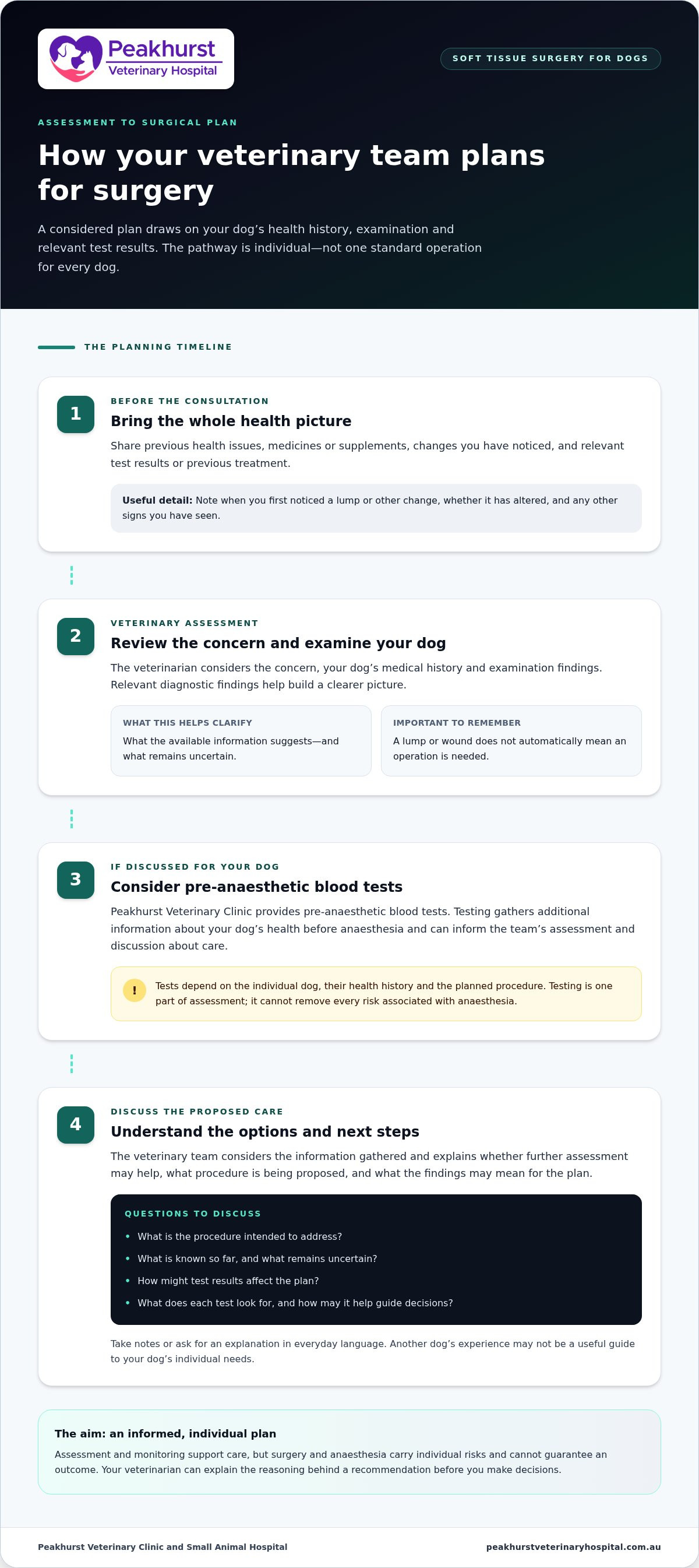
Soft tissue surgery can involve different parts of the body, and the right plan depends on your dog’s individual needs. This guide explains what an assessment and pre-anaesthetic testing may involve, how the team supports dogs during surgery and recovery, and what you can do at home before and after a procedure. It also covers useful questions to discuss with your veterinarian so you can make decisions with greater confidence.
Peakhurst Veterinary Clinic and Small Animal Hospital provides consultations and surgical care for dogs, with support from its veterinarians and nurses. A conversation with the team is a practical first step towards understanding your dog’s needs and the options available.
• Soft tissue surgery involves tissues and organs beyond bones and joints. The recommended approach depends on your dog’s needs.
• Your dog’s health history, examination and relevant test results help inform a considered surgical plan.
• Surgery and anaesthesia carry individual risks. Assessment and monitoring support care but cannot guarantee an outcome.
• Follow the treating veterinarian’s instructions for admission, feeding, medication and home recovery.
• When considering soft tissue surgery dog Sydney, discuss your dog’s specific needs with a veterinary team, including Peakhurst Veterinary Clinic’s surgical team.
The possibility of an operation can feel worrying for the whole family. You may be wondering what the procedure involves, why it’s being recommended and how your dog will be cared for. If you’re researching soft tissue surgery dog Sydney, remember that a recommendation should be based on your dog’s signs and individual needs, not on a label alone.
Soft tissue surgery refers to procedures involving tissues and organs other than bones and joints. It covers a range of situations, not one standard operation, and does not mean every dog needs the same treatment. A veterinarian considers what has changed, examines your dog and reviews relevant diagnostic findings. They can then explain whether surgery is appropriate and what other care may be considered.
A lump, wound or problem affecting internal soft tissue may prompt a veterinary assessment, but these concerns don’t automatically mean an operation is needed. A lump’s appearance alone may not show what it is, and wounds can differ in their extent and care needs. Examination and relevant diagnostic findings help the veterinarian understand the concern and discuss suitable next steps with you.
If your dog has a lump, your veterinarian can explain what is known and whether further investigation or treatment is appropriate. Some soft tissue growths, including sarcomas, need careful assessment. The general overview of Soft Tissue Sarcoma in Dogs describes how diagnosis and treatment can depend on the individual case. This is background information, not a substitute for advice about your dog.
Make a note of when you first noticed the change, whether it has altered and any other signs you’ve seen. These details can help guide the discussion alongside the examination and test results. The aim is to understand the problem before deciding on a plan, rather than assuming every lump or wound needs surgery.
Soft tissue surgery treats tissues and organs beyond bones and joints. Orthopaedic surgery focuses on bones, joints and related structures. Dental surgery concerns the teeth and mouth, while desexing is a separate type of procedure. These categories describe the broad issue being addressed, but they don’t tell you exactly what your dog’s operation or recovery will involve.
Each dog’s plan depends on the concern being investigated and the findings available to the veterinary team. Even two dogs with a lump may need different discussions because the location, examination and diagnostic results can differ. Your veterinarian can explain the reason for a recommendation in everyday language and talk through the proposed care before you decide.
At Peakhurst Veterinary Clinic and Small Animal Hospital, veterinarians and nurses provide consultations and surgical care. A conversation about your dog’s signs and needs can help you understand the options and next steps, without making surgery feel automatic.
There isn’t one pathway for every dog. The veterinary team considers your dog’s health, the concern being investigated and the information available. This helps explain the reasoning behind a recommendation and gives you a chance to understand the proposed next steps before making a decision.
Start by sharing your dog’s health history. Tell the veterinarian about previous health issues, medicines or supplements, changes you’ve noticed and questions on your mind. Details that seem small at home may help complete the picture. Bring details of relevant test results or previous treatment, too.
The veterinarian reviews the concern, your dog’s medical history and examination findings. They can then explain what the information suggests, whether further assessment may help and what procedure is being proposed. Ask what the procedure aims to address, what is known so far and what remains uncertain. Take notes or ask for an explanation in everyday language if that makes the discussion easier to follow.
Be open about medicines and past health concerns, even if they seem unrelated. Make a note of your questions before the appointment so you can cover them during the discussion. For more context on routine assessments and tracking your pet’s health, see this Sydney annual pet health check guide.
Pre-anaesthetic testing gathers additional information about a dog’s health before anaesthesia. Peakhurst Veterinary Clinic provides pre-anaesthetic blood tests, which can inform the veterinary team’s assessment and discussion about care. The tests recommended depend on the individual dog, their health history and the planned procedure. Testing is one part of the assessment, not a way to remove every risk associated with anaesthesia.
Ask how the results may affect the plan. The veterinarian can explain whether the findings support proceeding as planned or whether another step should be discussed. If you’re unsure what a test involves, ask what it looks for and how the result may help guide decisions. Clear answers can make the process easier to follow.
Planning continues beyond the consultation. The team considers the information gathered and discusses the proposed care with you, including what to expect next. Details differ from dog to dog, so another pet’s experience may not be a useful guide to your dog’s needs.
If you’re considering soft tissue surgery dog Sydney, a consultation can help you discuss your dog’s circumstances and the questions that matter to your family. You can arrange a veterinary consultation with the Peakhurst team to discuss your dog’s individual needs.
It’s understandable to feel concerned about your dog having an operation, particularly if anaesthesia is involved. Surgery and anaesthesia carry risks, and those risks vary with the individual patient, their health and the procedure being considered. Your veterinarian can explain how your dog’s circumstances inform the plan, without promising a particular outcome.
Assessment before surgery and monitoring during the procedure help the veterinary team make informed decisions and respond to the information available. These are important parts of care, but they can’t remove every risk or guarantee how a dog will recover. A clear discussion can help you weigh the potential benefits of treating the diagnosed problem against the risks, and understand whether reasonable alternatives are available.
Ask why surgery is being recommended and what the team hopes it will achieve for your dog. You can also ask what may happen if you wait, whether another approach is reasonable and what uncertainties remain. These questions help you understand the choices and make an informed decision.
Your dog’s age, health history, current medicines and examination findings may all be relevant. If a term feels unfamiliar, ask the veterinarian to explain it in everyday language. Take a moment to clarify what you’ve heard and make sure the plan makes sense to you.
Writing down questions before the appointment can help you cover the details that matter. Ask how your dog will be assessed, what monitoring is planned during the procedure and how the team will use that information. The veterinarian can explain the approach in the context of your dog’s health and the operation being considered.
• What individual health factors are relevant to my dog’s anaesthetic?
• How will my dog be assessed and monitored during the procedure?
• What are the expected benefits, risks and reasonable alternatives?
• What instructions should I follow about fasting, medicines and admission?
Follow the treating team’s instructions about food, water and any regular medicines. Don’t assume your dog should stop a medicine or follow a fasting routine based on advice for another pet. If instructions aren’t clear, ask the team to explain what applies to your dog before the procedure.
These questions can make a discussion about soft tissue surgery dog Sydney more focused. At Peakhurst Veterinary Clinic and Small Animal Hospital, veterinarians and nurses support care through consultations and surgical procedures. A thoughtful conversation can help you understand the proposed plan and feel more prepared to decide what is right for your dog.
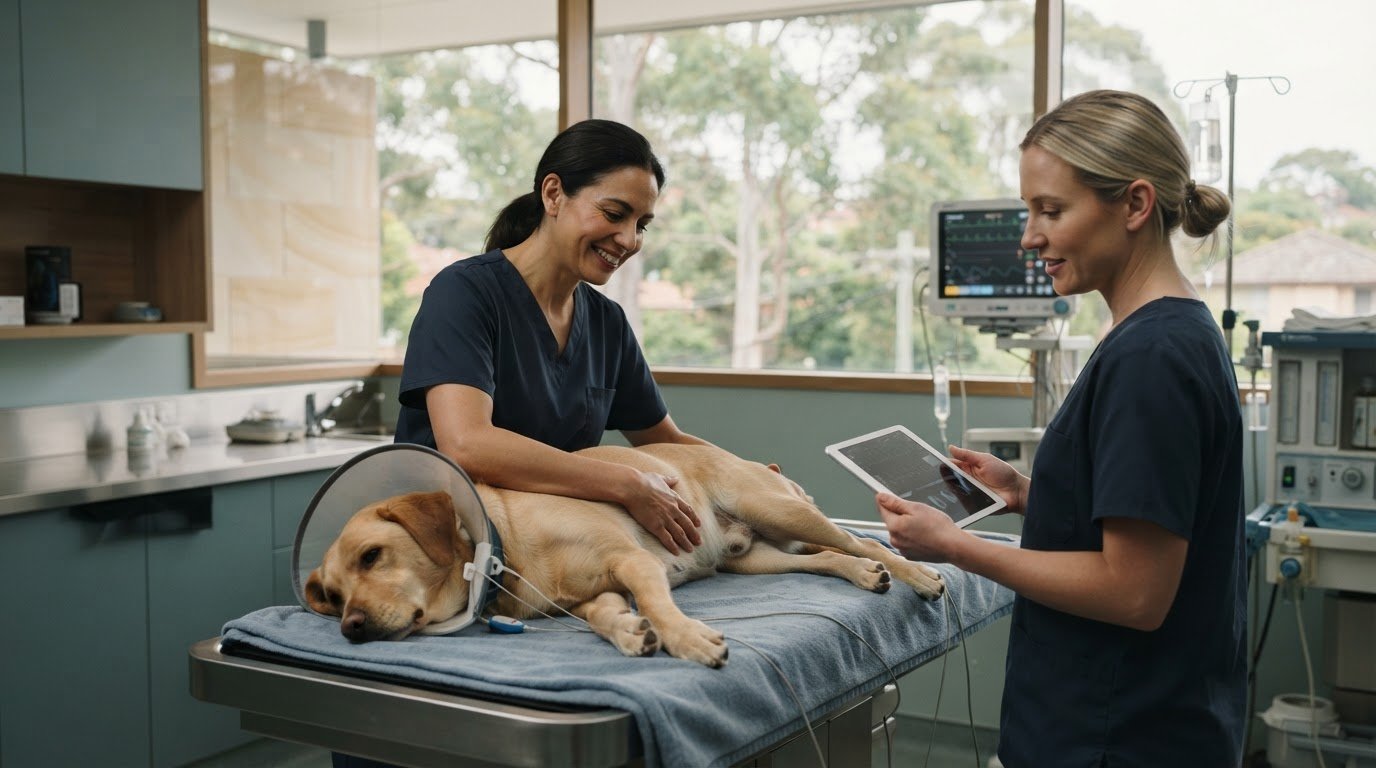
A clear plan for surgery day and the return home can make caring for your dog feel more manageable. Instructions differ depending on the procedure and your dog’s health, so follow the treating veterinarian’s guidance rather than advice based on another pet’s experience. If anything is unclear, ask the clinic before changing your dog’s routine.
Confirm the arrival time and admission instructions with the veterinary team. Follow their directions about feeding, water and regular medicines, as these may be specific to your dog and the planned procedure. Share an up-to-date list of medicines or supplements, and tell the team if your dog’s health or behaviour has changed since the assessment.
Arrange calm transport to and from the clinic, and prepare a comfortable, quiet resting place where your dog can settle without being disturbed. Ask about collection arrangements and what to bring so you know what to expect.
Your veterinarian will provide directions for your dog’s recovery. Follow the advice given for rest, prescribed medicines and observing the surgical area. The right approach depends on the operation and your dog’s condition, so there isn’t one recovery timetable or home-care routine for every patient.
Keep the written instructions somewhere easy to refer to, and note when medicines are due if any have been prescribed. Watch for changes that concern you, and contact the treating clinic for guidance if your dog seems unwell, the surgical area changes unexpectedly or you’re unsure whether something is part of the expected recovery. Don’t change or stop a prescribed medicine without veterinary advice.
• Keep the clinic’s admission, feeding and medicine instructions together.
• Prepare a comfortable resting spot before your dog comes home.
• Follow the directions provided for rest and checking the surgical area.
• Call the treating clinic if instructions are unclear or unexpected changes arise.
Recovery can take different paths, even for dogs having similar procedures. Your veterinary team can explain what to look out for in your dog’s case and how to follow any recommended next steps. This individual guidance is more useful than relying on a fixed timeline found online.
If you’re planning for soft tissue surgery dog Sydney, understanding the instructions before the day can help you feel ready to support your companion at home. Arrange a discussion with the Peakhurst veterinary team about your dog’s procedure and recovery.
Considering surgery for a much-loved dog can bring up plenty of questions. A calm conversation with a veterinary team can help you understand what has been found, why a procedure may be recommended and what the next steps could look like. For owners searching “soft tissue surgery dog Sydney”, local veterinary care makes it easier to discuss their dog’s needs close to home.
Peakhurst Veterinary Clinic and Small Animal Hospital provides surgical care for dogs, supported by its veterinarians and nurses. The independently operated hospital serves Peakhurst and nearby Sydney South communities. The team can discuss your dog’s situation and explain how assessment informs an individual plan, rather than assuming the same approach suits every patient.
A little preparation can help you make the most of an appointment. Bring information that gives the veterinarian a fuller picture of your dog’s health and care so far. If you’re unsure whether something is relevant, include it and discuss it with the team.
• A current list of medicines and supplements, including how they’re given.
• Notes about previous health concerns, treatment or changes you’ve noticed.
• Any reports or test results available from your dog’s recent care.
• Written questions about the recommendation, anaesthesia, recovery and follow-up.
You might ask what the proposed procedure is intended to address, what information supports the recommendation and what care may be needed afterwards. Written questions can be useful if you feel worried or find it difficult to remember everything during the appointment. You can also ask for medical terms to be explained in everyday language.
The first conversation doesn’t need to settle every decision. It can be a chance to describe what you’ve noticed, understand the veterinarian’s assessment and talk through the options that may suit your dog. If further information is needed, the team can explain how it may help clarify the plan.
After assessing your dog and considering the available information, the veterinarian can outline an approach tailored to their circumstances. Discuss what to expect, raise concerns and take time to understand the advice. The clinic serves pet owners in Peakhurst, Peakhurst Heights, Riverwood, Padstow Heights, Padstow, Mortdale, Lugarno, Narwee, Oatley, Revesby Heights, Penshurst, Beverly Hills, Alfords Point, Connells Point, Bonnet Bay, Oyster Bay, Como, Roselands, Hurstville Grove and Blakehurst.
If you’re ready to start the conversation, book a veterinary appointment with Peakhurst Veterinary Clinic and Small Animal Hospital. Bring your questions, share what you know about your dog’s health and take the discussion one step at a time.
Considering soft tissue surgery dog Sydney can bring a lot to think about, but you don’t have to work through every question on your own. Write down what you’ve noticed about your dog and what you’d like to understand. Bring those notes to an appointment and use the conversation to explore the recommendation, possible options and what happens next.
You don’t need to arrive with all the answers. Sharing your concerns can help the veterinarian focus on your dog’s needs and explain the choices in clear, everyday language. Take time to consider the information and ask for anything unclear to be explained again.
Book an appointment to discuss your dog’s surgical care with the Peakhurst veterinary team. Start with a conversation about your dog’s health and the next steps that may suit them.
Soft tissue surgery treats a health problem involving a dog’s tissues or organs rather than their bones or joints. The phrase describes a broad area of veterinary care, not one particular operation. If you’re looking into soft tissue surgery dog Sydney, find out what specific concern is being investigated and what the proposed procedure is intended to address. Your veterinarian can explain the terms used for your dog’s case.
A veterinarian may discuss surgery after assessing a lump, wound or problem affecting internal soft tissue. These concerns don’t all need an operation. The right response depends on the examination and relevant diagnostic findings. If you’ve noticed a change, note when it appeared and what has changed since. Sharing these observations can help the veterinary team understand the situation and discuss suitable options for your dog.
No operation or anaesthetic is without risk, and the level of risk differs between dogs and procedures. A veterinarian considers the dog’s health and the reason for surgery when discussing possible benefits, risks and alternatives. Assessment and monitoring inform decisions during care, but can’t guarantee an outcome. Ask which factors matter most for your dog, what uncertainties remain and what signs after the procedure should prompt you to seek advice.
Veterinarians consider the concern alongside the dog’s health history, current condition and examination findings. Depending on the case, relevant test results, including pre-anaesthetic blood test results, may also inform the discussion. You can help by describing changes you’ve observed, bringing details of medicines and sharing previous reports. The veterinarian can explain what the information means and whether further assessment may help guide a decision.
Whether a dog goes home on the day of surgery depends on the procedure, the dog’s condition and the veterinary team’s care plan. There isn’t one collection time that applies to every patient. Before surgery, ask about the expected admission and collection arrangements, and who to contact if your plans change. Make sure you understand any home-care directions before leaving with your dog.
Ask what problem the procedure is intended to address, what benefits are expected and whether alternatives are reasonable. You might also clarify your dog’s individual anaesthetic considerations, how they’ll be monitored and what recovery care may involve. Check instructions about food, medicines, admission and collection, too. If an explanation feels unclear, ask for it in everyday language before deciding what feels right for your dog.
Contact the treating clinic if your dog’s recovery worries you, if you notice an unexpected change or if you’re unsure how to follow the care instructions. Keep the discharge information handy and be ready to describe what you’ve noticed, when it began and any medicines given. The team can advise on the next step for your dog.
.png)