Your dog may seem perfectly well, yet a blood test can reveal information that helps shape their anaesthetic plan. It’s natural to have questions when a procedure is coming up, especially when your companion can’t tell you how they feel. A pre anaesthetic blood test dog owners discuss with their vet can assess selected aspects of health that may not be obvious during an examination.
Testing doesn’t guarantee against complications, and it doesn’t mean something is wrong. It gives your veterinarian another piece of information to consider alongside your dog’s examination, health history and planned procedure. A result may lead to further checks or a change to the plan. For an elective procedure, that can sometimes mean waiting while an unexpected finding is investigated.
This guide explains what common blood tests can assess, how results may inform an anaesthetic plan and what to discuss with your veterinarian. Knowing what the test can and can’t show can help you prepare for your dog’s care.
• A pre anaesthetic blood test can assess selected aspects of your dog’s health, but the tests included may vary.
• A complete blood count and biochemistry panel assess different things, from blood cells to selected markers related to organ function.
• Your dog’s health history, examination, age and planned procedure all help guide whether testing may be useful.
• The usual process includes discussing your dog’s health, collecting a sample, reviewing the results and confirming an anaesthetic plan.
• Ask your Peakhurst veterinary team what the proposed tests assess and how a result could affect the procedure or its timing.
It’s understandable to feel concerned when your dog is having a procedure under anaesthesia. A pre-anaesthetic blood test analyses a blood sample to assess selected aspects of health before anaesthesia. It adds information for the veterinary team to consider, but it can’t guarantee an anaesthetic will be risk-free.
Pre-anaesthetic screening may help inform an anaesthetic plan; it does not prevent every possible complication. It’s different from testing to investigate a specific illness. If your dog is unwell, a veterinarian may recommend targeted tests to look into particular signs. Screening before a planned procedure instead checks selected measures that may be relevant to your dog’s care.
Anaesthesia may be needed for procedures ranging from dental treatment to surgery. The broad overview of Veterinary surgery describes the range of procedures performed on animals. Considering test results alongside the planned procedure helps the veterinary team make an individual assessment rather than assume every patient has the same needs.
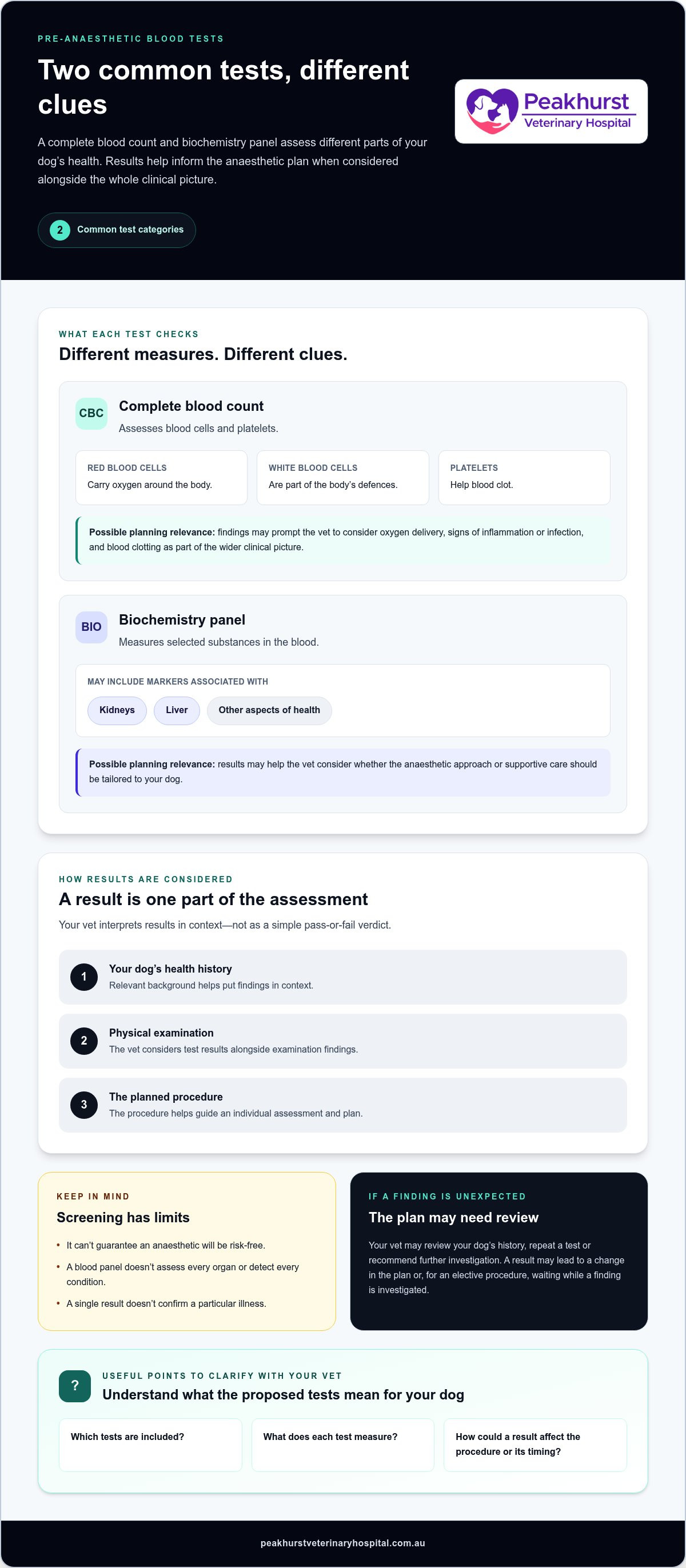
Depending on which tests are selected, bloodwork may assess blood cells and markers associated with organs such as the kidneys and liver. A complete blood count looks at red and white blood cells and platelets. A biochemistry panel measures selected substances that can provide clues about organ function and other aspects of health. The exact tests depend on your dog and the clinical situation.
Results aren’t interpreted on their own. Your vet considers them alongside the physical examination, your dog’s health history and the procedure being planned. If a result is outside the expected range, the vet can explain what it may mean for your dog and whether a change to the plan or further investigation is appropriate.
A dog who is eating, playing and behaving normally may appear healthy, but outward signs don’t answer every question about what’s happening inside the body. That doesn’t mean a healthy-looking dog is likely to have a hidden problem. It means appearance is one part of the overall assessment.
For some dogs, screening provides useful information before a planned procedure and supports a more tailored discussion about anaesthesia. Ask what the proposed tests assess and how the findings could inform your dog’s plan. This helps clarify why testing is being considered without expecting it to remove every uncertainty.
There isn’t one fixed panel for every dog. The tests selected depend on the individual patient and clinical situation. Ask what a proposed pre anaesthetic blood test includes, what each test measures and how the findings could inform the anaesthetic plan.
Two common categories are a complete blood count and a biochemistry panel. A complete blood count assesses blood cells, while biochemistry measures selected substances that can offer clues about organ function and other aspects of health. Results aren’t a simple pass-or-fail verdict. An unusual finding may lead the vet to review your dog’s history, repeat a test or recommend further investigation before deciding on the next step.
| Test category | Broad purpose | Possible planning relevance |
|---|---|---|
| Complete blood count | Checks red and white blood cells, and platelets. | May prompt the vet to consider oxygen delivery, signs of inflammation or infection, and blood clotting in the wider clinical picture. |
| Biochemistry | Measures selected markers associated with organs such as the kidneys and liver, as well as other substances in the blood. | May help the vet consider whether the anaesthetic approach or supportive care should be tailored to your dog. |
Red blood cells carry oxygen around the body. White blood cells are part of the body’s defences, and platelets help blood clot. Changes in these results can provide useful clues, but a single result doesn’t confirm a particular illness. Your vet weighs the finding against your dog’s examination, health history and any other test results.
Some biochemistry markers relate to kidney and liver function. These organs have important roles in processing substances and maintaining the body’s balance, so the results may help the vet consider an appropriate anaesthetic plan. The AAHA Anesthesia and Monitoring Guidelines also place pre-anaesthetic assessment within a broader process of individual patient care.
A blood panel has limits: it doesn’t assess every organ or detect every condition. If a result is unexpected, your vet can explain what it may mean for your dog and whether more information is needed. For a clear discussion about pre-anaesthetic blood tests, bring questions about the tests and your dog’s planned procedure.
A dog who seems bright and well may still be considered for blood testing before anaesthesia. Looking healthy is reassuring, but it doesn’t settle whether screening could be useful. The decision is individual and may take into account your dog’s health history, examination findings, age, planned procedure and the veterinarian’s judgement.
Research has examined routine pre-operative screening in dogs described as healthy, but there isn’t a universal rule that applies to every dog. Discuss what testing could add for your dog rather than assuming all dogs need the same tests or that a healthy appearance means no test is useful.
Testing isn’t an automatic yes or no; it’s an individual decision based on your dog’s health and planned procedure.
| Approach | What it means | How it may inform planning |
|---|---|---|
| Routine screening | Blood tests are considered as part of the pre-anaesthetic assessment, including for a dog who appears healthy. | May provide additional information to consider alongside the examination and health history. |
| Individually selected testing | The vet recommends tests based on the dog’s circumstances, which may include specific history or examination findings. | Can focus assessment on questions relevant to the dog and the procedure. |
Testing may be worth discussing if your dog has a known health condition, takes regular medicines or has had a recent change in health. Examination findings and the type of procedure may also influence what information the veterinary team wants before proceeding. These factors don’t automatically mean something is wrong; they help the vet decide what is relevant for your dog.
Ask what a proposed pre anaesthetic blood test may show and whether the information could affect the plan. Test selection should reflect your dog’s circumstances, not rely on a one-size-fits-all panel or age cut-off.
Normal blood results can be reassuring, but they don’t remove every anaesthetic risk or guarantee that complications won’t occur. Bloodwork can’t replace a physical examination, the veterinary team’s assessment or appropriate monitoring during anaesthesia. It is one part of a broader picture.
If results are unclear or something unexpected appears, your vet can explain what is known, what remains uncertain and whether further steps are recommended. Ask how the finding relates to the planned procedure and what it means for your dog’s care. This can make the decision clearer, even when testing doesn’t provide a simple yes-or-no answer.
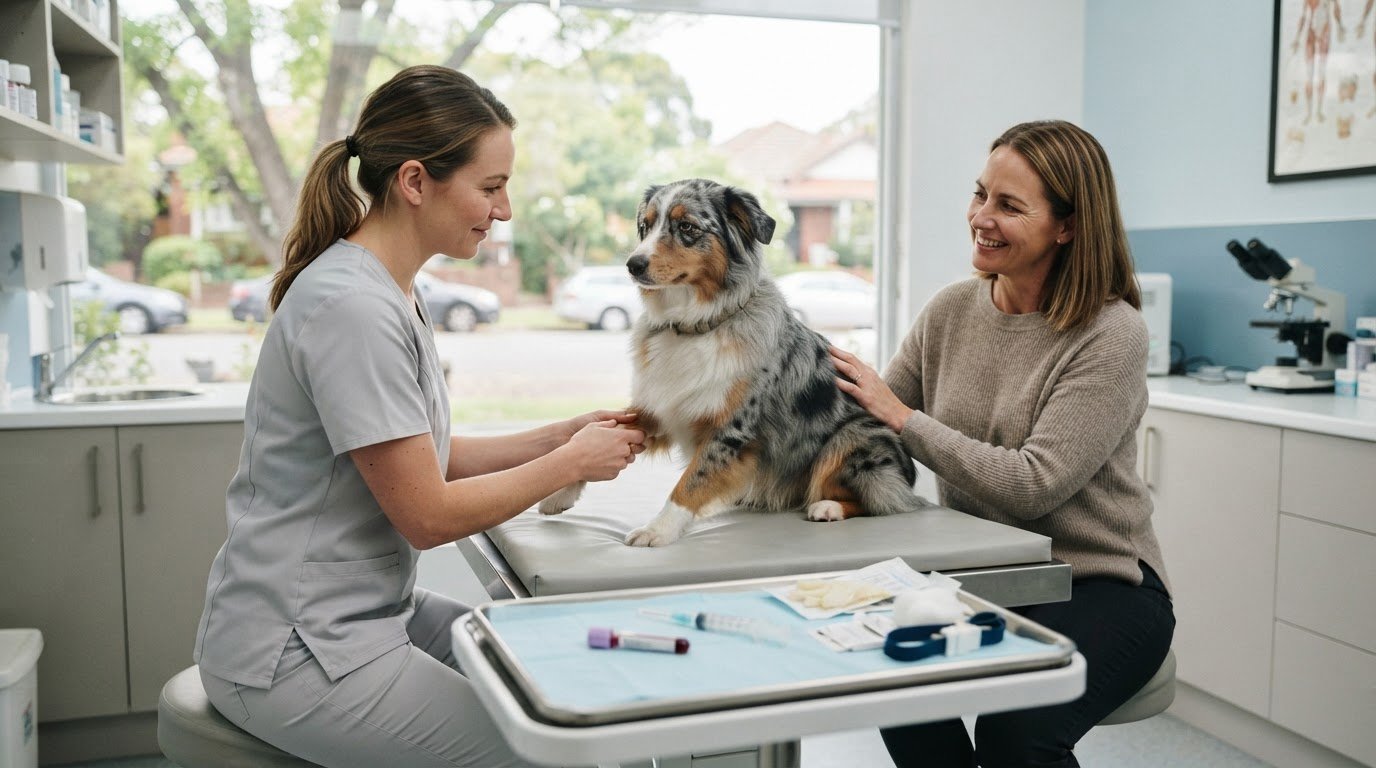
The process generally involves discussing your dog’s health and procedure with the veterinary team, collecting a blood sample, reviewing the findings and confirming the anaesthetic plan. The sample collection method and the time needed to receive results can vary. Your vet will explain what to expect for your dog.
Before the test, share relevant details such as your dog’s current medicines and supplements, previous test results and any recent changes in their health. Mention new signs such as a change in appetite, energy or behaviour, even if they seem mild. These details help the vet interpret the results in context.
Follow the veterinary team’s instructions for your dog’s procedure, including advice about food, water and regular medicines. Fasting directions can vary, so don’t assume your dog should miss a meal or skip medication unless you’ve been advised to do so. If an instruction isn’t clear, ask the team before the appointment.
Routine health care can also build a useful picture of your dog’s wellbeing over time. At your dog’s annual pet health checks, you can discuss changes in their health and share history that may matter when planning a procedure.
An unexpected result doesn’t automatically mean there’s a serious problem or that surgery can’t go ahead. Your vet will consider the finding alongside your dog’s examination, health history and planned procedure. They may recommend repeating a test or carrying out further assessment to understand the result more clearly.
The team may decide the current plan remains suitable, adjust aspects of the anaesthetic approach or change the timing of an elective procedure while gathering more information. A delay can be disappointing, but it may be a considered step in your dog’s care.
Ask what the result means for your dog and what happens next. When discussing a pre-anaesthetic blood test, share your questions and any recent health changes with the Peakhurst veterinary team. They can explain how the findings relate to the planned procedure.
It’s natural to want clear answers before your dog has a procedure. A useful discussion can cover what the proposed blood test assesses, why it’s recommended for your dog and how the results could inform their anaesthetic plan.
Peakhurst Veterinary Clinic and Small Animal Hospital provides pre-anaesthetic blood testing as part of its veterinary and surgical care for local pets. The independently operated hospital has served the community since 1972. Your dog’s veterinary team can talk through the test and explain how any findings relate to their health and planned procedure.
You don’t need to know the medical terms to take part in the conversation. Share what you know about your dog and raise any concerns, even if you’re unsure whether they’re relevant. These questions can help you understand the plan:
• Which tests are recommended for my dog, and what is each one intended to assess?
• How could an unexpected result affect the anaesthetic or procedure plan?
• What instructions should I follow about food, regular medication and arrival?
• How will I hear about the results, and is any follow-up recommended?
Tell the veterinary team about your dog’s health history, current medicines and supplements, previous test results and any recent changes you’ve noticed. Discuss why testing is being considered and how the results may guide your dog’s care. Follow the instructions given for the planned procedure, and don’t change your dog’s food or medication based on general advice alone.
Your dog’s results are considered alongside their history and examination. The vet may recommend proceeding with the plan, investigating a finding further, adjusting aspects of anaesthetic care or changing the timing of an elective procedure. Ask what each possible next step would mean for your dog. A change to the plan is a considered decision, not automatically a sign of an emergency.
If your dog is having surgery or another procedure that requires anaesthesia, a conversation with the veterinary team can help you feel prepared. Bring your questions and share your concerns with Peakhurst Veterinary Clinic and Small Animal Hospital’s team. They can discuss pre-anaesthetic testing and how it fits into your dog’s individual care.
A pre anaesthetic blood test dog owners discuss with their veterinarian can provide information about selected aspects of health before a procedure. The tests chosen and what the results mean depend on the individual dog, their health history and the planned care. Bloodwork may inform an anaesthetic plan, but it can’t remove every risk or replace an examination and careful monitoring.
If you’re unsure whether testing is worthwhile, ask what the proposed tests assess and how the findings could affect your dog’s procedure. An unexpected result may lead to further assessment or a change in timing. Your vet can talk through the reasons and next steps.
Peakhurst Veterinary Clinic and Small Animal Hospital provides surgical care and pre-anaesthetic blood tests for pets in Peakhurst and nearby communities, including Peakhurst Heights, Riverwood, Padstow Heights, Padstow, Mortdale, Lugarno, Narwee, Oatley, Revesby Heights, Penshurst, Beverly Hills, Alfords Point, Connells Point, Bonnet Bay, Oyster Bay, Como, Roselands, Hurstville Grove and Blakehurst. Discuss your dog’s pre-anaesthetic care with our veterinary team and arrange a conversation about their upcoming procedure.
A pre-anaesthetic blood test checks selected aspects of your dog’s health before anaesthesia. Depending on the tests chosen, a complete blood count may assess red and white blood cells and platelets, while biochemistry may measure markers related to organs such as the kidneys and liver. Panels vary, and results are interpreted alongside your dog’s history and examination. Ask your vet what the proposed tests are intended to assess.
Not automatically. A healthy appearance doesn’t settle whether testing may be useful, but it doesn’t mean a problem is likely either. Your vet may consider your dog’s history, examination, age and planned procedure when discussing whether to test. The decision is individual rather than a universal rule. If you’re unsure, ask what information testing could add to your dog’s anaesthetic plan.
No. Blood tests assess selected measures and can’t detect every health condition or assess every organ. A normal result also doesn’t remove all anaesthetic risks. Bloodwork is one part of a broader assessment that includes your dog’s history and physical examination, along with monitoring during anaesthesia. Your vet can explain what the chosen tests can and can’t show, and whether other checks are appropriate for your dog.
An abnormal result doesn’t automatically mean your dog is seriously ill or can’t have the planned procedure. Your vet will interpret the finding in context, considering your dog’s history and examination. They may recommend repeating a test, carrying out further assessment, adjusting aspects of the anaesthetic plan or changing the timing of an elective procedure. Ask what the result means for your dog and what next step, if any, is recommended.
Follow the veterinary team’s instructions for your dog’s specific procedure. Fasting directions can vary, particularly when blood testing is part of preparation for anaesthesia. Don’t withhold food or water, or change your dog’s regular medicines, based on general advice alone. If the instructions aren’t clear, ask the clinic what to do before the appointment. Tell the team about any medicines or supplements your dog takes.
Result timing can vary depending on the tests selected and how they’re processed. Your veterinary team can explain when to expect your dog’s results and how you’ll be updated. If the procedure is planned for a particular date, mention this when discussing the test so you understand how the timing fits together. Don’t assume results will be available on the day unless your clinic has told you so.
Normal bloodwork is useful information, but it can’t guarantee that anaesthesia will be risk-free. It reflects only the measures included in the tests and the sample taken at that time. Your vet will consider the results alongside your dog’s examination, health history and planned procedure, then make an individual plan. Peakhurst Veterinary Clinic and Small Animal Hospital provides surgical care and pre-anaesthetic testing in Peakhurst.
.png)