Pain doesn’t always sound like a yelp. Sometimes it shows up as a slower walk, less interest in dinner or a change in the way your dog settles beside you. If you’re wondering how to tell if my dog is in pain, these quiet shifts can be just as important as obvious signs of discomfort.
It’s understandable to wonder whether a change is simply part of ageing, a passing mood or something that needs attention. Dogs can hide discomfort, so compare what you see now with your dog’s usual behaviour and routines. You don’t need to work out the cause yourself.
This checklist will help you spot changes worth monitoring or discussing with your vet, recognise warning signs that need urgent attention, and record clear observations at home. Notes or a short video can help your vet understand what you’re seeing, even if your dog behaves differently during an examination. If signs are new, persistent or getting worse, arrange a veterinary examination.
• To understand how to tell if my dog is in pain, compare their movement, posture, mood and routines with what’s normal for them.
• Notice whether changes are new, persistent or getting worse, and use that pattern to guide your next step.
• Learn which warning signs need urgent veterinary attention and when a prompt appointment is sensible.
• Keep a simple record of changes in appetite, sleep, toileting, movement and interaction without trying to provoke a response.
• Help your vet understand what’s changed by describing your dog’s usual routine and when the signs began.
You know your dog’s little habits: how they greet you, settle down, move around the house and ask for attention. After an operation, you may notice small changes before you can explain what feels different. When considering how to tell if my dog is in pain, compare what you see now with your dog’s usual behaviour, movement, posture and daily routines. Follow the recovery guidance provided by your veterinary team.
Behaviour changes can be more noticeable than crying. A dog in discomfort may not yelp or whine. Instead, they might move differently or lose interest in an everyday activity. The broader picture of pain in animals includes how behaviour can help people recognise and assess discomfort.
Watch for changes that are new, persistent or getting worse. A simple checklist can help you describe what you’ve noticed:
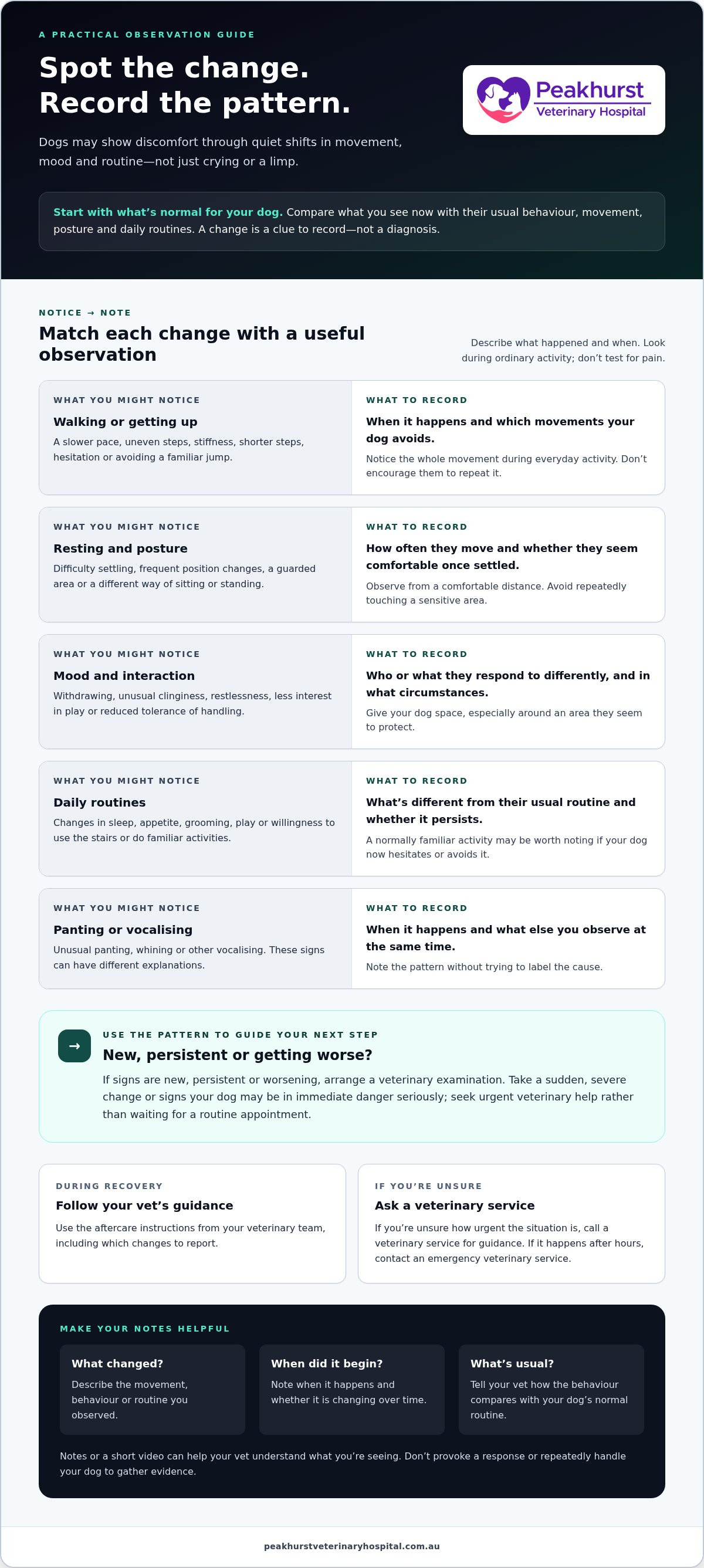
• Moving more slowly, limping, seeming stiff or avoiding a familiar movement.
• Holding their body differently or guarding one area.
• Withdrawing, seeking more company than usual, seeming restless or resisting touch.
• Changes in sleep, play, appetite or willingness to use the stairs.
• Unusual panting or vocalising. Note when it happens and what else you observe.
A normally sociable dog might retreat to a quiet spot, while another may become unusually clingy or struggle to settle. You could also notice less interest in meals or play, disrupted sleep, or hesitation at stairs they usually climb. Record these changes, especially if they’re different from your dog’s normal routine. One sign alone can’t identify the cause, so note the pattern rather than trying to label it.
Look for limping, stiffness, a guarded posture or a different way of sitting, standing or walking. Panting and vocalising can have different explanations, so note when they happen and what else you’ve noticed. Observe from a comfortable distance. Don’t repeatedly touch a sensitive area or make your dog walk, climb or change position to test for pain. If a change concerns you during recovery, describe it to your veterinary team.
During recovery from desexing, your dog may be quieter or less active than usual. Notice how their behaviour changes over time, and compare it with their usual pattern and the recovery guidance from your vet. A dog who normally trots to the door but now hesitates, or keeps shifting position instead of settling, is showing you something worth noting.
A change you can observe is a useful clue, not a confirmed cause. Dogs can show discomfort in different ways, and one sign on its own can’t tell you exactly what’s wrong. If you’re wondering how to tell if my dog is in pain, record what changed and when rather than trying to diagnose the reason.
| What changed | What you might observe | What to record |
|---|---|---|
| Walking or getting up | A slower pace, uneven steps, stiffness or reluctance to jump onto a familiar spot. | When it happens and which movements your dog avoids. |
| Resting | Difficulty settling, frequent position changes or guarding a preferred resting place. | How often they move and whether they seem comfortable once settled. |
| Mood and interaction | Less interest in play, withdrawing, unusual clinginess or reduced tolerance of handling. | Who or what they respond to differently, and in what circumstances. |
| Daily routines | Changes in grooming, sleep or willingness to do familiar activities. | What’s different from their usual routine and whether it persists. |
Notice the whole movement, not just a limp. Your dog may take shorter steps, move at a different pace, hold their body differently or pause before getting up. They might also avoid jumping or take longer to find a comfortable resting position. Don’t encourage these movements to test them. Simply note what you see during ordinary activity.
A normally gentle dog may turn away, move off or seem less willing to be touched when uncomfortable. Others may seek more company or appear unsettled. Give your dog space, especially around an area they seem to protect, and don’t provoke a reaction by repeatedly handling them. Describe any new or persistent changes to your veterinary team.
If you’re concerned about a change during recovery, a veterinary examination can help your team assess your dog in context. You can arrange a veterinary consultation and share your observations.
It can be hard to judge what can wait, especially while your dog is recovering from desexing. Follow the aftercare instructions provided by your veterinary team, and take a sudden, severe change or signs that your dog may be in immediate danger seriously. Don’t wait for crying or a limp before seeking advice. Dogs can be uncomfortable without showing either.
If your dog seems severely unwell or in immediate danger, seek urgent veterinary help rather than waiting for a routine appointment. If this happens after hours, contact an emergency veterinary service. If you’re unsure how urgent the situation is, call a veterinary service for guidance.
After an operation, follow the specific instructions you were given about recovery and which changes to report. If your dog’s condition is changing quickly or you’re seriously worried, act promptly rather than relying on a checklist to decide what’s happening.
Arrange a veterinary appointment if a change persists, keeps returning, worsens or affects everyday activities. Your dog might be increasingly reluctant to move, struggling to settle or behaving differently from their usual self during recovery. They don’t need to cry, limp or show several signs at once for your concern to be worth discussing.
When you speak with the veterinary team, describe what you’ve noticed and when it began. Mention whether it’s getting better, staying the same or becoming more pronounced, along with any effect on your dog’s usual routine. Clear observations help the team understand the change and decide what care may be appropriate.
If you’re asking yourself how to tell if my dog is in pain, remember that you don’t need to diagnose the cause before seeking help. It’s reasonable to ask for veterinary advice about a new or worrying change, even if you’re not certain it signals pain. For non-emergency concerns, arrange an appointment with your vet in Peakhurst and share what you’ve observed.
Clear, calm observations can help your veterinary team understand what has changed, especially as your dog recovers from desexing. You don’t need to test for pain or decide what’s causing a sign. Notice what happens during ordinary routines, jot down the details and arrange care if you’re concerned.
A simple sequence can help:
Watch your dog at rest and during normal, unforced activity. Don’t prod them or make them walk, climb or jump to check for a reaction.
Record when you first noticed the change and how often it occurs.
Compare appetite, sleep, toileting, movement and interaction with your dog’s usual pattern.
Share your notes with the veterinary team and follow the post-operative instructions you were given.
Keep your notes factual and brief. Write down whether the change is occasional or repeated, and whether it seems to be worsening. Note which everyday activities are affected, along with any recent incident or other change you’ve observed. For example, record that your dog hesitated before getting up rather than assuming why. If you’re asking how to tell if my dog is in pain, a clear description is more useful than trying to name a condition.
A short video may also help show a change in your dog’s natural movement, as long as it’s safe and doesn’t require you to encourage or handle them. Don’t delay a call or appointment to collect footage, and don’t ask your dog to repeat a movement that seems uncomfortable.
Let your dog rest in a calm, familiar space and avoid unnecessary handling. Don’t force exercise or press on a sore-looking area to see what happens. After surgery, follow the clinic’s recovery instructions, and ask your veterinary team what to do if you’re unsure. Don’t give human pain medicines or start another treatment unless a vet has directed you to do so.
Your observations can help guide the conversation, but they’re no substitute for an examination. Arrange a veterinary consultation to discuss new, persistent or worsening changes with the team.
It’s natural to feel concerned when your dog seems different. A veterinary assessment gives you a chance to share what you’ve noticed and have your dog examined. The vet may ask about your dog’s usual routine, what has changed and when you first saw the signs. They may also ask how often the change happens and whether it affects everyday activities.
The examination is guided by your dog’s history and what the vet observes. They’ll assess your dog calmly and may look at how they’re standing or moving, as well as examine them physically. What happens next depends on the individual dog and the information gathered. An examination doesn’t mean a particular cause or test can be assumed in advance.
Your notes can fill in details that may not be obvious during an appointment. Share when the change began, what seems different from your dog’s normal behaviour and whether it’s becoming more noticeable. If you’ve safely captured a short video of a natural movement change, you can show it to the vet. Don’t make your dog repeat a movement just to record it.
The vet brings your account together with the examination to guide appropriate next steps. For a broader look at preventive care and routine veterinary visits, read our annual pet health check guide.
If a change is persistent or concerning, arranging an appointment is a sensible way to have it assessed. You don’t need to be certain that your dog is in pain before asking for veterinary advice. A clear description of what you’ve noticed can help start the conversation.
Peakhurst Veterinary Clinic and Small Animal Hospital provides veterinary consultations and examinations for local owners in Peakhurst. The independently operated practice has served the community since 1972. Bring along your observations to help explain what has changed.
Knowing how to tell if my dog is in pain often starts with noticing what’s changed from their usual self. A shift in movement, mood or daily routines can be worth recording, even if your dog isn’t crying or limping. Clear notes about what you’ve seen and when it began can help your vet understand the bigger picture.
If the change is persistent, worsening or affecting everyday activities, a veterinary examination is a sensible next step. Peakhurst Veterinary Clinic and Small Animal Hospital has an experienced veterinary and nursing team providing clinical and surgical care.
Book a veterinary appointment in Peakhurst to discuss changes that concern you. You know your dog’s familiar ways, and sharing what you’ve noticed is a caring first step towards getting them the support they need.
Look for changes in your dog’s usual behaviour, movement or routines. They may withdraw, seem unusually restless, hesitate before getting up, move stiffly or avoid being touched. If you’re wondering how to tell if my dog is in pain, remember that crying isn’t the only clue. Note what’s different and when it happens, then share your observations with your vet, especially if the change persists or worsens.
Yes. Eating or wagging their tail doesn’t rule out discomfort. Dogs can continue familiar activities while showing other changes, such as moving more slowly, resting differently or being less interested in play. Look at your dog’s overall behaviour and compare it with what’s normal for them. A single reassuring sign can’t confirm that everything is fine, so speak with your vet if other changes concern you.
Possible signs include limping, stiffness, reluctance to move, an altered posture, guarding an area, restlessness, withdrawing or becoming less tolerant of handling. You might also notice changes in sleep, appetite, play or interaction. Dogs show discomfort differently, and these signs can have different causes. Look for a change from your dog’s normal pattern and record when it occurs rather than trying to diagnose it yourself.
Arrange a veterinary appointment if a change persists, recurs, worsens or affects your dog’s everyday activities. Seek urgent veterinary help if your dog collapses, has a seizure, cannot stand, cries out when touched or has rapid or laboured breathing. If an urgent problem occurs after hours, contact an emergency veterinary service.
Keep your dog calm and avoid pressing on a sore area or making them move to test what hurts. Note what changed and when it began, then contact a veterinary service for advice. If your dog collapses, has a seizure or has severe breathing difficulty, seek urgent veterinary help. For a sudden change that isn’t an emergency, arrange an appointment with your vet and follow their guidance.
Don’t give your dog human pain relief unless a vet has specifically instructed you to. Medicines intended for people may be unsafe for dogs, and the right care depends on your dog and the situation. If your dog seems uncomfortable, contact your veterinary team for advice rather than choosing a medicine or dose yourself. If your dog has already taken human medication, tell a vet what it was and when it happened.
Let your dog rest in a quiet, familiar space and avoid unnecessary handling, forced exercise or testing a sore area. Follow any aftercare instructions your vet has given, and don’t start medication without veterinary direction. Peakhurst Veterinary Clinic and Small Animal Hospital serves local owners in Peakhurst, Peakhurst Heights, Riverwood, Padstow Heights, Padstow, Mortdale, Lugarno, Narwee, Oatley, Revesby Heights, Penshurst, Beverly Hills, Alfords Point, Connells Point, Bonnet Bay, Oyster Bay, Como, Roselands, Hurstville Grove and Blakehurst.

.png)