We are closed on Monday 5th October 2026 for Labour Day. For emergency please contact Veterinary Specialist of Sydney (VSOS) (02) 8376 8767


What good is a microchip if it can’t help someone get your pet home? If you’re searching for “pet microchipping Sydney south”, you may be wondering what the procedure involves and whether your pet will find it upsetting. Those are understandable concerns. Knowing what to expect can make the decision feel more straightforward.
This guide explains how microchipping works, what NSW requirements mean for your pet, and why keeping contact details current matters as much as the implant. In NSW, cats and dogs must be microchipped by 12 weeks of age or before they’re sold or given away, whichever comes first. The chip provides a unique identification number, but you’ll also need to register it and update your details if they change.
We’ll walk through the procedure and the steps that help identification work when it’s needed. Peakhurst Veterinary Clinic and Small Animal Hospital provides microchipping as part of preventive veterinary care, with clear explanations to help you feel prepared.
• See what to expect during a microchipping appointment, from the initial check to guidance on next steps.
• Understand how a permanent microchip differs from a collar tag or GPS tracker, and why visible identification can still be useful.
• Learn how to keep your pet’s microchip record connected to current contact details through the NSW Pet Registry.
• For pet microchipping Sydney south, find out how Peakhurst Veterinary Clinic can support you with clear explanations and veterinary care.
• Discover how microchipping fits into your pet’s ongoing preventive care.
The thought of a much-loved pet slipping away can be upsetting. A microchip gives your dog or cat a permanent form of identification, and understanding how it works can make the subject feel less daunting. If you’re considering pet microchipping Sydney south, the key point is that the chip can help link a found pet back to you, provided its number is connected to current contact details.
A microchip is a permanent identification device that stores a unique number. A scanner reads the number so it can be used to look up the pet’s registered owner details. The chip identifies your pet, but it doesn’t track their live location. For a general overview of how pet microchipping works, you can read more about the technology and implantation process.
The scanner reads the chip’s unique identification number. It doesn’t display your name, address or phone number directly. Instead, the number is used to find the associated registry record, where your contact details can help someone who has found your pet reach you.
The implant and the registry record work together. If you move house or change your phone number, update the details linked to the microchip number. Out-of-date contact information can make it harder for someone to get in touch with you.
Dogs and cats can benefit from permanent identification, including indoor pets. A door left open, a damaged fence or an unexpected fright can give a pet a chance to get outside. If they’re found, a microchip can help connect them with their registered owner.
In NSW, cats and dogs must be microchipped by 12 weeks of age or before they’re sold or given away, whichever happens first. The chip supports identification and reunification, but it can’t guarantee that a lost pet will be found or returned. Keeping registry details current helps make the identification useful if your pet is separated from you.
Knowing the steps can help you feel more prepared before booking. At Peakhurst Veterinary Clinic, the veterinary team provides microchipping as part of preventive care and explains the procedure and what happens with your pet’s identification record. If your pet is nervous at the clinic, let the team know so they can take that into account during the visit.
A typical appointment includes an initial assessment and explanation, microchip implantation, and guidance on recording the chip number and keeping owner details up to date. The team will talk you through each step so you know what to expect.
The team will consider your pet and explain the procedure in plain language. They can answer questions and help you understand how the microchip number connects to the registry record. Your veterinary team will explain the clinical steps involved for your pet at the appointment.
Microchipping involves placing a small identification chip beneath the skin. Pets can respond differently to the experience, so it’s best not to assume they won’t notice it or promise that it won’t cause discomfort. A calm approach and clear explanation can help you and your pet feel more settled. The team will explain what to expect during and after the procedure, along with any guidance for your pet.
Yes, it’s a useful topic to raise during a broader preventive-care visit. If your pet is due for an annual health check or vaccinations, you can also discuss microchipping and questions about their identification record. Each service has its own purpose, but considering them together can make it easier to keep track of your pet’s care.
For more on what a routine check-up can cover, read our annual pet health checks guide. Owners looking for pet microchipping Sydney south can arrange care with the local veterinary team at Peakhurst Veterinary Clinic. Arrange pet microchipping in Peakhurst.
These identification options serve different purposes. A microchip provides a permanent identification number, a collar tag makes contact details visible, and a GPS tracker can help show a pet’s location while the device is being used. Knowing the difference helps you decide how they can work together.
| Option | How it’s read or used | What it can’t do |
|---|---|---|
| Microchip | A compatible scanner reads its unique number, which can be used to look up the linked registry record. | It doesn’t display contact details itself or show a pet’s live location. |
| Collar tag | A person who finds your pet can read the contact details displayed on the tag. | It can become detached, damaged or difficult to read. |
| GPS tracker | A tracking device can provide location information while it’s being worn and functioning. | Its use may depend on factors such as battery power and connectivity, and it doesn’t replace permanent identification. |
A collar tag gives someone who finds your pet a simple way to see how to reach you, without needing a scanner. A microchip works differently: a compatible scanner reads its number, and registry records connect that number with owner contact details. The tag is visible, while the chip is a permanent form of identification beneath the skin. Keeping both current, where practical, gives people more than one way to identify your pet.
Check that the phone number on the tag is readable and up to date. The contact details linked to the microchip need attention too, particularly after a move or phone-number change.
A GPS tracker and a microchip aren’t interchangeable. The tracker is designed to help with location information; the microchip is designed to identify your pet if they’re found and scanned. A tracker needs to be worn and working, and depending on the device, may rely on power and a connection. A microchip won’t help you follow your pet’s movements in real time.
For pet microchipping Sydney south owners can think of the microchip and collar tag as complementary identification: one is permanent and scanned, the other is visible and readable. Neither method guarantees a safe reunion, but together they can give a finder useful ways to identify your pet and try to contact you.
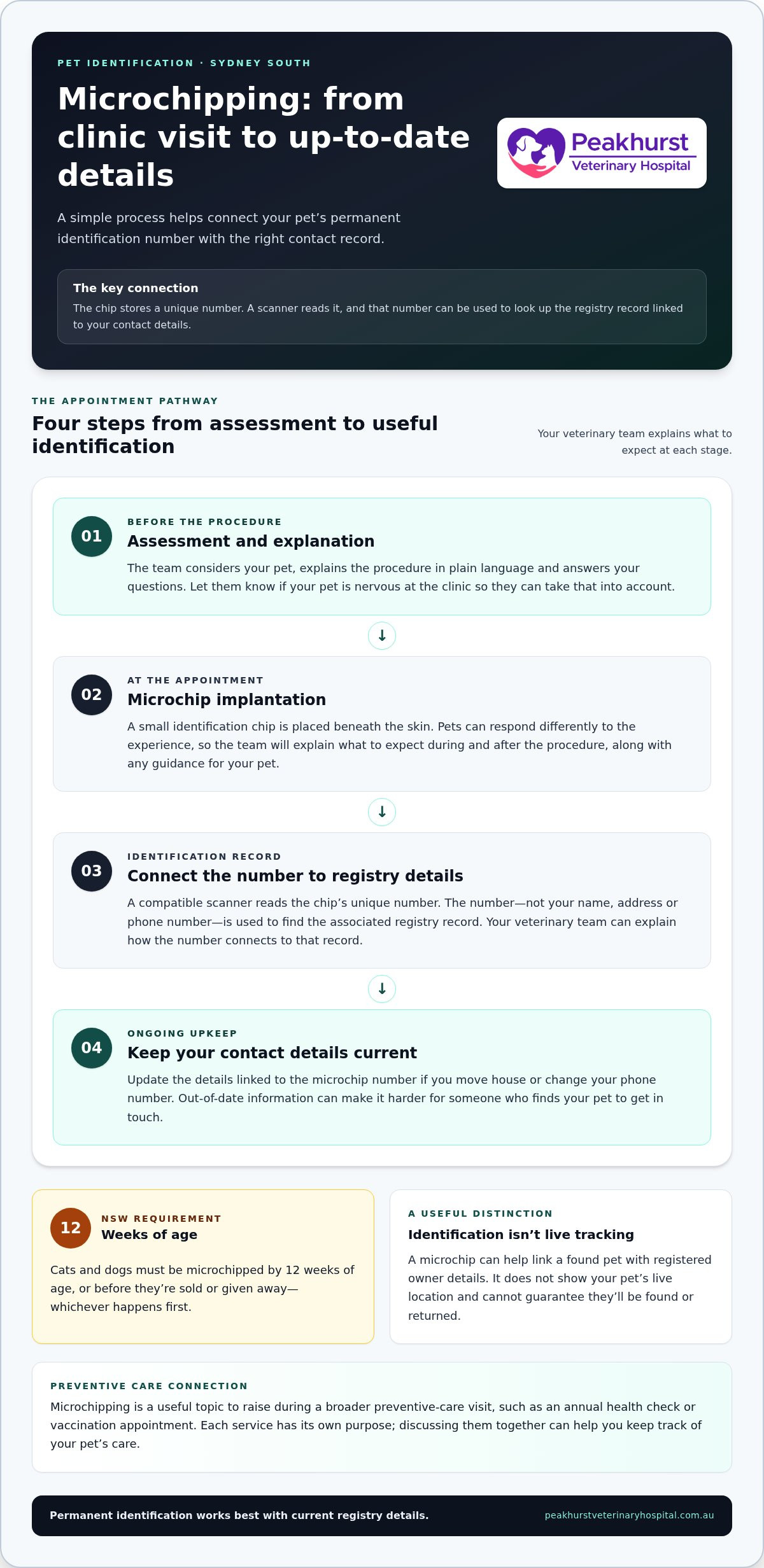
In NSW, microchipping and registration are related but separate steps. A microchip gives your pet a unique identification number; registration records that number and your details with the NSW Pet Registry. Both matter. The chip alone doesn’t tell someone who finds your pet how to contact you.
NSW requires cats and dogs to be microchipped by 12 weeks of age or before they’re sold or given away, whichever happens first. Microchipping meets the identification requirement, but it doesn’t replace registration. Owners also need to register their pet on the NSW Pet Registry and keep the information linked to the chip current.
Registration is a separate, one-time lifetime step. As requirements can change, use current NSW Government guidance for the latest instructions on registration and your responsibilities. Keeping the distinction clear can help you avoid assuming that having a chip means every registry step is complete.
Review your pet’s record through the NSW Pet Registry and follow its instructions to update the information. A new address, changed phone number or change of ownership can affect whether someone is able to reach the right person if the pet is found. Update the record promptly when details change, then check that the information is accurate.
A simple record-keeping checklist can help:
Keep it with your pet’s paperwork and make sure you can find it when needed.
Note that the chip is recorded on the NSW Pet Registry.
Review your phone number and address, and update them when they change.
If you have questions about how the appointment and registry steps fit together, the Peakhurst Veterinary Clinic team can guide you through microchipping and the registration follow-through. For pet microchipping Sydney south owners can arrange care with a local veterinary team that understands the importance of clear records. Arrange pet microchipping in Peakhurst.
Choosing a local clinic for your pet’s microchipping can make the next step feel more manageable. Peakhurst Veterinary Clinic and Small Animal Hospital provides microchipping as part of preventive veterinary care for pets in Peakhurst and across Sydney’s south. The independently operated clinic has served the community since 1972.
It’s natural to have questions, especially if your pet is young, unsettled or new to your family. The veterinary team can explain the procedure in clear language and help you understand the follow-through for your pet’s identification record. That way, you’ll be better prepared for the visit and for keeping the linked details up to date.
A little preparation can help the appointment run smoothly. Bring any existing microchip paperwork or adoption records you have, and have your current contact details ready for the registry record. If you’re unsure whether your pet has already been microchipped, those records can give the team useful context.
Before the procedure, let the veterinary team know about relevant health concerns or anything that may affect how your pet responds to handling. For example, mention if your pet becomes anxious around unfamiliar people or is uncomfortable being held. Sharing this information helps the team understand your pet’s needs and explain what to expect.
• Bring existing microchip paperwork or adoption records, if available.
• Have your current phone number and address ready.
• Share relevant health or handling concerns with the veterinary team.
For pet microchipping Sydney south owners can turn to Peakhurst Veterinary Clinic for local veterinary care and clear guidance. The clinic serves pet owners in Peakhurst, Peakhurst Heights, Riverwood, Padstow Heights, Padstow, Mortdale, Lugarno, Narwee, Oatley, Revesby Heights, Penshurst, Beverly Hills, Alfords Point, Connells Point, Bonnet Bay, Oyster Bay, Como, Roselands, Hurstville Grove and Blakehurst. Microchipping is part of preventive care and an opportunity to discuss your pet’s identification alongside their broader wellbeing. The team can talk you through the procedure and explain registry steps, so you know what to do after the appointment.
Gather the records you have, make a note of any questions and take the next step when you’re ready. Arrange pet microchipping through the clinic website.
A microchip provides permanent identification, while current details on the NSW Pet Registry help connect that identification to you. It isn’t a GPS tracker, so a visible collar tag can offer another practical way for someone to reach you if your pet is found.
If you’re considering pet microchipping Sydney south, Peakhurst Veterinary Clinic and Small Animal Hospital provides this service as part of preventive veterinary care. The clinic serves Peakhurst and surrounding southern Sydney communities, and the veterinary team can explain the procedure and registry follow-through in clear terms.
When you’re ready, arrange pet microchipping with the Peakhurst team. Preparing your records and questions can help make the next step simpler.
Yes. NSW requires cats and dogs to be microchipped by 12 weeks of age or before they’re sold or given away, whichever happens first. This is separate from registration: owners must also register their pet on the NSW Pet Registry. A chip alone doesn’t complete registration. Check current NSW Government guidance for the registration steps and any responsibilities that apply to your pet.
No. A microchip provides a permanent identification number that can be read with a compatible scanner. It doesn’t show your pet’s live location or send tracking updates. If a lost pet is found and scanned, the number can be used to look up the associated registry record. A GPS tracker has a different purpose and may rely on power, connectivity and being worn by your pet.
Your pet may feel brief discomfort during microchip implantation, and their response can vary. The veterinary team can explain what to expect and help keep the experience as calm as possible. Tell them beforehand if your pet is anxious about handling or has a relevant health concern. They can talk you through the procedure and any aftercare guidance for your individual pet.
Update the contact information linked to your pet’s microchip through the NSW Pet Registry, following its current instructions. Review the record if you move, change your phone number or transfer ownership, so the details remain useful if your pet is found. Keep the microchip number and registry information with important pet documents, such as adoption paperwork or veterinary records, for easy reference.
Yes, microchipping can be discussed as part of a veterinary visit for a puppy or kitten. The vet can consider your young pet’s needs and explain the procedure and timing. In NSW, cats and dogs must be microchipped by 12 weeks of age or before they’re sold or given away, whichever comes first. You can also raise questions about the registry record during the visit.
If your pet is missing, contact your local council and let nearby veterinary clinics and animal shelters know. Share a clear description and your pet’s microchip number if you have it, and check that your contact details on the NSW Pet Registry are current. A microchip helps identify a pet when scanned, but it doesn’t track their location or guarantee they’ll be found.
Peakhurst Veterinary Clinic charges a fee for pet microchipping as part of its veterinary services. The clinic serves Peakhurst, Peakhurst Heights, Riverwood, Padstow Heights, Padstow, Mortdale, Lugarno, Narwee, Oatley, Revesby Heights, Penshurst, Beverly Hills, Alfords Point, Connells Point, Bonnet Bay, Oyster Bay, Como, Roselands, Hurstville Grove and Blakehurst. Arrange a microchipping appointment with the clinic.
.png)