The Australian Veterinary Association reports that four in five Australian dogs and cats over three have some level of dental disease. That may be surprising, especially when your pet seems happy and well. If you’re searching for pet dental scaling Sydney services, persistent bad breath, visible tartar or a change in eating are good reasons to discuss your pet’s mouth with a vet. You don’t need to work out the cause alone.
It’s understandable to have questions about anaesthesia or the possibility of extractions. A veterinary assessment helps clarify what your pet’s mouth needs and why. This guide explains when professional scaling may help, how general anaesthesia supports a thorough assessment, and what recovery may involve. You’ll also learn how scaling, polishing and any needed extractions can fit into an individual care plan.
At Peakhurst Veterinary Clinic and Small Animal Hospital, dental care is part of broader support for pets and their families. Clear communication and transparent pricing can help make planning your pet’s care more manageable.
• Learn what professional scaling removes and which signs can help you decide when to arrange a dental assessment.
• See the usual steps of treatment, from the veterinary assessment and care plan through to scaling, polishing and recovery guidance.
• Understand how your pet’s dental findings guide whether routine cleaning or further treatment may be recommended.
• Prepare for the appointment by sharing your pet’s health information and following the clinic’s specific fasting and medication instructions.
• Explore pet dental scaling Sydney care at Peakhurst Veterinary Clinic, an independently operated practice established in 1972.
Noticing tartar or bad breath doesn’t mean you’ve missed something. A veterinary assessment helps identify what’s happening and whether care is appropriate. For pet dental scaling in Sydney, start with an examination so recommendations reflect your pet’s mouth and health, rather than appearance alone.
Professional scaling is the veterinary removal of plaque and hardened tartar from tooth surfaces. It’s one part of dental care, not a complete answer to every oral problem. A vet assesses the whole mouth for concerns that may need attention beyond the deposits you can see.
Professional scaling removes deposits from teeth; brushing at home helps prevent their build-up. Brushing is useful ongoing care, but it doesn’t replace a veterinary assessment or remove established tartar. The vet considers the teeth, gums and other signs in the mouth before recommending an approach.
The amount of visible tartar doesn’t always tell the whole story. An oral concern may not be obvious during a quick look, and visible deposits alone don’t determine which treatment is needed. The Veterinary dentistry overview describes the broader field, including oral disease and dental cleaning. Your vet’s examination helps turn that general information into advice for your individual pet.
Scaling may address deposits, but it can’t be assumed to resolve every problem. If the assessment identifies another concern, your vet can explain what it means and discuss suitable next steps.
Arrange a dental check if you notice changes such as:
• Bad breath that persists or seems unusual for your pet.
• Yellow or brown tartar visible on the teeth.
• Eating differently, dropping food or seeming reluctant to chew.
• Sensitivity around the mouth, or discomfort when the face is touched.
These signs don’t confirm a particular dental problem, but they are useful reasons to seek veterinary advice. Pets can be subtle about discomfort, so a lack of obvious symptoms doesn’t always mean the mouth is trouble-free. Mention changes you’ve noticed, even if they seem small. Your observations at home can help the vet understand what’s different.
If you’re concerned, an assessment is a practical next step for pet owners in Peakhurst, Riverwood and Mortdale. You don’t need to decide in advance whether your pet needs scaling. The examination guides the conversation and helps you understand the options before planning care.
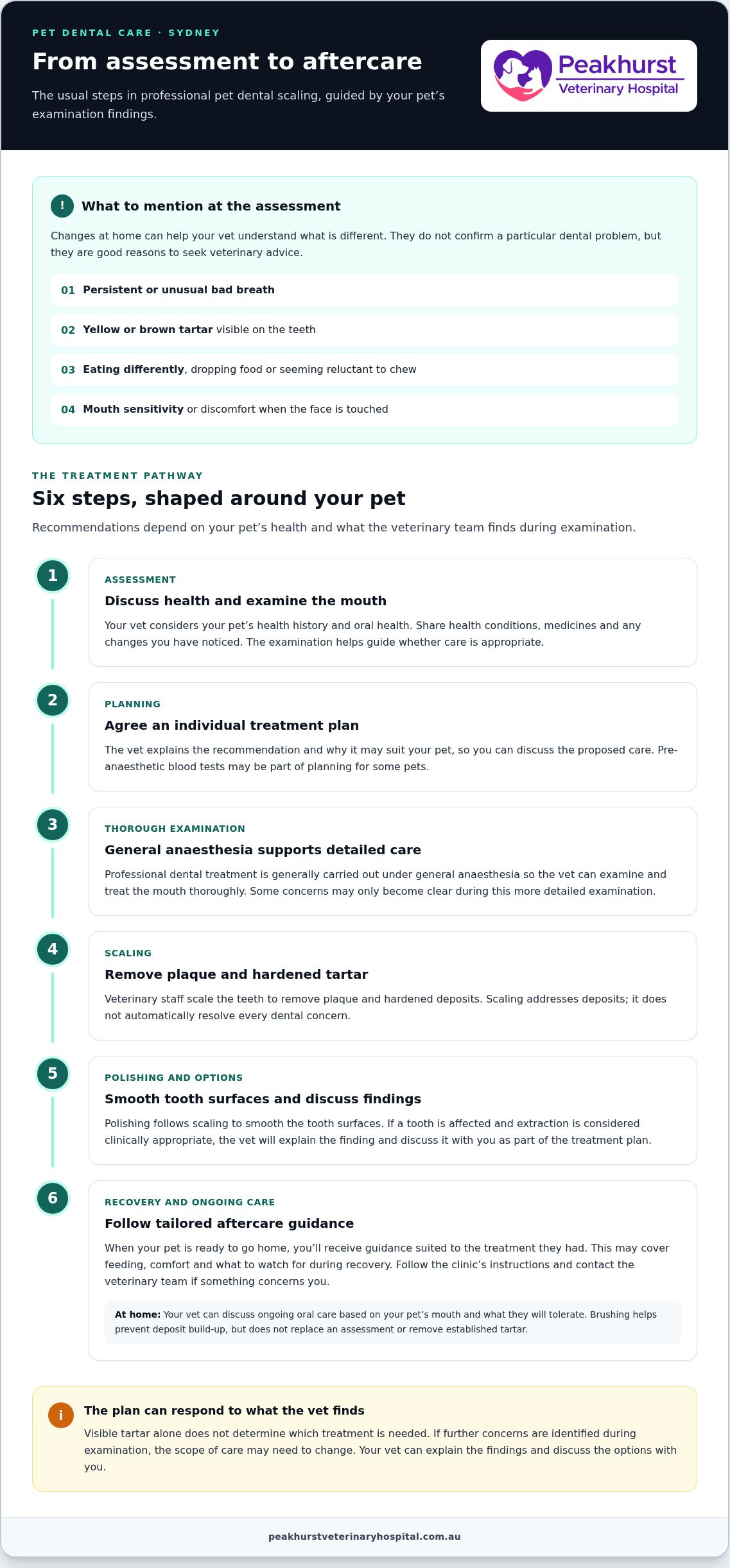
Knowing the usual steps can make a dental appointment feel less uncertain. The process starts with a veterinary assessment and a plan for your pet. If scaling is recommended, treatment includes scaling and polishing, followed by guidance for your pet’s recovery and ongoing care.
The treatment plan depends on your pet’s examination findings. An initial check helps the vet understand your pet’s health and visible dental concerns, though some issues may only become clear during a more detailed examination. If further treatment appears necessary, the vet can explain the findings and discuss the options with you.
Your vet considers your pet’s health history alongside their oral health. Mention health conditions, medicines and changes you’ve noticed, as this information helps shape the plan. The vet will explain the recommendation and why it may suit your pet, giving you the chance to discuss the proposed care before proceeding.
Professional dental treatment is generally carried out under general anaesthesia so the vet can examine and treat the mouth thoroughly. Pre-anaesthetic blood tests may also be part of planning for some pets. The team can explain how these considerations relate to your pet and what to expect. If further dental concerns are identified during the examination, the scope of care may need to change. Clear discussion of the findings and options helps you make informed decisions about the next step.
During scaling, veterinary staff remove plaque and hardened deposits from the teeth. Polishing follows to smooth the tooth surfaces. These steps address deposits but don’t automatically resolve every dental concern. If a tooth is affected and an extraction is considered clinically appropriate, the vet will discuss it with you as part of the treatment plan.
When your pet is ready to go home, you’ll receive aftercare guidance tailored to the treatment they received. This may include advice on feeding, comfort and what to watch for during recovery. Follow the clinic’s instructions, and get in touch with the veterinary team if something about your pet’s recovery concerns you.
Your vet can also discuss ongoing care and ways to support your pet’s oral health at home, based on their mouth and what they’ll tolerate. For general information about products assessed for helping control plaque or tartar, the Veterinary Oral Health Council (VOHC) approved products list is one resource to explore with your vet.
Peakhurst Veterinary Clinic and Small Animal Hospital provides dental care including scaling, polishing and extractions, with treatment planning shaped around each pet. You can book a veterinary dental assessment and discuss the next steps with the team.
Seeing tartar can prompt a sensible question: is a routine clean enough, or might something else be going on? The answer comes from the veterinary assessment, not just the appearance of a tooth. A photograph or quick glance can’t show everything the vet needs to consider, so don’t diagnose dental disease or decide on treatment from appearance alone.
The appropriate dental plan depends on examination findings and your pet’s individual needs. The recommendation may be straightforward, or the vet may discuss other care if the assessment identifies a concern. The comparison below is a general guide, not a diagnosis.
| What the assessment suggests | What may be discussed | What guides the recommendation |
|---|---|---|
| Deposits on the teeth, with no other concern identified in the assessment | Routine scaling to remove deposits, followed by polishing | The vet’s examination and your pet’s overall health |
| A suspected dental problem, such as a tooth or gum concern | A closer assessment and an explanation of possible next steps | What the vet finds, rather than tartar alone |
| A finding that may need care beyond cleaning | Discussion of additional treatment, which may include an extraction | Whether the treatment is clinically suitable for your pet |
Visible deposits can be a reason to arrange a dental assessment, but they don’t automatically mean scaling is the only care needed. Your vet considers your pet’s mouth and health before recommending treatment. They can explain what routine scaling involves, what they’ve found and what they propose before treatment proceeds. There isn’t one schedule that suits every pet.
If the assessment reveals a concern beyond deposits, the vet may discuss additional care. Polishing is part of routine cleaning, while an extraction may be considered if a tooth needs to be removed. Neither is an automatic step. The vet will explain the findings and why an option may suit your pet, so you can understand the recommendation without having to interpret it alone.
It’s understandable to feel uneasy about general anaesthesia. A thorough veterinary dental procedure is typically performed under anaesthesia so the team can examine and treat the mouth. Your vet can explain how this applies to your pet and outline the planned care. When comparing pet dental scaling in Sydney, focus on understanding the findings, proposed treatment and any circumstances that could change the plan.
At Peakhurst Veterinary Clinic and Small Animal Hospital, dental care includes scaling, polishing and tooth extractions. Clear communication and transparent pricing help owners understand the proposed scope of care and plan with greater confidence.
A little preparation can make the appointment and journey home more manageable for both of you. Follow the instructions your veterinary team gives you for your pet’s procedure rather than relying on general advice. This is especially important for fasting and regular medicines, as instructions can differ between pets and treatment plans.
Make a note of your pet’s current health and anything you’d like the vet to know. Sharing these details helps the team plan care around your companion, including if you’ve noticed a previous reaction or concern related to anaesthesia.
• Write down current medications, health conditions and any previous anaesthetic concerns.
• Follow the clinic’s specific directions about food, water and when to arrive. If anything is unclear, contact the treating team before changing your pet’s routine.
• Plan how you’ll bring your pet home, and set up a comfortable, quiet place where they can rest as directed.
• Keep the clinic’s discharge instructions handy so you can refer to them once you’re home.
These steps help you arrive prepared without having to guess what’s safe for your pet. When organising pet dental scaling in Sydney, share any recent changes in your pet’s health with the veterinary team too.
Your pet may need time to rest after their procedure. Follow the discharge advice about activity, food, water and medication. The guidance will reflect the care they received and their individual needs. A pet who has had additional dental treatment may have different instructions from one who has had routine scaling and polishing alone.
Quiet time and close observation can help you notice how your pet is doing. Follow the clinic’s recommendations for checking on them, and don’t assume every pet will have the same appetite or energy straight after treatment. If you’re unsure whether a behaviour is expected, the treating veterinary team can advise based on your pet’s procedure.
Keep an eye on your pet’s comfort, activity and willingness to eat in line with the discharge instructions.
Get in touch if recovery seems unexpected, your pet’s discomfort appears to worsen, or you’re worried about a change in their condition.
You don’t need to work through concerns on your own. Pet-specific advice can help you understand what to do next, whether your question is about medication, eating or settling at home. A calm plan for the trip home and a quiet resting space can also make the first part of recovery easier for your companion.
To arrange a dental appointment and discuss preparation for your pet, book a dental assessment with Peakhurst Veterinary Clinic and Small Animal Hospital.
Choosing where to seek dental care can feel like a big decision, especially if you’re unsure whether your pet needs a routine clean or further treatment. Peakhurst Veterinary Clinic and Small Animal Hospital is an independently operated local practice established in 1972. The team provides dental care for pets and aims to make treatment planning clear and individual to each patient.
Care includes scaling to remove deposits, polishing and tooth extractions when appropriate. Pre-anaesthetic blood tests are also part of the clinic’s care. The vet assesses your pet and explains suitable options, so you can understand what is recommended and why. The clinic’s transparent pricing helps you discuss costs in relation to the proposed care.
For families in Peakhurst, Peakhurst Heights, Riverwood and Mortdale, a local veterinary team offers a place to discuss dental findings and care choices. Share what you’ve noticed at home, hear what the assessment suggests and talk through a plan that considers your pet’s health and needs. If further care is recommended, the team can explain the proposed scope before treatment proceeds.
Dental concerns may also come up during a general health visit. Routine examinations give you an opportunity to discuss changes in your pet’s wellbeing, including anything you’ve noticed about their mouth. The annual pet health checks guide explains how these appointments support ongoing conversations about your companion’s health.
If you’ve noticed tartar, changes in eating or another concern, you don’t need to decide for yourself whether scaling is right. An assessment gives the vet the chance to examine your pet and explain options based on the findings. You can also talk through questions about anaesthesia, pre-anaesthetic blood tests and possible additional treatment to better understand the plan.
Online booking offers a straightforward way to arrange an appointment. Before the visit, jot down any changes you’ve seen and bring details of your pet’s current medicines or relevant health history. These observations can help the veterinary team understand what prompted your concern and make the discussion more useful for your family.
Peakhurst Veterinary Clinic provides pet dental scaling in Sydney, including assessment, treatment planning and dental care in a neighbourhood practice. The clinic serves pet owners in Peakhurst, Peakhurst Heights, Riverwood, Padstow Heights, Padstow, Mortdale, Lugarno, Narwee, Oatley, Revesby Heights, Penshurst, Beverly Hills, Alfords Point, Connells Point, Bonnet Bay, Oyster Bay, Como, Roselands, Hurstville Grove and Blakehurst. If you’re ready to discuss your pet’s teeth or arrange an assessment, book an appointment with Peakhurst Veterinary Clinic.
You don’t have to work out the right treatment on your own. Share what you’ve noticed and what concerns you. Your veterinary team can help make sense of it and talk you through the choices. Even small observations, such as a change in how your pet chews or behaves around food, can help start a useful conversation.
If you’re considering pet dental scaling in Sydney, note your questions before arranging an appointment. You might want to discuss your pet’s comfort, what the proposed care involves or how to prepare for the day. Having those questions ready can help you feel more settled and involved in decisions about your companion’s wellbeing.
Arrange a dental assessment for your pet with Peakhurst Veterinary Clinic and Small Animal Hospital. A conversation with the team can help you understand the next step and feel more confident supporting your pet.
There isn’t one fixed fee for pet dental scaling in Sydney, as the total depends on your pet’s examination and the care recommended. Before agreeing to treatment, ask for an estimate that explains what’s included and which additional procedures could affect the total. If findings change the proposed care, ask the vet to explain any revised estimate before proceeding. Peakhurst Veterinary Clinic aims to provide transparent pricing, so you can make decisions with a clearer understanding of costs.
Professional scaling commonly involves general anaesthesia, which allows the veterinary team to work on the teeth while your pet remains still. It’s natural to have questions about this. Your vet can consider your pet’s health history, discuss relevant checks such as pre-anaesthetic blood tests, and explain the plan for your individual animal. Share any past reactions to anaesthesia or medicines, including those during treatment elsewhere, so the team can take that history into account.
Yes, cats can have veterinary dental care, including professional cleaning when the vet recommends it. Cats may show a concern through subtle changes rather than an obvious sign. Mention if your cat starts favouring one side while chewing, avoids a familiar food or grooms less than usual. Don’t use human toothpaste or mouth rinses, as these aren’t made for cats. Ask your veterinary team which home-care approach is suitable for your cat.
There’s no single interval that’s right for every pet. Timing can vary with your pet’s dental condition, general health and how their mouth changes over time. Ask your vet when they’d like to review your companion’s teeth, then follow that advice rather than relying on a calendar schedule found online. If you spot a new change between planned visits, such as reduced interest in food, arrange advice sooner instead of waiting for the next routine check.
No. Brushing is useful home care, but it doesn’t remove established tartar like veterinary scaling can. If your pet is new to brushing, keep the first attempts brief: let them sniff the brush, then gently touch the outside of a tooth if they’re comfortable. Stop if they resist or seem uncomfortable, and ask your vet about a gradual approach. Use toothpaste made for pets, not human toothpaste, and let your veterinary team guide product choices.
Arrange a veterinary assessment if you notice persistent bad breath or visible tartar, particularly alongside a change in eating or behaviour. Avoid scraping deposits yourself, as this can hurt your pet and won’t tell you whether there’s another concern. Before the appointment, note when you first noticed the change and whether it comes and goes. That simple record can help the vet understand what’s been happening and decide what to examine.
No. Cats can also need professional dental assessment and care, and the appropriate approach depends on the individual animal. Peakhurst Veterinary Clinic and Small Animal Hospital provides care for cats, dogs and other small animals. Its local community includes Peakhurst, Peakhurst Heights, Riverwood, Padstow Heights, Padstow, Mortdale, Lugarno, Narwee, Oatley, Revesby Heights, Penshurst, Beverly Hills, Alfords Point, Connells Point, Bonnet Bay, Oyster Bay, Como, Roselands, Hurstville Grove and Blakehurst.

.png)