What if anaesthesia is what allows your dog’s dental clean to be thorough, not simply more comfortable? It’s natural to feel uneasy about anaesthesia, especially when your dog is part of the family. Dog teeth cleaning under anaesthetic can raise questions about risks, preparation and what happens while your companion is asleep.
A professional dental clean needs more than a quick look at visible tartar. General anaesthesia allows the veterinary team to examine and clean below the gumline, where dental problems can be difficult to see. An awake scale may make teeth look cleaner, but it can’t provide the same opportunity for a complete assessment and treatment.
Every dog’s health is different, so the decision should be made with your veterinarian after considering your dog’s individual needs. This guide explains what a veterinary dental procedure involves, how pre-anaesthetic checks and blood tests can inform care, and what to discuss about monitoring and recovery. With clear information, you can feel more prepared to make a considered decision for your dog.
• Learn the usual stages of a veterinary dental visit, from the initial health assessment through to supervised recovery.
• Understand what dog teeth cleaning under anaesthetic can assess, and how it differs from awake scaling.
• Prepare by sharing your dog’s health history, current medicines and any previous concerns about anaesthesia.
• Follow the clinic’s specific pre-appointment instructions, including guidance on food and water, rather than relying on general online advice.
• Discover how Peakhurst Veterinary Clinic and Small Animal Hospital’s dental care and pre-anaesthetic blood tests can support a considered conversation about your dog’s needs.
It’s understandable to feel concerned when your much-loved dog needs an anaesthetic. Knowing why it’s recommended can make the decision feel less daunting. A veterinary dental clean is more than polishing the tooth surfaces you can see. A thorough assessment may need to examine the gums and the areas beneath their edges, where problems can be difficult to spot at home.
General anaesthesia is a controlled state in which a dog is unconscious and unaware during a procedure. A veterinary team manages the anaesthetic and monitors the dog while the work is carried out. Sedation is different: it can make an animal calmer or drowsier, but it isn’t the same as general anaesthesia and doesn’t necessarily provide the same level of stillness or awareness.
The veterinarian considers each dog’s health and circumstances when deciding whether and how to proceed. A pre-anaesthetic assessment, and blood testing where advised, can help inform that discussion. Anaesthesia has risks, so talk through your dog’s health and your concerns with the veterinarian rather than assuming one approach suits every patient.
Even a gentle dog can move their head or mouth unexpectedly. Staying still helps the veterinary team examine each part of the mouth carefully and use dental instruments with precision. It also allows the team to assess and clean tooth surfaces below the gumline, not just remove visible build-up from the outside of the teeth.
This distinction matters. Tartar on visible surfaces may be only part of the picture, while the gums and tooth-supporting tissues also need attention during a thorough dental assessment. An awake scale can make teeth look cleaner, but it can’t provide the same access for examination and cleaning below the gumline. It shouldn’t be treated as equivalent to a veterinary dental procedure under general anaesthesia.
Anaesthesia makes a careful examination and professional cleaning possible, but it doesn’t remove every risk or guarantee a particular result. Your veterinarian can explain how the proposed approach relates to your dog’s health and what the procedure may involve. For a wider overview, the Veterinary Dentistry Overview introduces the field and the role of oral health in animal care.
If you’d like to understand how dental scaling fits into veterinary treatment more broadly, Pet Dental Scaling in Sydney: A Caring Guide to Your Pet’s Treatment offers a helpful companion guide. Use it as background for a conversation about your own dog’s needs.
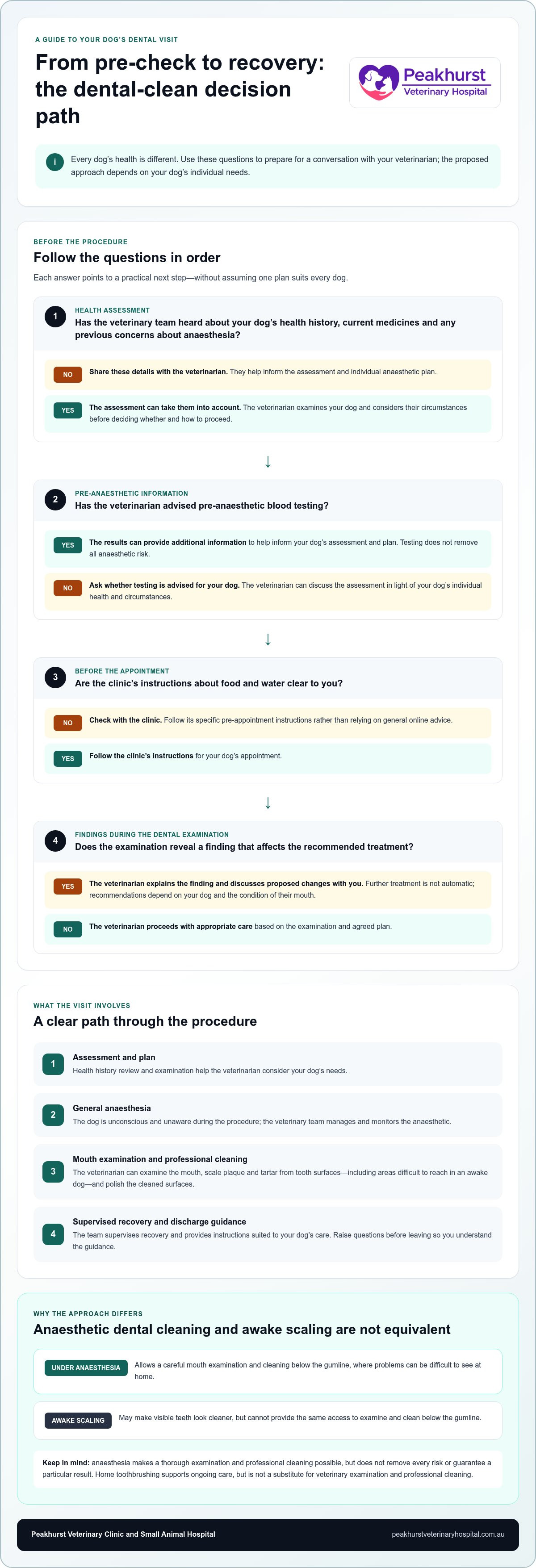
Knowing the broad sequence can make the day feel more manageable. The exact approach depends on your dog’s health and what the veterinarian finds, so the team will explain the plan and discuss any changes with you.
In brief, a typical dental visit involves a health assessment, an individual anaesthetic plan, a mouth examination and professional cleaning, followed by supervised recovery and discharge guidance.
Before the procedure, the veterinarian reviews your dog’s health history and examines them to help assess their needs. Share relevant changes in their health, current medicines and any previous concerns about anaesthesia. Peakhurst Veterinary Clinic and Small Animal Hospital provides pre-anaesthetic blood testing, which can give the veterinarian additional information for the assessment. Testing doesn’t remove all anaesthetic risk, but it can help inform an individual plan.
An annual health check is another opportunity to discuss changes in your dog’s health and oral care. For broader guidance, you can also read Annual Pet Health Checks in Sydney: Guide for Owners.
Once the dog is under general anaesthesia, the veterinarian can examine the mouth more closely and decide what treatment is appropriate. Professional scaling removes built-up plaque and tartar from tooth surfaces, including areas that are difficult to reach in an awake dog. Polishing smooths the cleaned surfaces. Home toothbrushing supports ongoing care, but it isn’t a substitute for a veterinary examination and professional cleaning.
The examination may reveal findings that affect the recommended treatment. The veterinarian can explain what they’ve found and discuss any proposed changes to the plan with you. Further treatment isn’t automatic; recommendations depend on the individual dog and the condition of their mouth.
After the procedure, the veterinary team supervises your dog’s recovery and provides instructions suited to their care. These may cover what to expect at home and how to follow advice for your dog’s individual case. Follow the clinic’s discharge guidance, and raise questions before you leave so you feel prepared to care for your dog afterwards.
The AAHA Dental Care Guidelines describe the role of anaesthesia in comprehensive dental care for dogs and cats. Peakhurst Veterinary Clinic and Small Animal Hospital provides veterinary dental care and pre-anaesthetic blood tests. If you’re in Peakhurst or nearby southern Sydney, learn about the clinic’s dental care as you consider the next step for your dog.
It can be confusing to hear about different ways to clean a dog’s teeth, especially if you’ve tried brushing, dental chews or an awake scaling service. There’s no need to feel judged. Home care can be valuable, and an awake approach may remove some visible build-up. The key difference is what each method is designed to assess and reach.
Purpose
Veterinary cleaning under general anaesthesia: A dental procedure that allows the veterinarian to examine the mouth and carry out professional cleaning as appropriate.
Awake cleaning: May focus on visible tooth surfaces and removing accessible deposits, depending on the approach used.
Access
Veterinary cleaning under general anaesthesia: Allows the veterinary team to assess and clean below the gumline, where problems may not be visible from the outside.
Awake cleaning: Access can be limited by what the conscious dog will comfortably allow. It may not provide the same opportunity to examine or clean beneath the gumline.
Stillness
Veterinary cleaning under general anaesthesia: The dog remains still and unaware during the procedure, supporting a more detailed examination and careful use of dental instruments.
Awake cleaning: A dog may move, pull away or resist handling, which can limit how thoroughly the mouth can be examined or cleaned.
What can be assessed?
Veterinary cleaning under general anaesthesia: The veterinarian can examine more of the mouth and use their findings to guide recommendations for that dog.
Awake cleaning: Clean-looking visible surfaces alone don’t establish the health of the gums or tissues below them.
Generally, awake cleaning shouldn’t be considered a substitute for a veterinary dental assessment and procedure. A conscious dog may not tolerate the handling needed for a close examination, particularly around sore or sensitive areas. That doesn’t mean every awake service is the same, or that every dog will respond alike. It means the purpose and limits of the approach matter when deciding what care your dog needs.
Home toothbrushing, when your dog accepts it, can help with ongoing oral care. Dental chews may also form part of a home-care routine. Neither replaces a veterinarian’s assessment, which considers your dog’s mouth and individual health.
Visible tartar removal can improve how a tooth surface looks, but appearance alone doesn’t show whether the gumline and supporting tissues are healthy. Problems in those areas may not be obvious while your dog is awake. For dog teeth cleaning under anaesthetic, the veterinarian recommends care based on the examination and your dog’s needs, rather than assuming every mouth requires the same treatment.
A little preparation can help you feel more settled and give the veterinary team useful information about your dog. Before dog teeth cleaning under anaesthetic, discuss your dog’s health, the appointment arrangements and any concerns you’d like addressed. You don’t need to have every answer ready; sharing what you know is a helpful start.
Give the veterinarian a clear picture of your dog’s health and usual routine. Mention known diagnoses, current medicines and supplements, allergies, and any recent changes in eating, drinking or behaviour. Previous anaesthetic experiences matter too, including anything that seemed minor at the time. This information helps the team consider your dog as an individual.
You might find it helpful to note down:
• Health conditions, recent symptoms or changes you’ve noticed.
• All medicines and supplements, including how and when your dog takes them.
• Known allergies or past reactions to medicines or procedures.
• Previous anaesthetics and any concerns you remember from those visits.
• Questions about pre-anaesthetic blood tests and how your dog’s health informs the plan.
Peakhurst Veterinary Clinic and Small Animal Hospital offers pre-anaesthetic blood tests. Discuss with the veterinarian how testing may contribute to your dog’s individual assessment and what the results can help inform.
Use the clinic’s instructions as your guide. Food, water and regular medicines may need specific directions before an anaesthetic, so don’t rely on general online fasting advice or make changes without guidance from the veterinary team. If an instruction isn’t clear, ask the clinic before the appointment rather than guessing.
• Follow the supplied directions for food, water and medicines exactly.
• Bring relevant health or treatment records if they’re not already available to the team.
• Make sure the clinic has your current phone number and can reach you during the appointment.
• Clarify drop-off and collection arrangements, including when you should expect an update.
• Ask what recovery guidance you’ll receive and how to get in touch if you have a concern after discharge.
Before leaving your dog, make sure you understand the next steps. At collection, ask for clear home-care instructions and written guidance if available. It can help to know what changes to expect, how to follow the veterinarian’s recommendations and which contact route to use if questions arise once you’re home.
If you’re in Peakhurst or nearby southern Sydney and would like to talk through your dog’s dental care, arrange a dental care discussion with the Peakhurst team.
Deciding whether your dog needs a dental procedure is a conversation, not a choice you have to make alone. A veterinarian can assess your dog’s oral health, consider their individual health history and explain what a proposed procedure involves. If you’re weighing up dog teeth cleaning under anaesthetic, take time to understand the recommendation and raise your concerns.
A clear discussion can help you feel more confident about the plan. You might ask:
• What did the examination suggest about my dog’s teeth and gums?
• What would the proposed dental procedure involve, and why is it recommended?
• How will my dog’s health history inform the anaesthetic assessment?
• Could pre-anaesthetic blood testing help inform the assessment?
• How will you share findings or updates, and what aftercare instructions should I expect?
These questions help you understand why treatment is recommended and how the plan relates to your dog. The veterinarian can explain what’s known before the procedure and how any findings may inform further recommendations.
Consider arranging an assessment if you notice changes such as reluctance to eat, chewing differently, or signs that your dog’s mouth may be uncomfortable. These changes can have different causes, so one sign alone, or a photograph of the teeth, can’t confirm a dental problem. A veterinary examination gives the team a chance to assess your dog and discuss an appropriate next step.
Peakhurst Veterinary Clinic and Small Animal Hospital provides veterinary dental care, including dental scaling, as well as pre-anaesthetic blood tests. The independently operated practice has served the community since 1972. That history offers local context, while the right recommendation for your dog still depends on their health and examination.
For a broader explanation of treatment, Pet Dental Scaling in Sydney: A Caring Guide to Your Pet’s Treatment provides helpful context alongside a conversation with your veterinarian. The clinic serves pet owners in Peakhurst, Peakhurst Heights, Riverwood, Padstow Heights, Padstow, Mortdale, Lugarno, Narwee, Oatley, Revesby Heights, Penshurst, Beverly Hills, Alfords Point, Connells Point, Bonnet Bay, Oyster Bay, Como, Roselands, Hurstville Grove and Blakehurst. If you have questions about your dog’s teeth, arrange a dental appointment with the Peakhurst team. A calm discussion is a practical first step.
Deciding about a dental procedure can feel like a lot to carry, especially when anaesthesia is part of the discussion. You don’t need to settle every concern on your own or make a decision before you understand the options. A calm conversation with your veterinarian can help you weigh your dog’s oral health alongside their wider health and feel clearer about what comes next.
If you’re considering dog teeth cleaning under anaesthetic, jot down what you’ve noticed and any questions you’d like answered. You might ask how the recommendation relates to your dog, what the assessment involves and what information could help you make an informed choice. Taking those questions along can make the discussion more manageable.
Peakhurst Veterinary Clinic and Small Animal Hospital provides veterinary dental care and pre-anaesthetic blood tests for dogs. The team can talk through your concerns and help you consider a suitable next step for your companion.
Talk with our caring veterinary team about your dog’s dental health. A thoughtful conversation is a positive place to begin.
For a thorough veterinary dental examination and cleaning, general anaesthesia is commonly recommended because it allows the veterinarian to assess the mouth and work carefully. This is different from cosmetic removal of deposits visible on the teeth. The right plan still depends on your dog’s health, temperament and needs. Discuss the proposed procedure, possible benefits and risks with your veterinarian so you can make an informed decision together.
Some visible deposits may be removed while a dog is awake, but awake scaling isn’t equivalent to a veterinary dental procedure under general anaesthesia. A conscious dog may move or resist, limiting how fully the mouth can be examined and which tooth surfaces can be reached. Home brushing can support day-to-day care, too. Ask your dog’s veterinarian what each option can and can’t assess, and which purpose best fits your dog.
Being older doesn’t, by itself, determine whether a dog can have dental treatment under anaesthesia. The veterinarian considers the dog’s health history and examination, and may discuss pre-anaesthetic blood testing as part of an individual assessment. These steps help inform the plan, but can’t guarantee zero risk. Share any new symptoms, diagnoses and medicines, and ask how your dog’s health affects the recommendation before deciding how to proceed.
There isn’t one recovery timeline that suits every dog. It can vary with your dog’s health, the procedure and the veterinary plan. Follow the discharge instructions for your dog, including any guidance about rest, food or medicines. Don’t change medicines without veterinary advice. If recovery seems different from what the team described, or you’re worried about your dog, contact the clinic using the instructions provided at discharge.
Tell the veterinary team about the health problem before the appointment so the veterinarian can consider it alongside your dog’s history and current condition. They may discuss further assessment, testing, timing or changes to the proposed plan, depending on the individual case. This doesn’t automatically mean treatment will go ahead or be postponed. Bring relevant details about diagnoses, medicines and recent changes, and raise anything that could affect your dog’s care.
The total depends on your dog’s examination and the care the veterinarian recommends, so a general figure may not reflect your dog’s needs. Before proceeding, ask what the proposed treatment includes, how any additional findings could affect the plan, and how fees will be explained. This can help you understand the expected costs and make a considered decision. Peakhurst Veterinary Clinic and Small Animal Hospital serves owners in Peakhurst, Peakhurst Heights, Riverwood, Padstow Heights, Padstow, Mortdale, Lugarno, Narwee, Oatley, Revesby Heights, Penshurst, Beverly Hills, Alfords Point, Connells Point, Bonnet Bay, Oyster Bay, Como, Roselands, Hurstville Grove and Blakehurst.

.png)