Could a stiff morning or skipped jump be among the arthritis in dogs signs? Changes can creep in gradually, so it’s easy to put them down to age or a passing sore leg. Clues aren’t always an obvious limp: they may show up in how your dog moves, behaves and manages everyday routines.
It’s understandable to feel unsure about what you’re seeing or how soon to ask for help. A change doesn’t confirm arthritis, but noting when it happens and whether it’s becoming more frequent gives your vet useful context. You know your dog’s usual habits, and those observations matter.
This article explains movement and behaviour changes to watch for, what details to record and when a veterinary assessment may help. We’ll also outline what an examination can involve, so you can discuss your concerns with confidence. If you’re in Peakhurst or nearby, Peakhurst Veterinary Clinic and Small Animal Hospital can assess changes in your dog’s wellbeing.
• Arthritis in dogs signs can be subtle. Look for patterns in how your dog moves and behaves rather than relying on one obvious limp.
• Notice whether getting up, using stairs or enjoying familiar activities seems different. These changes don’t confirm arthritis.
• Keep a simple record of when changes happen, which activities are affected and whether they recur.
• Share your observations with your vet to help explain what’s changed in your dog’s everyday life.
• A veterinary examination in Peakhurst can help investigate changes in your dog’s comfort and movement.
Gradual changes in a much-loved dog can be difficult to spot. Your companion may still greet you at the door, enjoy a sniff around the yard or want to be near the family, while quietly adjusting how they move. It’s natural to wonder whether they’re simply slowing down or whether everyday movement has become less comfortable.
Arthritis is a condition involving changes in the joints that can affect a dog’s comfort and movement. The term often refers to osteoarthritis, where changes in a joint can develop over time. The Osteoarthritis in dogs overview offers general background, but a veterinarian can assess what may be happening for an individual dog.
The arthritis in dogs signs you notice can vary. Some dogs show an obvious limp; others appear stiff after resting or become less keen to do familiar things. These clues can have different causes, so they’re useful observations, not a diagnosis. A veterinary examination considers your dog’s history and movement alongside other findings to investigate possible explanations.
Think about the context: does your dog move differently only after a long rest, or also during an ordinary walk? Are they taking longer to settle or choosing a different route around the house? A pattern across everyday situations can be more useful than one isolated moment. There’s no need to reach a conclusion at home.
Dogs can adapt their movements and routines gradually. A dog who once jumped onto the couch might wait for a lift, while one who loved a game of fetch may stop sooner. Small shifts can blend into daily life. A noticeable limp is easier to recognise, but changes to familiar activities are also worth mentioning to your vet.
Age alone doesn’t mean a dog has arthritis, and slowing down can have other explanations. Compare your dog’s current habits with what’s usual for them, rather than judging them against other dogs. If a change is new or keeps returning, an examination can help explore it.
Joint discomfort can become more relevant as dogs age, but arthritis isn’t inevitable in older dogs. Younger dogs can also have movement changes that deserve attention. A dog’s individual health history and build may influence their risk, but these factors can’t tell you on their own whether arthritis is present.
Pay attention to what has changed for your own dog, whatever their age or size. Note whether they’re moving differently, avoiding an activity they used to enjoy or seeming less comfortable in a familiar situation. If the change persists or concerns you, share your observations with a veterinarian. At Peakhurst Veterinary Clinic and Small Animal Hospital, a clinical examination can help investigate changes in your dog’s comfort and movement.
Movement changes can be easy to miss when they happen little by little. Your dog might still get around the house but take longer to stand after a nap or pause before getting onto a familiar spot. A brief change can have many explanations. Notice whether it keeps happening, affects several activities or alters your dog’s usual day.
Common movement changes can include stiffness after rest, difficulty rising or using stairs, a slower walk, less interest in play and occasional limping. These are clues to record, not proof of arthritis. As the Understanding Osteoarthritis in Dogs guide from the American College of Veterinary Surgeons explains, dogs with osteoarthritis may show changes in mobility and activity. Similar signs can also have other causes.
Watch how your dog manages familiar transitions. They may push up more slowly from their bed, shift position several times before lying down or hesitate at steps they used to climb without pausing. A dog who once hopped into the car or onto the couch might now wait, reach up without jumping or avoid the attempt altogether.
Make a note of what you see and when it happens. For example, does your dog seem stiff after resting, or hesitate each time they meet the stairs? Don’t encourage them to jump or climb to test their movement. Observing their normal routine gives your veterinarian useful details without putting extra strain on them.
On a walk, your dog might lag behind, move at a different pace or seem ready to turn home sooner than usual. At home, they may be less interested in a game, take more breaks or avoid a favourite activity. Some dogs limp steadily or from time to time, while others don’t show an obvious limp. Its absence doesn’t rule arthritis in or out.
Look at the whole pattern: which activity changed, whether it happens on every walk and whether your dog moves differently after resting. A short video of a change that happens naturally may help your vet understand what you’ve noticed. Don’t make your dog repeat a movement for the camera. If you’re seeing a limp, our guide to what to do when a dog is limping has advice on next steps.
If movement changes keep returning or affect familiar routines, a veterinary examination can help investigate the cause. A vet at Peakhurst can consider your dog’s history and movement, then discuss what support may be appropriate. You don’t need to be certain it’s arthritis before seeking advice. Sharing what you’ve noticed is a useful place to start.
A change in your dog’s behaviour can sometimes occur alongside a change in how they move. Perhaps they still come over when you arrive home but no longer follow you from room to room. They might settle in a different spot or seem less interested in a familiar game. These shifts can be subtle and don’t establish that arthritis is the cause.
Look for a pattern rather than reading too much into one quiet day. Has your dog’s usual routine changed repeatedly? Does a behaviour occur alongside a particular activity or after a period of rest? Noticing how a change fits into your dog’s day can help you describe it clearly to a veterinarian. Behaviour can change for many reasons, so context matters.
Think about what’s normal for your dog. A usually playful dog might start leaving a game sooner, while a companion who follows the family around may choose to stay curled up. You might notice a change in where or how they rest, or less interest in greeting people or joining household routines.
Compare today’s habits with your dog’s own usual behaviour, not another dog’s. Consider whether the change happens once or keeps appearing in familiar situations. A single off day can have many explanations; a repeated change is more useful to share with your vet, especially if you’ve also noticed altered movement.
Some dogs may seem unsettled, more irritable than usual or less comfortable with handling. You might notice a change when helping with grooming, putting on a harness or patting an area they’ve previously been happy to have touched. These responses aren’t specific to arthritis, but they’re worth mentioning if they’re new or recurring.
Also note if your dog repeatedly pays attention to one part of their body, such as licking or grooming it more than usual. This can have different explanations, so treat it as an observation rather than a diagnosis. Don’t press, bend or manipulate an area to see whether it hurts. That could cause discomfort and won’t reliably explain what’s going on.
To distinguish an isolated change from a developing pattern, ask: what’s different, in which familiar situation, and has it happened again? You don’t need to interpret the answer. A brief note about the behaviour and what was happening at the time gives your veterinarian a clearer picture than a label such as “seems grumpy”.
If changes in your dog’s social habits, rest or response to touch persist, or appear alongside movement changes, discuss them with your vet. An examination can help investigate possible causes and put those everyday observations into context. You know your dog’s personality best, and sharing what feels different is a thoughtful first step.
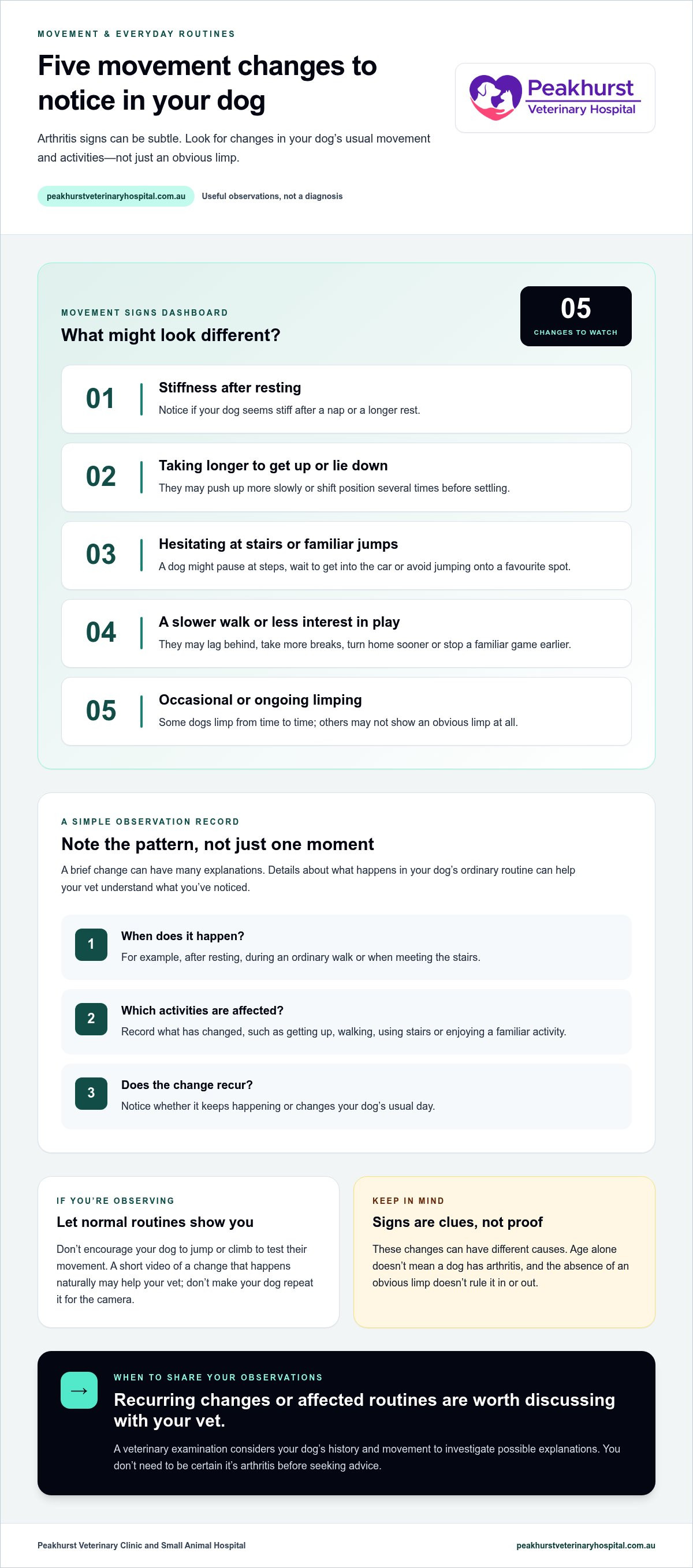
Simple notes can turn a general worry into useful information for your veterinarian. You don’t need to decide whether the changes are arthritis in dogs signs or assess your dog at home. Record what you notice in their normal routine, without asking them to repeat a movement or activity.
Useful notes describe what changed, when it happened, which activity was affected and whether it happened again. A short entry soon after you spot a change is often easier than relying on memory later.
Use plain, factual words such as “paused before the steps” or “took longer to stand after resting”. Avoid guessing at the cause.
Note the activity and timing, such as after a nap, during a walk or while settling down for the night.
Record whether the change passed quickly or continued through part of the activity.
Note if it happens again, and whether it appears during active periods, after rest or in more than one familiar situation.
Keep your dog’s routine as normal and comfortable as possible while you observe. Don’t add extra walks, stairs or jumping to test for pain, and don’t change exercise based on a suspected diagnosis without veterinary advice. If your dog’s usual activity changes naturally, record what was different and how they responded. These details help your vet understand the concern alongside your dog’s history and examination.
If a movement change occurs naturally and it’s safe to do so, a brief video may help show what you mean. Film from a comfortable distance without making your dog perform or repeat the movement. Don’t delay seeking veterinary advice to capture footage, particularly if your dog appears very uncomfortable.
Arrange an appointment if a change persists, keeps returning or is getting worse. Seek prompt veterinary guidance if your dog seems to be in severe pain or can’t bear weight on a leg. A vet can assess your dog and investigate possible causes; your notes can help make that conversation clearer.
Regular examinations also give you an opportunity to discuss changes in your dog’s health and routine. The annual pet health check guide explains the role of routine veterinary examinations. If you’ve noticed persistent or recurring changes, arrange a veterinary examination in Peakhurst to discuss your dog’s comfort and movement.
Noticing changes in your dog’s movement or behaviour can leave you wondering what they mean. A veterinary assessment is a practical way to explore those changes, not a promise of one particular diagnosis. The vet considers your dog’s history and what you’ve observed, then examines them to investigate possible causes.
Depending on your dog’s signs and examination, the vet may observe how they stand or walk and assess their joints and movement. X-rays may be recommended to gather further information. Next steps depend on your individual dog and the findings, so there’s no need to arrive with a diagnosis in mind. Explaining what has changed is a helpful place to begin.
Bring any notes you’ve kept and describe how your dog’s current routine differs from their usual one. Mention changes in movement, activity, rest or behaviour, as well as relevant health history. If you have a short video of a change that happened naturally, you can show it to the vet. These details add context to what can be seen during an appointment.
Your notes can be brief, and you don’t need to remember every detail. A straightforward account of what concerned you can still help. Mention whether a change appears in a particular situation, has happened more than once or makes your dog seem different from their usual self. The veterinary team can ask questions and assess your dog’s movement.
Asking about a change is reasonable, even if you’re unsure whether it points to arthritis. A veterinary examination can put your observations into context and guide what may be helpful next. Each dog is different, and recommendations depend on the assessment and your dog’s needs.
Peakhurst Veterinary Clinic and Small Animal Hospital has cared for dogs and other small animals in the local community since 1972. Dog owners in Peakhurst, Peakhurst Heights, Riverwood, Padstow Heights, Padstow, Mortdale, Lugarno, Narwee, Oatley, Revesby Heights, Penshurst, Beverly Hills, Alfords Point, Connells Point, Bonnet Bay, Oyster Bay, Como, Roselands, Hurstville Grove and Blakehurst can arrange an assessment if they’ve noticed changes in their dog’s comfort or movement. You don’t need to be certain that you’re seeing arthritis in dogs signs before asking for advice.
Arrange a veterinary visit with Peakhurst Veterinary Clinic to discuss the changes you’ve noticed.
You don’t have to work out what’s behind a change before asking for help. Noticing that something feels different and having it assessed is a caring step. A veterinary visit gives you the opportunity to discuss your concerns, understand what the examination shows and consider what may help your dog.
If you’re wondering whether what you’ve noticed could be arthritis in dogs signs, your observations are valuable, even if they seem small or you’re unsure how to describe them. The team at Peakhurst Veterinary Clinic and Small Animal Hospital supports local dog owners with veterinary examinations and care.
Arrange a veterinary visit with Peakhurst Veterinary Clinic to discuss your dog’s movement or comfort.
Yes, a dog may have arthritis without an obvious limp. They might move less freely, avoid a particular activity or take longer to settle into a comfortable position. A limp can also come and go, so not seeing one doesn’t rule out joint discomfort. If you’ve noticed a change that’s unusual for your dog, describe it to your vet, even if they appear to walk normally during the appointment.
No, stiffness after resting doesn’t always mean arthritis. Other issues can affect how a dog moves, and a brief change may have more than one explanation. Notice whether the stiffness keeps happening, how long it seems to last and whether it affects your dog’s usual activities. If it recurs or gets worse, a vet can assess your dog and consider possible causes.
Yes, younger dogs can develop joint problems, although age and arthritis aren’t a simple one-to-one relationship. A dog’s individual health history and development can be relevant, so age alone can’t confirm or rule out a cause. If a young dog is reluctant to move, repeatedly lame or struggling with an activity they normally manage, arrange veterinary advice rather than assuming they’ll grow out of it.
Some owners notice their dog seems less comfortable in cold or wet weather, but a weather-related change doesn’t confirm arthritis. It can help to keep your dog warm and dry and make sure their resting place is comfortable. Note whether the change also occurs in other conditions and mention the pattern to your vet. A veterinary assessment can help explore discomfort, whatever the weather.
They can seem to appear suddenly, even if changes were subtle before you noticed them. But a sudden limp or difficulty moving may also be linked to an injury or another health problem, rather than arthritis alone. If your dog suddenly can’t bear weight, seems severely uncomfortable or has a marked change in movement, seek prompt veterinary guidance. Don’t wait to build a symptom record before asking for advice.
No, don’t give your dog human pain relief unless a veterinarian has specifically instructed you to. Medicines intended for people can be unsafe for dogs, and the right treatment depends on the individual animal. If your dog has already swallowed any medication, contact a veterinarian promptly and tell them the product name, strength, amount and when it was taken. Keep the packaging handy if you can.
Don’t force your dog to continue an activity that seems uncomfortable, but don’t make a major or lasting change to their exercise routine without veterinary advice. Keep outings gentle and guided by how your dog is coping, and avoid activities that visibly worsen their discomfort. If a walk brings on a clear change in movement, stop and let your dog rest, then discuss what happened with your vet.

.png)