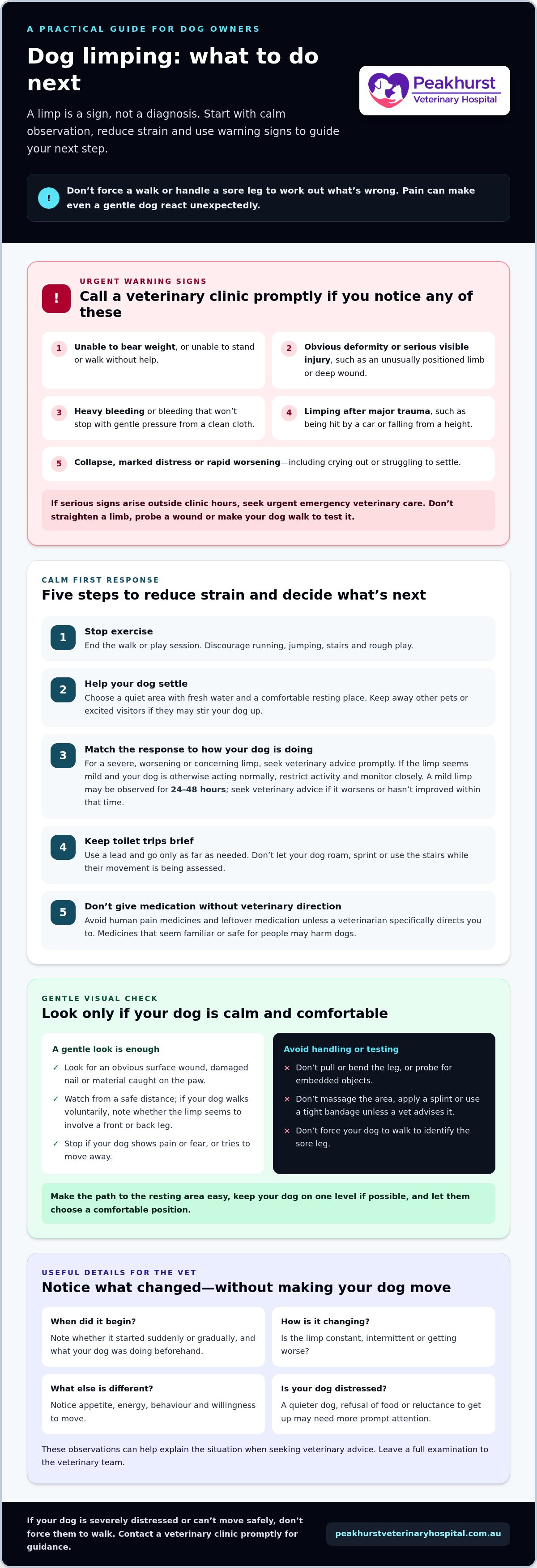
Could a small limp be serious, or is it safe to wait? If you’re searching “my dog is limping what to do”, it’s understandable to feel worried and unsure whether to touch the sore leg. A limp has many possible causes, and its appearance alone can’t tell you how serious it is. Start with calm observation, not forceful handling.
This guide explains which warning signs need prompt veterinary attention, how to keep your dog comfortable while arranging care, and what to do next. If your dog won’t bear weight, cries in pain, has swelling, a visible deformity or bleeding, or began limping after major trauma, contact a vet promptly instead of waiting to see if it settles.
For a mild limp in a dog who’s otherwise acting normally, restricting activity and observing closely for 24-48 hours may be reasonable. Seek veterinary advice if the limp worsens or hasn’t improved within that time. You’ll also learn how to look at the paw gently, what details to note and how a veterinary examination can help investigate a persistent or concerning limp.
• If you’re wondering “my dog is limping what to do”, use the severity of the limp and your dog’s overall condition to guide your next step.
• Limit activity while arranging veterinary advice. Avoid trying to diagnose or treat the cause yourself.
• A limp can have several causes, from a torn nail or sprain to a fracture or cruciate ligament injury. Guessing may lead you in the wrong direction.
• Note when the limp began, what your dog was doing and any changes in their behaviour. These details can help the vet assess the problem.
• Follow your vet’s recovery instructions, and check with them before changing your dog’s activity or medication.
Seeing your dog struggle to walk can be unsettling, especially when you don’t know whether the problem can wait. A limp is a sign, not a diagnosis. Its seriousness depends on how your dog is moving, what may have happened and whether other changes are present.
Limping is a change in the way a dog moves that may reflect pain or injury. A slight, occasional hitch in their step is different from suddenly being unable to stand. You don’t need to work out the cause at home. Look for warning signs, keep your dog settled and seek veterinary advice when their condition calls for it.
Call a veterinary clinic promptly if your dog shows any of these signs. If serious signs arise outside clinic hours, seek urgent emergency veterinary care.
, or can’t stand or walk without help.
, such as a limb that looks unusually positioned or a deep wound.
with gentle pressure using a clean cloth.
, such as being hit by a car or falling from a height. Injuries may not be obvious at first, even if your dog seems composed.
Crying out, struggling to settle or suddenly worsening alongside a limp calls for urgent advice.
Don’t try to straighten a limb, probe a wound or make your dog walk to test it. Pain can make even a gentle dog react unexpectedly, so give them space and avoid handling the sore area. If you’re unsure how serious a sign is, describe what you can see to a veterinary professional and follow their advice.
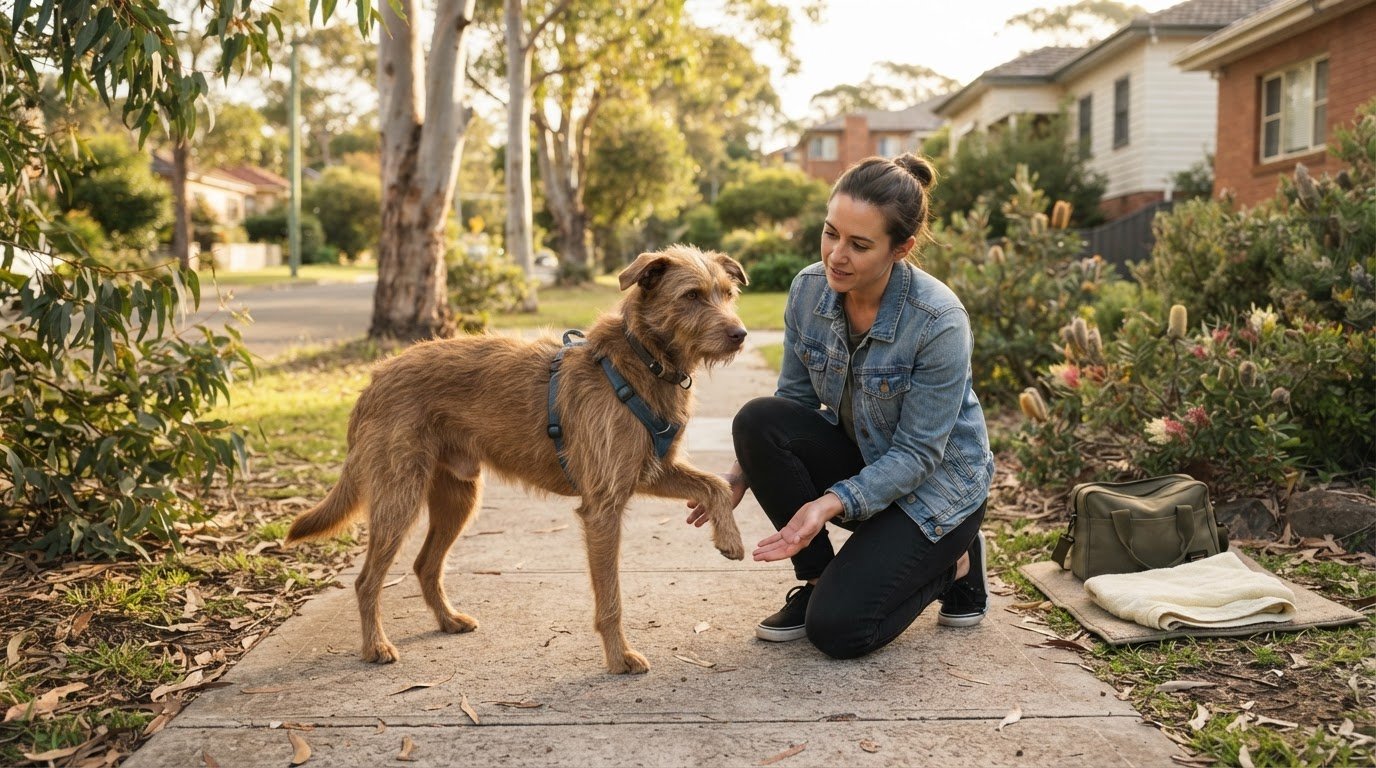
From a safe distance, watch how your dog moves. If they’re walking voluntarily, notice whether the limp seems to involve a front or back leg. Don’t make them walk or touch the leg to work this out. If they’re distressed or can’t move comfortably, leave the assessment to the veterinary team.
Note when the limp began and what your dog was doing beforehand. Did it start suddenly after a run, or did you notice it gradually? Is it constant, intermittent or getting worse? These details help the vet understand the timeline, even if you didn’t see an injury happen.
Look for changes in appetite, energy, behaviour and willingness to move. A dog who’s quieter than usual, refusing food or reluctant to get up may need more prompt attention than one with a mild limp who otherwise seems like themselves. If you’re searching “my dog is limping what to do”, these observations can help you explain the situation clearly when seeking veterinary advice.
Once you notice a limp, take things one step at a time. You don’t need to work out what’s wrong before helping your dog. Focus on preventing extra strain and deciding whether veterinary advice is needed. If your dog is in severe distress or can’t move safely, don’t force them to walk. Contact a veterinary clinic promptly for guidance.
Limiting activity helps avoid extra strain while the cause is assessed. A dog who feels excited or anxious may try to run even when a leg is sore, so a quiet, predictable space can help them settle.
Use this simple sequence:
End the walk or play session and discourage running, jumping, stairs and rough play.
Choose a quiet area with fresh water and a comfortable resting place. Keep other pets and excited visitors away if they’re likely to stir your dog up.
Call a veterinary clinic promptly if the limp is severe, worsening or accompanied by other worrying signs. If it seems mild and your dog is otherwise settled, restrict activity and monitor them closely while arranging advice as needed.
Use a lead and go only as far as needed. Don’t let your dog roam, sprint or use the stairs while their movement is being assessed.
Don’t give human pain medicines or leftover medication unless a veterinarian specifically directs you to. Medicines that seem familiar or safe for people may harm dogs.
Make the path to your dog’s resting area as easy as possible, and keep them on one level if you can. Let them choose a comfortable position rather than trying to reposition a sore leg. Don’t massage the area, apply a splint or use a tight bandage unless a vet has advised you to. These attempts can cause discomfort or make an injury harder to assess.
Only look if your dog is calm and comfortable with you nearby. Without pulling or bending the leg, check visually for an obvious surface wound, damaged nail or material caught on the paw. Don’t probe for embedded objects, and stop if your dog shows pain or fear, or tries to move away. A gentle look is enough. Leave a full examination to the vet.
If the limp persists or concerns you, a veterinary examination can help assess what’s going on. Peakhurst Veterinary Clinic and Small Animal Hospital provides veterinary consultations in Peakhurst to assess your dog’s movement and the affected area.
A limp can look similar from the outside even when the underlying problem is quite different. Your dog might favour a paw because of a damaged nail, or take shorter steps because a joint or muscle hurts. The way they move may offer clues, but it can’t confirm the cause. Searching “my dog is limping what to do” shouldn’t mean trying to diagnose a problem from one symptom.
It can help to think about possible causes in a few broad groups:
a sore pad, torn nail, small cut or material caught between the toes.
a sprain or muscle strain that may follow a sudden twist, run or jump.
conditions such as arthritis, a fracture, a cruciate ligament injury or a kneecap problem.
infection and some illnesses can also affect movement and need veterinary assessment.
These examples aren’t a checklist for matching symptoms to a diagnosis. A dog with a paw injury may limp much like a dog with a joint problem, and some injuries aren’t visible from the outside. Different causes may need different care, so treating what you think is wrong can delay the right assessment or make your dog more uncomfortable.
Yes. A tender paw pad, damaged nail or small object caught between the toes can make each step sore. Your dog might lift a paw or place it down cautiously, but those signs don’t reveal exactly what’s causing the discomfort. Redness, swelling or a wound can also be difficult to assess safely. Arrange veterinary advice if the pain persists, worsens or affects normal weight-bearing.
It could. Sprains and muscle injuries may affect movement, while fractures and joint problems can cause similar signs. Cruciate ligament injuries and kneecap problems also require veterinary assessment to identify what’s happening and guide care. Your dog’s age, breed or the way a limp looks can’t confirm a particular condition, so avoid relying on appearance alone.
When investigating a persistent or concerning limp, a vet will consider when it started, what your dog was doing, their age and activity, and what they find during an examination. A sudden change after exercise may guide the conversation differently from a limp that developed gradually, but neither story proves the cause. Share what you’ve observed, including whether the limp has changed over time. That context helps the veterinary team decide what further assessment may be needed.
A veterinary examination can help turn worrying observations into a clearer plan. The vet will ask when the limp began, what your dog was doing beforehand, whether an injury may have occurred and what has changed at home. You don’t need to arrive with a diagnosis. Your observations, including small details, can help guide the assessment.
Before the visit, note when you first noticed the limp and whether it has stayed the same, eased or worsened. Mention any changes in activity, appetite, energy or willingness to move. If the limp comes and goes, a short video of your dog walking naturally may help the vet see what you’ve noticed. Don’t make your dog walk just to record it.
Tell the vet about any medicines or supplements your dog has received. Include the amount and when you gave it, even if it was a one-off dose. This helps the team understand what your dog has already had and consider the next steps safely. If you’re unsure of a detail, say so. You’re not expected to remember everything perfectly.
The appointment usually starts with a conversation about your dog’s history, followed by observation and a careful physical examination. The vet may watch how your dog stands or moves, then gently assess the affected area. They’ll take your dog’s comfort into account and adapt the examination if a particular movement seems painful or difficult.
Examination findings help determine whether further tests are appropriate. Depending on what the vet finds, they may recommend X-rays or other tests to gather more information. Not every dog needs the same investigation. A test may be recommended when it could help guide care for that individual animal. The vet can explain what they recommend and why, so you can understand the options before deciding how to proceed.
A consultation is also a chance to ask questions. You might ask what the examination has shown so far, whether your dog should continue resting and what changes would mean you should seek further advice. If you’re worried and searching “my dog is limping what to do”, a clinical assessment can help replace guesswork with a sensible next step.
Peakhurst Veterinary Clinic and Small Animal Hospital provides veterinary examinations in Peakhurst to assess a persistent or concerning limp and your dog’s affected area.
Once your dog has been assessed, the next steps depend on what the vet finds. Care may involve rest, prescribed medication, further tests or a procedure, but there isn’t one recovery plan that suits every dog. Follow the instructions for your pet, and check with the veterinary team before changing their activity or medication, even if they seem brighter.
Recovery can take time. Your dog may appear more comfortable before the underlying problem has fully settled, so avoid increasing walks or returning to play ahead of the plan. If surgery is recommended, ask the vet to explain what the procedure is intended to address and what care will be needed afterwards. The clinic’s guide to soft tissue surgery for dogs in Sydney may also help you understand this part of veterinary care.
Follow the individual rest and activity plan your veterinarian provides. Give prescribed medication only as directed, and contact the clinic if you’re concerned about a dose or how your dog is responding. A brief daily note can help you track changes without relying on memory.
note whether your dog is moving more comfortably or becoming reluctant to stand.
record notable changes from their usual routine.
watch for increased pain, swelling or greater difficulty moving.
These notes can be useful if you need to update the vet or attend a follow-up. If your dog’s condition worsens, don’t wait for the next planned check-in to seek veterinary advice.
Arrange a reassessment if the limp returns, gets worse or doesn’t improve as your vet expected. The same applies if you notice new swelling, reduced appetite or difficulty moving. If your dog is recovering from a procedure, follow the review plan provided and contact the clinic if you’re unsure whether a change is part of recovery.
If you’re in Peakhurst or nearby Sydney and the limp persists, returns or continues to worry you, Peakhurst Veterinary Clinic and Small Animal Hospital can assess your dog. You don’t need to work out the cause before booking. Sharing when the limp began and how it has changed gives the veterinary team a helpful starting point.
If you’re still searching “my dog is limping what to do”, focus on the next safe step: follow your vet’s advice, keep a simple record of progress and arrange a review if your dog isn’t improving as expected.
If you’re still wondering “my dog is limping what to do”, you don’t have to work it out alone. A clear plan can start with an assessment, then continue at home with guidance tailored to your dog. Before the visit, consider what would make following that plan easier, such as setting up a quiet resting spot or writing down questions you’d like answered.
For dogs with a persistent or concerning limp, Peakhurst Veterinary Clinic and Small Animal Hospital provides veterinary consultations, diagnostics and surgery. The independently operated hospital has cared for the community since 1972, with a veterinary and nursing team ready to help you understand the next step for your dog.
Arrange an appointment with our Peakhurst veterinary team to have your dog assessed and get a clear plan for their care.
Yes. Dogs don’t always vocalise when they’re sore, so a quiet dog may still be uncomfortable. You might notice subtler changes, such as licking one paw, shifting weight while standing, taking longer to settle or avoiding a favourite step onto the sofa. If you’re asking “my dog is limping what to do”, pay attention to these changes as well as crying, and seek veterinary advice if the limp persists or concerns you.
Keep the appointment if a vet has advised an assessment, even if your dog seems to be walking normally again. A limp that comes and goes can be difficult to observe in the clinic, so tell the vet when it appeared, how long it lasted and what your dog was doing. Don’t encourage running or jumping to bring it back. Owners in Peakhurst, Peakhurst Heights, Riverwood, Padstow Heights, Padstow, Mortdale, Lugarno, Narwee, Oatley, Revesby Heights, Penshurst, Beverly Hills, Alfords Point, Connells Point, Bonnet Bay, Oyster Bay, Como, Roselands, Hurstville Grove and Blakehurst can share these details when arranging local care.
A dog may seem stiff when first getting up, but you can’t tell the reason from that pattern alone. Notice whether their movement settles once they’re up, whether it happens after every rest and whether the stiffness is becoming more noticeable. If it keeps recurring, lasts longer than usual or affects their willingness to move, arrange veterinary advice rather than assuming it’s simply age or a harmless ache.
Yes. A grass seed or other material lodged between the toes can make a paw suddenly uncomfortable, and a seed may be hard to see beneath the fur. If your dog keeps licking one spot, or you notice redness or swelling, avoid digging around or trying to pull out anything embedded. Stop the check if your dog is sore, and have a vet assess the paw.
Skip the usual walk, run or game of fetch until you’ve had appropriate veterinary advice. Exercise can put extra strain on a sore area, even if your dog seems keen to keep going. If they need to toilet, keep it brief and close to home, then let them rest. For comfort without a walk, offer calm company or a familiar toy they can enjoy while settled.
No, don’t give human pain relief unless a veterinarian specifically directs you to. A medicine that’s familiar to people may be unsafe for a dog, and the right advice depends on the individual animal. If you’ve already given your dog a medicine, contact a veterinary clinic and share its name, strength, amount and when it was given. Don’t give another dose or combine medicines without veterinary direction.
.png)