What if removing a tooth is the gentlest way to ease your dog’s discomfort? A recommendation for tooth extraction can feel worrying, especially when you’re thinking about anaesthesia, recovery or whether your companion will still enjoy meals. If you’re searching for “tooth extraction dog Sydney,” it’s natural to want clear answers before making decisions.
A change in breath, chewing, drooling or comfort is worth discussing with your vet, but extraction isn’t decided by one sign alone. The tooth is assessed alongside your dog’s overall health, and your vet can explain what they’ve found and why the options may differ.
This guide covers signs to raise, what to ask during an assessment, and how to prepare for care before and after a procedure. Peakhurst Veterinary Clinic and Small Animal Hospital provides dental and surgical care, including tooth extractions and pre-anaesthetic blood tests. A clear, tooth-by-tooth plan can help you feel prepared to support your dog.
• Notice changes in chewing, drooling or comfort and share what you’ve observed with your vet.
• For tooth extraction dog Sydney concerns, an assessment helps clarify which tooth is affected, your dog’s health and the next steps.
• Monitoring, tooth-preserving treatment or extraction may be considered, depending on the veterinary findings.
• Before the procedure, follow the clinic’s instructions about food, medicines and arrival, and ask what to expect at home.
• Follow your dog’s tailored aftercare instructions as they recover.
Mouth pain can be hard to recognise in a much-loved dog. Some dogs keep up their usual routines, while others show small changes that are easy to mistake for fussiness or ageing. If you’ve noticed a difference, arrange an assessment rather than trying to identify the cause at home. A visible problem, such as a chipped tooth, doesn’t automatically mean extraction is needed. The next step depends on the veterinary findings and what may best support your dog’s comfort and health.
Some changes call for prompt veterinary advice, particularly facial swelling or a broken tooth. A search for “tooth extraction dog Sydney” may bring up many possible causes, but signs alone can’t show whether a tooth needs to come out. An examination helps the vet understand what’s happening and discuss an appropriate plan with you.
Look for changes in your dog’s mouth and daily habits. Bad breath, drooling or pawing at the mouth can be reasons to arrange an assessment, as can reluctance to eat or difficulty chewing. You might also notice red, swollen or bleeding gums, a loose tooth, or a tooth that looks damaged. These signs don’t all mean the same thing, and none confirms on its own that extraction is needed.
• Watch for changes in how your dog picks up, chews or finishes food.
• Note whether they favour one side of the mouth or avoid harder food.
• Look out for visible gum changes, a loose tooth or damage to a tooth.
• Tell your vet about facial swelling, drooling or pawing at the mouth, and when you first noticed it.
Sharing when a change began and whether it’s getting better, worse or staying the same gives your vet useful context. If your dog has facial swelling or a broken tooth, seek veterinary advice rather than waiting for the problem to become more obvious.
Dogs may continue eating even when their mouths are uncomfortable, so appetite alone doesn’t always tell the whole story. Your dog might chew more slowly, drop food, switch to softer meals or seem less interested in a familiar treat. Changes in play, patience or willingness to have their face touched can also be useful to mention. Dental health is one part of broader dog health, and small observations can help your vet decide what to examine.
A warning sign is a reason to investigate, not a diagnosis or an automatic decision to extract a tooth.
Before the appointment, note what you’ve seen, including changes in chewing, food preference or behaviour. Your veterinarian can examine your dog, consider their general health and explain whether monitoring, treatment or extraction may be appropriate. Be specific about when the change happens, such as during meals or when your dog picks up a particular type of food. Those details help make the conversation more useful without assuming the worst from one sign.
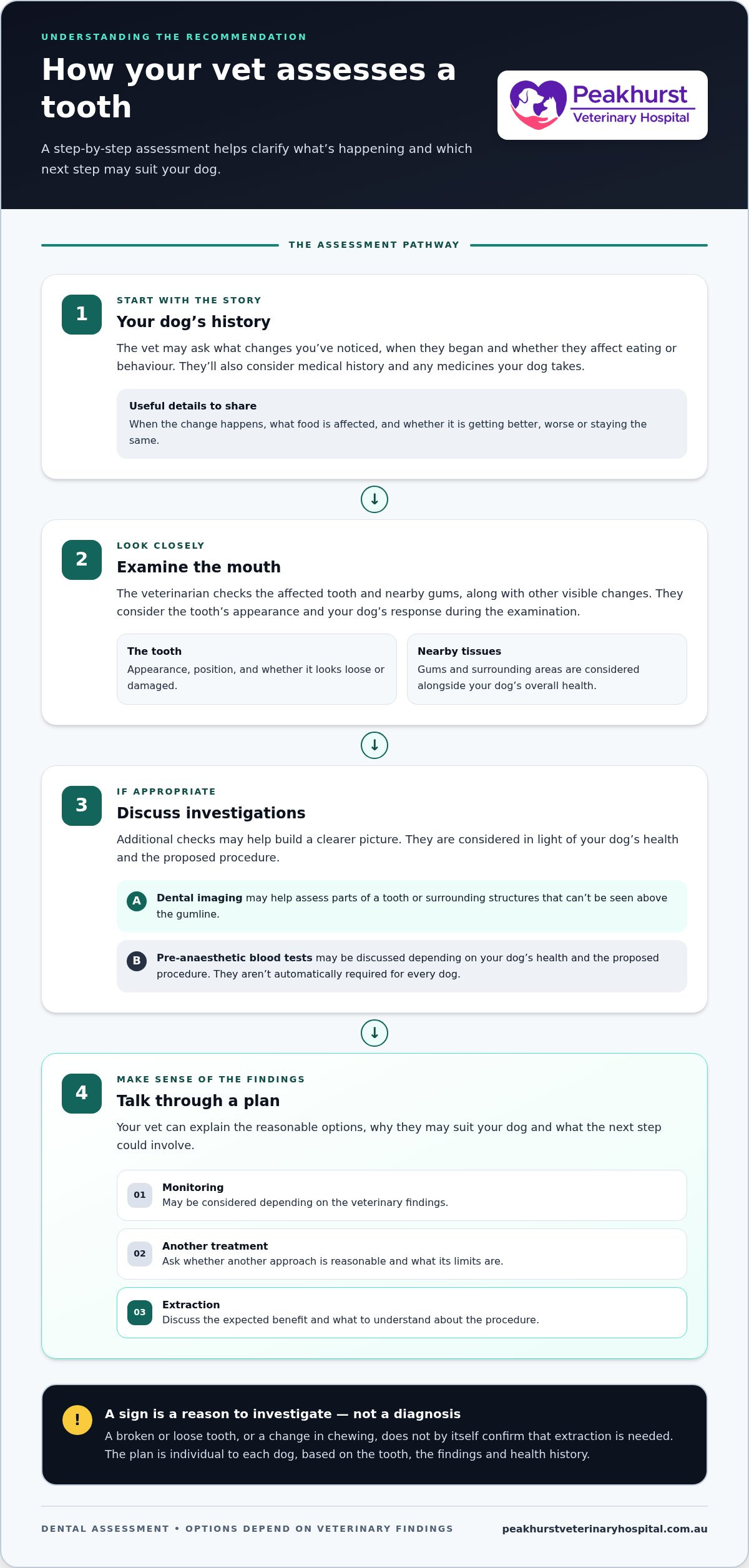
Deciding whether a tooth should be removed takes more than a quick look. Your veterinarian considers your dog’s comfort, dental findings and general health, then explains the next steps. This assessment helps distinguish a tooth that may need treatment from one that can be monitored or managed another way.
The vet may ask what changes you’ve noticed, when they began and whether they affect eating or behaviour. They’ll also consider your dog’s medical history and any medicines they take.
The veterinarian looks at the affected tooth and nearby gums, as well as other visible changes. They consider the tooth’s appearance and your dog’s response during the examination.
Dental imaging may help assess parts of a tooth or surrounding structures that can’t be seen above the gumline. Depending on your dog’s health and the proposed procedure, pre-anaesthetic blood tests may also be discussed. These investigations aren’t automatically required for every dog.
Once the findings have been considered, your vet can explain the reasonable options, why they may suit your dog and what the next step could involve.
The decision takes account of more than one detail. Your dog’s symptoms and medical history provide context, while the examination helps the vet assess the tooth, gums and surrounding tissues. A broken or loose tooth, for example, is considered alongside its position and your dog’s overall health. If a procedure is being considered, ask whether pre-anaesthetic blood tests would help inform the plan for your dog.
The right plan is individual to each dog because each tooth, set of findings and health history is different.
You don’t need to know the technical terms. A few clear questions can help you understand the recommendation and take part in the decision. If you’re looking into tooth extraction dog Sydney options, ask how the vet reached their conclusion and what the proposed next step involves.
• What do the examination and any imaging suggest about this tooth and the surrounding tissues?
• Is monitoring or another treatment a reasonable option, and what are its limits?
• What benefit is extraction expected to offer, and what should I understand about the procedure?
• Would my dog’s health history affect the plan or the checks before treatment?
If your dog is also having a dental clean, understanding pet dental scaling in Sydney can help you discuss how cleaning and tooth treatment fit into the overall plan. The veterinary team at Peakhurst Veterinary Clinic can talk through your dog’s dental findings and the available next steps.
Once your vet has assessed a tooth, the conversation may include more than one possible path. Monitoring can be reasonable in some cases; in others, treatment to preserve the tooth or extraction may be discussed. There isn’t one option that suits every dog. The decision depends on the tooth, the diagnosis, your dog’s health and the veterinary findings.
Use the table below to organise your questions. It’s a starting point for a conversation, not a way to decide at home which treatment your dog needs.
| Option | When it may be discussed | What to clarify |
|---|---|---|
| Monitoring | When the vet considers observation appropriate based on the findings. | What changes to watch for, when to arrange a review and what would prompt reassessment. |
| Tooth-preserving treatment | When the tooth’s condition and your dog’s circumstances may make retaining it suitable. | What the approach involves, expected comfort, follow-up needs and practical care at home. |
| Extraction | When the tooth may not be comfortably or appropriately retained. | How the diagnosis supports removal, what the procedure involves and what recovery care may be needed. |
Ask whether a tooth-preserving approach is appropriate for this particular tooth. Suitability depends on the veterinary findings, and a damaged or diseased tooth can’t always be saved. If treatment to retain it is an option, ask your vet to explain the expected benefits, any follow-up and what daily care may involve. Understanding those practical details can help you weigh the approach alongside your dog’s wellbeing.
Extraction may be considered if the vet finds that a tooth can’t be comfortably or appropriately retained. Ask which findings led to the recommendation and how they relate to this tooth, rather than assuming every damaged tooth needs the same treatment. You can also ask what alternatives are reasonable, what their limitations may be, and what could happen if treatment is delayed or the tooth is monitored.
For owners researching tooth extraction dog Sydney, it can help to understand how dental treatment and anaesthesia fit together. The guide to dog teeth cleaning under anaesthetic provides broader context to discuss with your vet.
Home care, such as tooth brushing when your dog is comfortable with it, can support ongoing oral health and prevention. It doesn’t replace veterinary treatment for established dental disease or an injured tooth. Your vet can advise what care is suitable while a treatment plan is being considered.
If you’re unsure how the options apply to your dog, the team at Peakhurst Veterinary Clinic can talk you through the findings and next steps.
Knowing what to prepare can make a dental procedure feel more manageable for you and your dog. Your veterinary team will provide instructions suited to your dog and the planned treatment, so follow those rather than general advice you may find elsewhere. Instructions about food, medicines and arrival can vary between patients.
A few notes can help you give the veterinary team a clear picture of your dog’s health and routine. Before the visit, gather:
• A brief record of the signs you’ve noticed, when they began and whether they’ve changed.
• Details of any changes in eating, chewing, drinking or behaviour.
• A current list of medicines, supplements and relevant medical history.
• Any questions you’d like answered about the proposed treatment or recovery.
Follow the clinic’s specific instructions about food, medicines and arrival. Don’t apply a general fasting rule or change a medicine routine unless the veterinary team has advised you to do so. If anything in the instructions is unclear, ask the team to explain it before procedure day.
Before leaving your dog with the team, make sure you understand the plan and how you’ll receive updates. You might ask what treatment is expected, whether the plan could change based on findings during the procedure, and what the discharge instructions will cover. Clarify who to contact if you have concerns once you’re home.
If your dog has a new symptom or change in health since the assessment, tell the team before the procedure. That information may be relevant to their care plan.
At home, follow the discharge plan for feeding, pain relief, rest and any follow-up. Advice is tailored to your dog and the treatment performed. Give medicines only as directed, and check with the veterinary team if you’re unsure about a dose or have difficulty giving it. Follow the activity instructions rather than assuming every dog needs the same recovery routine.
Contact the veterinary team promptly if your dog’s recovery differs from the guidance you were given. For example, worsening swelling, ongoing bleeding, marked distress, or difficulty eating or drinking are changes to raise with them. If your dog seems unwell, don’t wait for a scheduled follow-up to seek advice.
Dental care continues beyond the procedure. Your vet can advise when and how to resume appropriate home care; for related context, see this guide to pet dental scaling in Sydney. If you’re concerned about your dog’s mouth, Peakhurst Veterinary Clinic can assess your dog’s dental health.
It can be unsettling to notice a change in your dog’s mouth, especially when you’re unsure what it means. A practical next step is to note what you’ve seen, arrange a veterinary assessment and talk through the findings before deciding on treatment. Whether you’re looking into tooth extraction dog Sydney options or want a sore-looking tooth checked, an assessment helps clarify what may be happening.
Peakhurst Veterinary Clinic and Small Animal Hospital is an independently operated local practice established in 1972. The team provides dental care, tooth extractions and pre-anaesthetic blood testing, alongside surgical care. An extraction isn’t assumed from one visible sign. The recommendation depends on your dog’s individual examination and health, and the proposed plan is discussed with you.
Bring your observations, even if they seem small: perhaps your dog has started chewing differently, is slower to finish meals or has become reluctant to have their face touched. You can ask what the examination suggests about the affected tooth, whether further assessment may be useful and how your dog’s general health informs the options. Ask the team to explain unfamiliar terms or talk through why one approach may be preferred.
The discussion can cover the proposed treatment and relevant next steps, such as whether pre-anaesthetic blood testing is appropriate before a procedure. You can also ask what to expect at home, including how to follow the feeding, medication and recovery instructions tailored to your dog. The aim is for you to understand the plan and have space to raise concerns.
For families in Peakhurst, Peakhurst Heights, Riverwood, Padstow Heights, Padstow, Mortdale, Lugarno, Narwee, Oatley, Revesby Heights, Penshurst, Beverly Hills, Alfords Point, Connells Point, Bonnet Bay, Oyster Bay, Como, Roselands, Hurstville Grove and Blakehurst, a veterinary assessment is a practical first step. You don’t need to know whether extraction is necessary before making an appointment. Share what you’ve noticed, ask how the findings relate to your dog, and discuss which options are suitable. If treatment is recommended, the veterinary team can explain the plan and the care your dog may need afterwards.
Keep the process simple: notice changes, arrange an assessment, understand the options and follow the aftercare instructions provided for your dog. Clear answers can help you feel prepared, whatever the veterinary findings show.
Read more about dental assessments for dogs at Peakhurst Veterinary Clinic.
If you’re weighing up what a dental concern might mean, you don’t need to decide on treatment before speaking with a vet. A conversation can turn your observations into useful questions and give you a clearer sense of what should happen next. For anyone searching “tooth extraction dog Sydney”, remember that the right recommendation depends on your dog’s individual assessment.
Before an appointment, jot down what has changed and what you’d most like to understand. Ask the veterinary team to explain their findings in plain language, talk through the options and outline the care your dog may need. Feeling prepared doesn’t mean having all the answers; it gives you a clear place to begin.
With a plan shaped around your companion, you can move forward with care and confidence.
The cost depends on the tooth, the treatment needed and your dog’s health, so a reliable estimate follows a veterinary assessment. Ask for an itemised estimate explaining what’s included, such as imaging, anaesthesia, medicines and follow-up care. The team at Peakhurst Veterinary Clinic can discuss the expected treatment plan and costs after examining your dog.
What and when your dog should eat depends on the procedure and your veterinarian’s instructions. Your dog may need softer food for a period, or a gradual return to their usual meals. Don’t offer hard treats, chews or toys until the treating team says they’re suitable. If your dog won’t eat as expected, contact the clinic for advice.
Your dog may be tender after treatment, and the veterinarian can plan pain relief to help keep them comfortable. Give only the medicines prescribed for your dog, following the label and discharge instructions. Never give human painkillers unless a veterinarian specifically directs you to, as some can be harmful to pets. If your dog seems increasingly uncomfortable despite the plan, contact the treating team.
Sometimes a broken tooth may be treated without extraction, but whether that’s suitable depends on the damage and the veterinary findings. For example, a fracture that reaches deeper parts of the tooth may need a different approach from a small chip. Ask your vet what the examination shows, whether imaging could help, and what each reasonable option means for your dog’s comfort and follow-up.
Recovery varies with your dog’s health and the tooth treatment performed, so there isn’t one timeline that applies to every patient. Your discharge instructions should explain what changes to expect and when your dog can return to normal meals and activity. Prepare a quiet, comfortable place at home, and note any unexpected changes so you can describe them clearly if you call the clinic.
An older dog’s age alone doesn’t determine whether an extraction is suitable. The veterinarian considers overall health, medical history and the findings for the affected tooth when discussing the plan. Depending on your dog, pre-anaesthetic blood tests may help assess their health before a procedure. Share any existing conditions and medicines, then ask how these factors affect the recommended approach and care.
Contact your veterinarian promptly if your dog develops facial swelling or stops eating, as these changes need professional assessment. Tell the clinic when the swelling or appetite change began and whether it’s getting worse. Don’t try to examine a painful area closely or give leftover medicine. For families in Peakhurst and nearby Sydney South communities, seeking veterinary advice is a sensible next step. Book a dental assessment for your dog with Peakhurst Veterinary Clinic.

.png)