Your dog may still greet you at the door and finish every meal, even when their mouth feels sore. Dogs can hide discomfort, so small changes in eating or behaviour are easy to miss. If you’re searching for dog dental care Peakhurst, knowing what to look for is a useful place to start.
It’s natural to feel unsure about checking your dog’s teeth or starting a brushing routine. You don’t need to tackle everything at once. Gentle, gradual home care can make toothbrushing more manageable, while a veterinary assessment can help identify concerns you may not see yourself.
In this guide, you’ll learn to spot possible signs of dental trouble, build a realistic home-care routine and understand when to seek veterinary support. Peakhurst Veterinary Clinic and Small Animal Hospital provides dental examinations, scaling and tooth extractions when clinically appropriate. Steady care at home and timely professional advice can help you make informed decisions for your dog’s comfort.
• Notice changes in your dog’s breath, gums, chewing or willingness to have their mouth handled.
• Introduce a toothbrush gradually in a calm moment, and use toothpaste made for dogs.
• Persistent bad breath, bleeding gums, loose teeth, facial swelling or difficulty eating are reasons to arrange a veterinary assessment.
• Keep brief notes about new or worsening signs, including when you first noticed them, to help guide a conversation about dog dental care Peakhurst.
• A dental examination can clarify your dog’s needs; scaling and extractions may be recommended when clinically appropriate.
It can be hard to tell when a dog’s mouth is uncomfortable. Some dogs keep playing, greeting the family and eating as usual, even when chewing hurts. A dog may continue eating despite oral discomfort because appetite can remain strong, and they may adapt by chewing differently or swallowing food with less chewing. That’s why a shift in their usual habits is worth noticing.
Plaque is a soft film that forms on teeth. If it remains, it can harden into tartar, which may look like a yellow or brown deposit near the gum line. Visible changes offer useful clues, but they don’t show everything. Irritation or disease can also affect areas beneath the gums, so an at-home look is an observation, not a full picture of your dog’s oral health.
For dog dental care Peakhurst owners can start by watching for patterns rather than trying to diagnose a problem. One sign can have different explanations, but a change that persists, worsens or appears alongside other symptoms deserves attention. A veterinary assessment can put your observations in context and help guide the next step.
Look out for breath that stays unpleasant, visible deposits, red or bleeding gums, or more drooling than usual. Pawing at the mouth may also signal discomfort. Changes around mealtimes can be just as telling: your dog might chew on one side, drop food, take longer to eat, show less interest in food or pull away when you touch their face. Don’t force a mouth check if they seem uncomfortable.
Behaviour matters, too. A dog who becomes less willing to play with a favourite toy or have their muzzle handled may be responding to discomfort, although these signs alone don’t identify the cause. Pay attention to changes that keep returning or become more pronounced, and share what you’ve noticed with your vet.
A look at the teeth can reveal some deposits or gum changes, but it can’t show every concern beneath the gum line. A photograph or bad breath on its own can’t confirm a dental diagnosis either. A veterinary dental assessment adds professional context to what you’ve observed. The broader field of veterinary dentistry covers animal oral health, assessment and treatment.
When you speak with a vet, simple details can help: what changed, when you first noticed it, and whether eating or behaviour has shifted. You don’t need to arrive with a diagnosis. A calm discussion and examination can help clarify whether visible signs need further attention and what care may suit your dog.
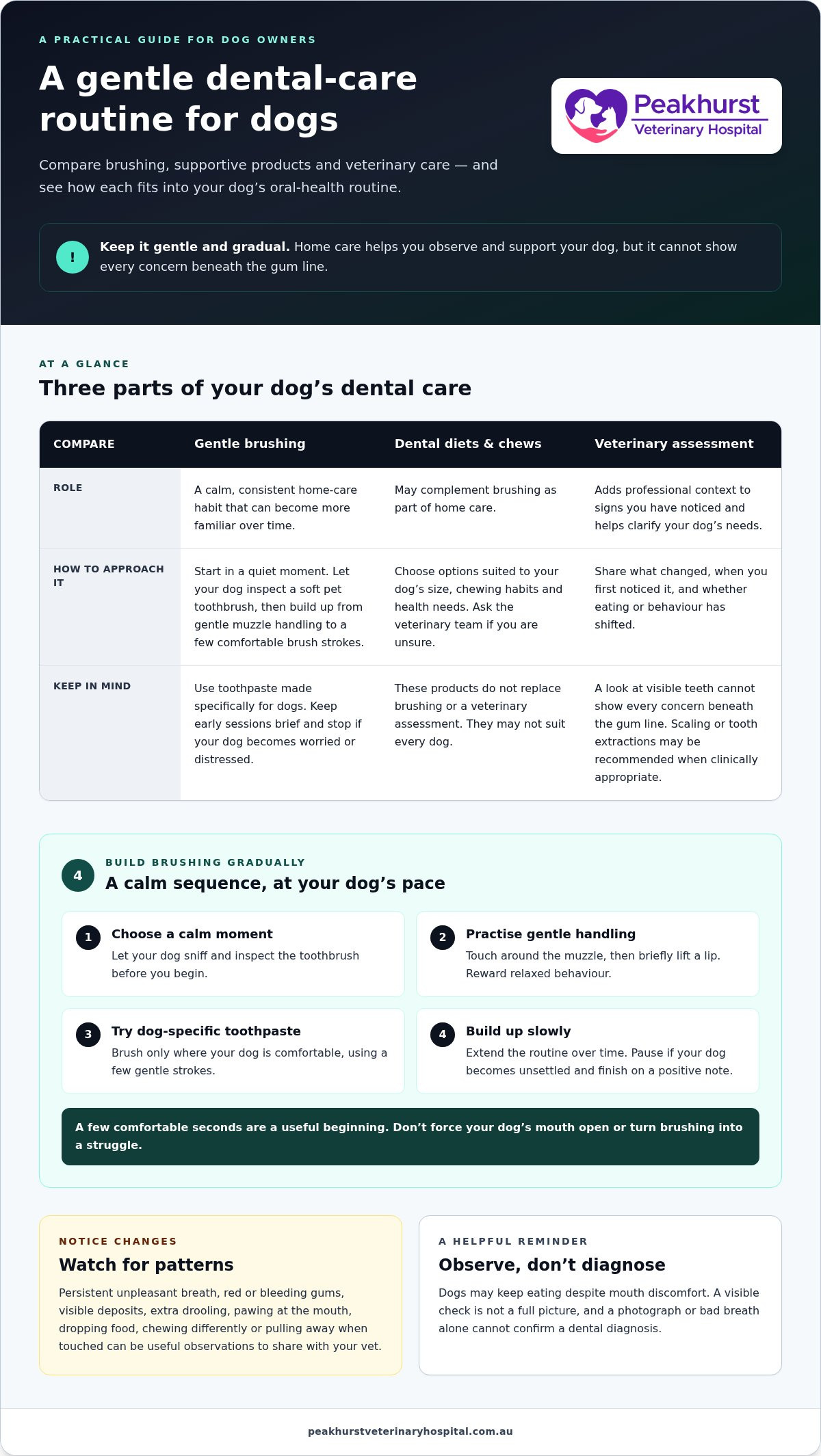
Starting a toothbrushing routine doesn’t mean holding your dog still and brushing every tooth straight away. A calm introduction, small steps and patience can help mouth care feel more familiar. If your dog moves away, becomes tense or seems distressed, pause and try again another time. Go at their pace rather than turning brushing into a struggle.
Choose a quiet moment when your dog is relaxed, rather than when they’re excited or keen for dinner. Keep early attempts brief and reward calm cooperation with praise or a small treat. Even a few seconds of comfortable handling is a useful beginning.
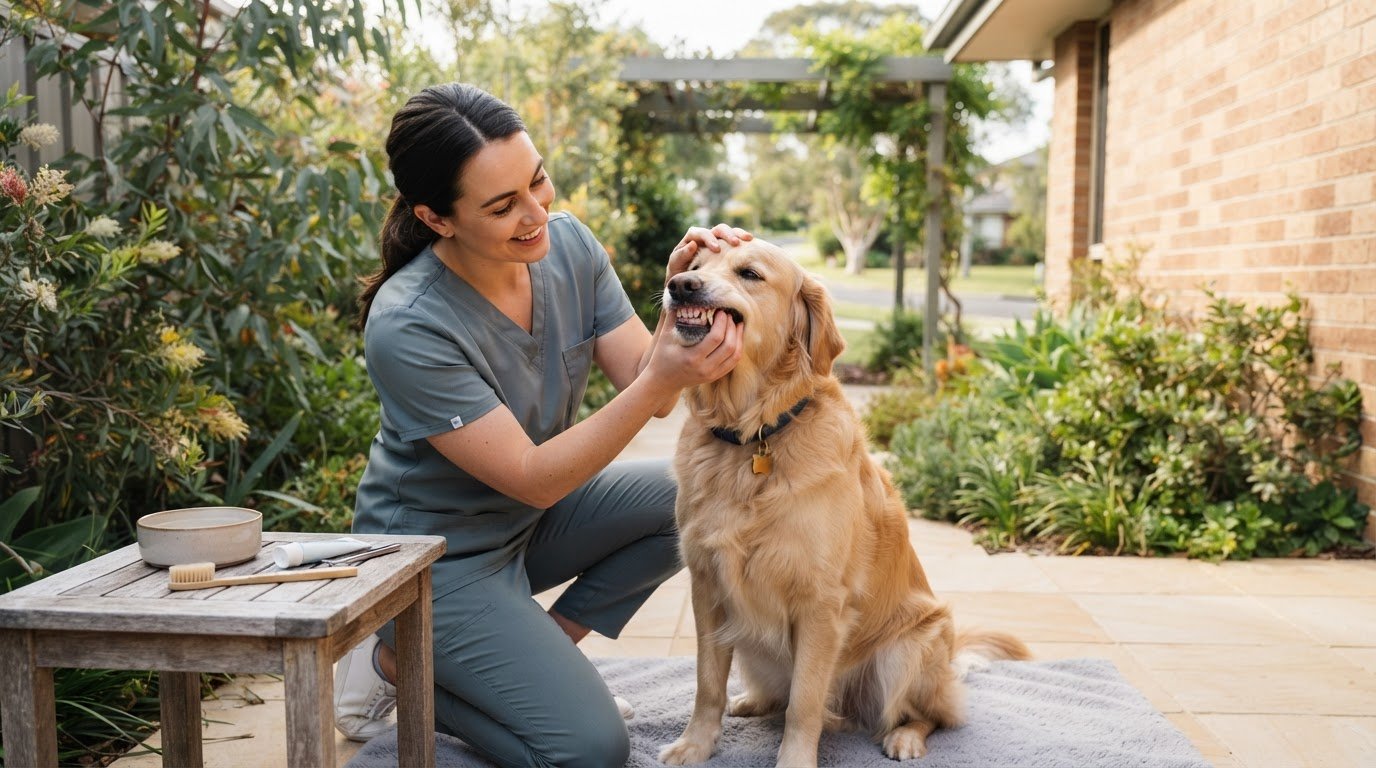
Let your dog sniff and inspect a soft pet toothbrush first. Begin by gently touching around the muzzle, then gradually lift a lip for a moment before trying to brush. Use toothpaste made specifically for dogs, and don’t assume human toothpaste is suitable. Keep early sessions short and stop if your dog shows signs of worry.
As your dog becomes more comfortable, build up slowly. Brush only the teeth they’ll comfortably allow you to reach, then finish on a positive note. A consistent, gentle routine is more realistic than an occasional long session that leaves your dog wary of the brush.
• Choose a calm moment and let your dog inspect the brush.
• Practise brief, gentle handling around the muzzle, rewarding relaxed behaviour.
• Introduce dog-specific toothpaste, then try a few gentle brush strokes where your dog is comfortable.
• Gradually extend the routine over time, pausing if your dog becomes unsettled.
Dental diets and chews may complement brushing, but they don’t replace it or a veterinary assessment. Choose options suited to your dog’s size, chewing habits and health needs. A product that doesn’t suit your dog may not be a sensible choice, especially if they have difficulty chewing or other health concerns.
If you’re unsure what may suit your dog, ask the veterinary team for guidance. The aim is a manageable routine that fits your dog, not a cupboard full of products or pressure to use something they won’t tolerate.
Some dogs need a slower introduction, and others may not be comfortable with brushing at all. Don’t force their mouth open or continue if they show signs of distress. You can keep building positive associations with the brush and gentle handling while discussing other ways to support their dental health with your vet. Home care is one part of the picture; it can’t assess what’s happening beneath the gum line.
For dog dental care Peakhurst owners can make brushing a small, low-pressure habit and seek advice if their dog’s comfort or health affects the routine. The Peakhurst veterinary team can discuss your dog’s dental needs.
Home care helps you keep an eye on your dog’s mouth, but it can’t always explain a change or what care it needs. With dog dental care Peakhurst, a routine conversation about oral health can be part of ongoing care, while some signs call for a more timely veterinary appointment. You don’t need to wait until several symptoms appear. If something is new, persistent or getting worse, seeking advice is a sensible next step.
Arrange a veterinary assessment if your dog has persistent bad breath, bleeding or sore-looking gums, a loose tooth, facial swelling or difficulty eating. Changes such as dropping food or avoiding usual meals also deserve attention, especially if they continue. These signs don’t identify the cause, and you don’t need to work it out at home. Contact your veterinary team for advice rather than waiting for more symptoms to appear.
Some changes are less obvious. Your dog might chew more cautiously, resist having their face touched or seem uncomfortable around food. If you’re unsure whether a change matters, consider how long it has been happening and whether it affects everyday activities. A brief note of what you’ve observed can help you explain the concern during an appointment.
A veterinary examination gives the vet an opportunity to assess your dog’s mouth and discuss suitable care. The next step depends on your dog’s individual findings; an examination doesn’t mean a particular treatment is automatically needed. If treatment is recommended, the vet can explain why and discuss the options with you before you decide how to proceed.
Dental care may include scaling to remove built-up deposits or, when clinically indicated, extracting a tooth. These are possible treatments, not a prediction of what your dog will need. If you’re worried about what a procedure involves, this guide to dog teeth cleaning under anaesthetic explains more about the process for Australian pet owners.
A dental assessment is also a chance to talk through changes you’ve noticed and ask questions. For more on possible treatment, including scaling, read this overview of pet dental scaling in Sydney. A conversation doesn’t commit you to treatment; it helps you understand your dog’s needs and consider the next step with your veterinary team.
A brief, regular check-in can help you notice what’s changing between veterinary visits. It can’t rule out dental problems, and your dog may not be comfortable having their mouth handled. Keep the routine gentle and short. If you notice a change, record it and share it with your veterinary team rather than trying to diagnose the cause yourself.
Choose a calm moment each week, perhaps when your dog is settled beside you. Notice their breath and watch how they chew or approach food. If they’re comfortable, gently lift their lip to look at the visible gums and teeth. Don’t force an inspection or open their mouth if they pull away, tense up or seem uncomfortable. Stop and seek veterinary advice about safe handling if needed.
A short note on your phone or calendar can make patterns easier to explain. Include what you noticed and when it began, such as “taking longer to eat since Tuesday” or “gum looks red compared with last week”. Record whether the change has improved, stayed the same or become more noticeable. These observations can help your vet understand what’s different, but they can’t confirm that everything is healthy.
• Notice changes in breath or visible gum appearance.
• Pay attention to chewing, appetite and any food your dog drops.
• Observe whether your dog remains comfortable with gentle face handling.
• Write down new or worsening changes and when you first saw them.
Link the check-in to a quiet habit you already have, such as settling down after a walk or relaxing together in the evening. Keep your aim modest: looking at your dog’s face and noticing how they eat may be enough if mouth handling isn’t comfortable. If you’re also building a brushing routine, work in small steps. Don’t let a missed day become a reason to give up.
Your dog’s needs and tolerance can change, so review the plan with your veterinary team when something shifts. The timing of dental check-ups should suit the individual dog and veterinary advice; there isn’t one schedule that fits every pet. A weekly home observation is simply a way to notice changes between professional examinations, not a replacement for them. For dog dental care Peakhurst owners, clear notes can make conversations about those changes more useful.
If you’re unsure what you’ve noticed or how often your dog should have their mouth checked, discuss your dog’s dental care with our Peakhurst veterinary team.
If you’ve noticed a change in your dog’s breath, eating or behaviour, raising it with a vet is a practical first step. A discussion or examination doesn’t commit you to treatment. It gives you a chance to understand what may be happening and talk through care that suits your dog. You don’t need to be certain that something is wrong before asking for guidance.
Peakhurst Veterinary Clinic and Small Animal Hospital provides dog dental care, including examinations, scaling and tooth extractions when clinically appropriate. The independently operated practice has served the Peakhurst community since 1972. A conversation can connect what you’ve observed at home with a clearer understanding of your dog’s dental needs.
A few simple details can make the conversation more useful. Mention changes in your dog’s breath, eating, chewing or behaviour, and when they first appeared. If they’ve changed over time, describe whether they’ve become more noticeable, eased or stayed much the same. You don’t need a complete record or medical terms; everyday observations are helpful.
• Describe what seems different from your dog’s usual habits.
• Note when you first noticed the change and whether it has progressed.
• Share any concerns about brushing or handling your dog’s mouth.
If you’re new to dental care, or haven’t been sure where to begin, that’s okay. Ask questions and explain what feels manageable at home. There’s no need to feel judged for noticing a concern later or finding brushing difficult. The aim is to talk through your dog’s individual needs and possible next steps at a pace that feels clear.
A dental examination helps the veterinary team assess your dog’s mouth and discuss suitable care. Depending on the findings, this may include advice or treatment such as scaling or an extraction when clinically appropriate. These options are considered for the individual dog; an initial discussion doesn’t mean a procedure will automatically be recommended. You can raise questions and consider the information before deciding how to proceed.
Peakhurst Veterinary Clinic and Small Animal Hospital is in Peakhurst and supports local pet owners in Peakhurst Heights, Riverwood, Padstow Heights, Padstow, Mortdale, Lugarno, Narwee, Oatley, Revesby Heights, Penshurst, Beverly Hills, Alfords Point, Connells Point, Bonnet Bay, Oyster Bay, Como, Roselands, Hurstville Grove and Blakehurst. Dog dental care Peakhurst can begin with a conversation about the signs you’ve noticed and the care your dog may need.
Book a dental check for your dog and discuss their dental health with the Peakhurst veterinary team.
Dental care doesn’t need to become a perfect routine overnight. Choose a manageable next step, whether that means noting a concern or having a conversation with a vet. You don’t need to arrive with all the answers. Sharing what you’ve noticed is a useful place to begin.
With dog dental care Peakhurst, a supportive discussion can help you feel clearer about what matters for your dog and what to do next. If you’ve been putting off asking a question, or would simply like to talk through your dog’s dental health, the Peakhurst team can help you take that step at a comfortable pace.
Book a dental check for your dog and take a positive next step towards their ongoing care.
Persistent unpleasant breath isn’t something to dismiss as simply part of having a dog. It can be associated with oral problems, but breath alone can’t show what’s causing it. Notice whether your dog also seems uncomfortable around food, has sore-looking gums or is chewing differently. If the change continues or you’re concerned, arrange a veterinary assessment. A normal-looking moment at home can’t rule out an issue that needs attention.
Regular brushing is a helpful habit, but the right routine can vary between dogs. The Australian Veterinary Dental Association recommends brushing every other day; your veterinary team can help you adapt a routine to your dog’s needs. Introduce a pet toothbrush and dog-specific toothpaste gradually, keeping sessions calm and manageable. If your dog resists mouth handling or already shows signs of discomfort, ask for guidance before pushing ahead.
Use toothpaste made for dogs rather than treating human toothpaste as a suitable substitute. Dogs swallow toothpaste as you brush, so products intended for people aren’t the right default for their oral care. Choose a pet toothbrush and introduce it gently, allowing your dog time to get used to the sensation. If your dog has sensitivities or won’t tolerate brushing, ask your veterinary team about an approach that may suit them.
Early signs can include a change in breath, visible tartar, altered gum appearance, drooling, pawing at the mouth or a different chewing pattern. These clues vary, and some dogs show little obvious discomfort, so a lack of noticeable signs doesn’t confirm that all is well. If something is persistent or getting worse, seek veterinary advice rather than waiting for several changes to appear together.
No. A suitable dental chew may be a useful addition, but it shouldn’t replace brushing or veterinary assessment. What’s appropriate depends on your dog’s size, chewing style and health needs. For example, a dog that struggles to chew may need different guidance from one that handles chews comfortably. Discuss options with your veterinary team, especially if your dog has existing dental concerns.
Yes, older dogs can still benefit from having their oral health assessed. Age alone doesn’t determine what care is appropriate, so mention any changes in breath, eating, chewing or comfort during a veterinary visit. The veterinarian can consider your individual dog’s needs and discuss suitable options after an assessment. Don’t assume that a particular treatment, including one involving anaesthesia, will be needed just because your dog is older.
Arrange veterinary attention promptly if your dog has a loose tooth, facial swelling, bleeding or difficulty eating. These signs need professional assessment, as you can’t safely determine the cause at home. Don’t force your dog’s mouth open or try to remove a tooth yourself, as handling may cause distress. When arranging care, describe what you’ve noticed and when it began, including any change in your dog’s eating or comfort.
.png)