We are closed on Monday 5th October 2026 for Labour Day. For emergency please contact Veterinary Specialist of Sydney (VSOS) (02) 8376 8767


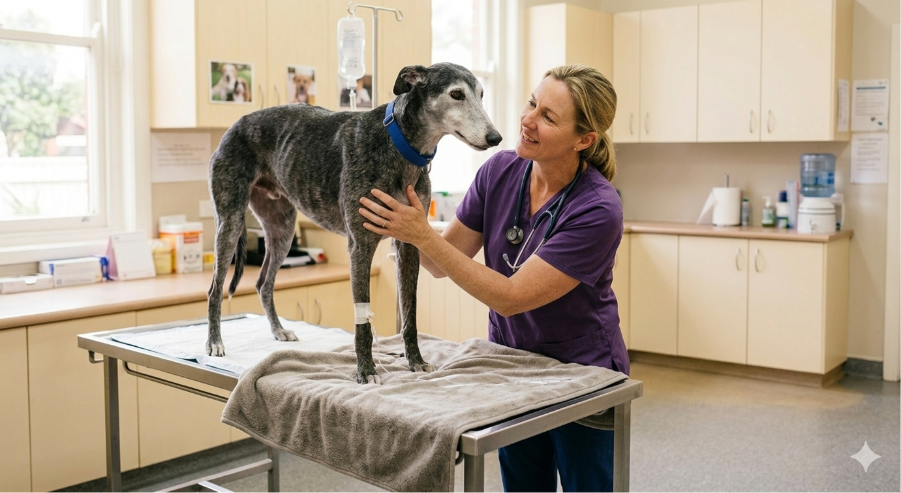
Like us, pets experience predictable changes in their behaviour, health and fitness as they age. As a pet owner, recognising these changes early and knowing when to seek veterinary support can make a real difference to your pet’s quality of life.

If your older pet seems different in any way - less active, eating differently, or just not quite themselves, let us help assess what’s going on and recommend the right care. Book an appointment at our clinic today.
According to the American Animal Hospital Association (AAHA) guidelines, dogs are considered senior during the last 25% of their expected lifespan. Because different breeds age at different rates, the age at which a dog becomes a senior varies quite a bit.
As a general guide, dogs enter their senior years at approximately:
For cats, AAHA guidelines consider 10 years of age to be the start of the senior life stage, with the geriatric stage beginning approximately 4 to 5 years later.
Ageing involves all body systems, so health conditions become more likely as your pet gets older. It is also common for senior pets to develop more than one health issue at the same time. It’s a situation known as co-morbidities, which is why close monitoring and regular veterinary attention become increasingly important.

The range of health issues that can develop in older pets is broad. Below are the conditions most commonly seen in senior dogs and cats.
Arthritis is one of the most common conditions in older pets. Loss of joint fluid, cartilage damage and bone-on-bone rubbing causes stiffness, pain and a reduced ability to move around comfortably.
Signs to watch for include:
Management of arthritis involves a combination of approaches. Your veterinarian may recommend veterinary-approved joint supplements or prescription mobility diets, medications to relieve pain and inflammation, and environmental changes such as non-slip mats, ramps, raised food bowls and comfortable thick bedding. Regular, gentle exercise such as slow walks or hydrotherapy also plays an important role.
Important: Never give your pet supplements or over-the-counter products without veterinary advice. Some human products are not safe for dogs or cats and may interfere with prescribed medications.
Dental disease is extremely common in senior pets, with cats and small breed dogs particularly susceptible. Owners often notice bad breath, drooling, bleeding gums, difficulty eating or dropping food from the mouth.
Beyond the discomfort it causes, dental disease can lead to tooth root abscesses, bone infection in the jaw and widespread infection affecting the organs of the body. Treatment involves a general anaesthetic, professional cleaning and polishing, and extraction of any affected teeth.
Prevention requires consistent dental care at home and regular in-clinic cleaning procedures. Your veterinarian will examine your pet’s teeth at every check-up and advise when a dental procedure is needed.
All organ systems change as animals age. The extent of any deterioration depends on a combination of age, breed, genetics, pre-existing conditions and lifestyle. Early diagnosis is always the goal, allowing management strategies to be put in place before significant illness develops.
Heart disease can often be detected early during routine veterinary checks by listening for changes in heart sounds, rate or rhythm. At home, owners can monitor for reduced exercise tolerance, coughing, more frequent panting or changes in breathing rate, especially during sleep.
Your Peakhurst veterinarian may recommend chest x-rays, blood tests or a heart ultrasound to diagnose the issue and develop the most appropriate treatment plan. Heart disease is usually a lifelong condition managed with ongoing medication.
The kidneys have a large functional reserve, which is exactly why early diagnosis is so important. Starting supportive management early can make a significant difference to the long-term health of affected pets.
Owners may notice their pet drinking more water, urinating more frequently, showing changes in appetite, vomiting, losing weight or simply seeming “not themselves”. In many cases, early changes in kidney function are identified on routine screening tests before any obvious signs appear, which is one of the key reasons regular testing is recommended.
Liver disease is generally detected through blood tests and ultrasound. Like the kidneys, the liver has significant functional reserves, so early detection can substantially improve long-term outcomes.
Contact your veterinarian if your pet seems lethargic, experiences changes in appetite or body weight, or shows signs of jaundice such as yellow colouring in the skin, gums or eyes.
Respiratory disease is a common cause of coughing and breathing difficulties in older pets. Your veterinarian will need to distinguish between conditions of the trachea, such as tracheal collapse, and conditions of the lungs, such as bronchitis, pneumonia or tumours. After a thorough chest examination, x-rays are likely to be recommended. Treating a cough early can help reduce the ongoing damage caused by chronic coughing.
Senior dogs and cats are at higher risk of developing endocrine disorders, including thyroid dysfunction, diabetes mellitus and adrenal gland dysfunction. The symptoms of these conditions often overlap with other forms of organ dysfunction, but targeted screening tests can indicate whether further investigation is needed.
Disorientation, staring into space, anxiety when alone, disrupted sleep patterns, barking or vocalising for no apparent reason, or general behavioural changes can all be signs of cognitive decline. Canine and Feline Cognitive Dysfunction, often referred to as “doggy dementia” or “kitty dementia”, is associated with age-related brain changes.
If you notice these signs, a full veterinary assessment is recommended. Your veterinarian can discuss medications, anxiety-reducing strategies and management techniques to support your pet and ensure their safety at home.
The risk of cancer increases as pets age, though advances in detection and treatment have provided more options than ever before. External lumps may be assessed by fine needle aspiration or biopsy, while internal masses may only be detectable through veterinary examination, x-rays or ultrasound. Not all lumps are cancerous, but regular veterinary visits during your pet’s senior years can help with early diagnosis and management.

Any time you notice changes in your pet, no matter how small, it is worth contacting your veterinarian. We recommend increasing the frequency of veterinary visits as your pet approaches their senior years, starting from around seven to eight years of age.
Six-monthly check-ups in senior pets can help identify changes in the early stages. Early intervention almost always leads to better long-term outcomes. Topics worth discussing at a senior check-up include mobility and exercise capacity, behavioural changes, changes in drinking or eating, weight changes, lumps or bumps, coughing or breathing issues, changes in sleep patterns, and changes in sight or hearing.
The Senior Pet Bundle is a comprehensive health screening designed specifically for older pets. It includes a full physical examination, screening blood tests, thyroid function testing, urinalysis, blood pressure monitoring and an eye check for glaucoma. We recommend this be performed annually.
These checks provide a baseline for monitoring your pet’s health over time, allowing subtle changes to be identified and addressed early. If your pet is insured, check with your provider as some policies cover annual blood and urine testing.
The Senior Pet Bundle screens for:

We recommend a full physical examination every six months for senior pets, along with annual screening tests through the Senior Pet Bundle. Together, these help detect changes in major body systems before they become serious.
Yes. Senior pets have different nutritional requirements compared to younger animals. A high-quality, complete and balanced senior pet food is recommended. Feeding smaller amounts more frequently can also help support the ageing digestive system. Your veterinarian can recommend the most appropriate diet for your pet’s individual needs.
Absolutely. Many serious conditions, including early kidney disease and liver changes, develop without any obvious signs. Regular screening allows your veterinarian to detect these changes before your pet appears unwell, giving the best chance of effective early management.
Behavioural changes in senior pets should always be assessed by a veterinarian. Disorientation, increased anxiety, changes in sleep patterns and unusual vocalisation can all be signs of cognitive decline or other underlying health conditions. Early assessment means earlier support.
Come prepared with a list of the main changes you have noticed and any specific concerns. Note changes in drinking, eating, toileting, sleep, mobility or behaviour. This information is invaluable for your veterinarian when building a full picture of your pet’s health.
Concerned About Your Senior Pet’s Health?
If your pet is showing signs of illness or discomfort, or if you simply want to stay ahead of their health as they age, the veterinarians at Peakhurst are here to help. A six-monthly check-up and our annual Senior Pet Bundle can give you confidence that your pet is receiving the care they deserve.




.png)