Your puppy doesn’t have to miss every early social experience while their vaccinations are underway. With a safe plan, they can start getting used to the world as you build their protection.
If you’ve found conflicting advice about the puppy vaccination schedule Sydney vets commonly use, it’s understandable to wonder which dates to follow and when it’s safe to go out. A typical course includes visits at 6-8, 10-12 and 14-16 weeks, but your puppy’s age, health and vaccination records can affect the plan.
This month-by-month guide explains the purpose of each visit, which vaccines are routinely recommended and which may depend on your puppy’s lifestyle and likely exposure. You’ll also learn how a vet can review vaccination records, plan follow-up care and help you make informed choices about socialisation before the course is complete. Every puppy is different, so use these stages as a starting point and discuss your puppy’s needs with your vet.
• The puppy vaccination schedule Sydney vets commonly use is a guide, not a one-size-fits-all prescription.
• Learn what early vaccination visits help protect against and why follow-up doses matter.
• Understand how your puppy’s health, routine and contact with other dogs can shape vaccine recommendations.
• Find out how to organise vaccination records and what to do if a visit is missed.
• Explore safer socialisation options and prepare useful questions for your vet.
Bringing home a puppy comes with plenty to organise, but their vaccination plan doesn’t have to be confusing. Your vet can check which doses they’ve already received, explain what’s next and set dates that suit their age and health.
A puppy vaccination course is a series of planned visits that helps prepare a puppy’s immune system to recognise and fight selected infectious diseases. Vaccination reduces the risk of serious illness, but it can’t prevent every disease or guarantee that a vaccinated dog will never become unwell. The puppy vaccination schedule Sydney owners discuss with their vet is a guide to building protection, not a promise of complete immunity after one injection.
Core vaccines are recommended for dogs generally. In Australia, these protect against canine parvovirus, canine distemper and infectious canine hepatitis. Other vaccines may be considered based on a puppy’s likely contact with other dogs, environment and local risks. For a broader overview of core and additional vaccines, see this general vaccination schedule. Your treating vet can confirm which components are appropriate for your puppy.
Parvovirus can cause severe digestive illness and is especially dangerous for puppies. Distemper can affect several body systems, including breathing and the nervous system. Infectious canine hepatitis can harm the liver. A C3 vaccine covers these core diseases. A vet may discuss additional protection, such as kennel cough vaccines or leptospirosis vaccination, if your puppy’s likely exposure makes it relevant. Recommendations and vaccine components can vary, so check the plan with your vet.
Young puppies can carry antibodies passed on by their mother. These offer early support, but can also affect how well a vaccine dose works, and the timing varies between puppies. Repeat doses are planned steps to help build protection as maternal antibodies decline. They don’t mean an earlier visit has failed. Your vet sets the timing based on your puppy’s age, health, vaccination records and current vaccine guidance.
An early dose shouldn’t be treated as instant or lifelong protection. If you’re in Peakhurst or a nearby Sydney suburb, bring any breeder, shelter or previous clinic records to your vet. They can review what’s known, explain what remains due and help you plan the next steps.
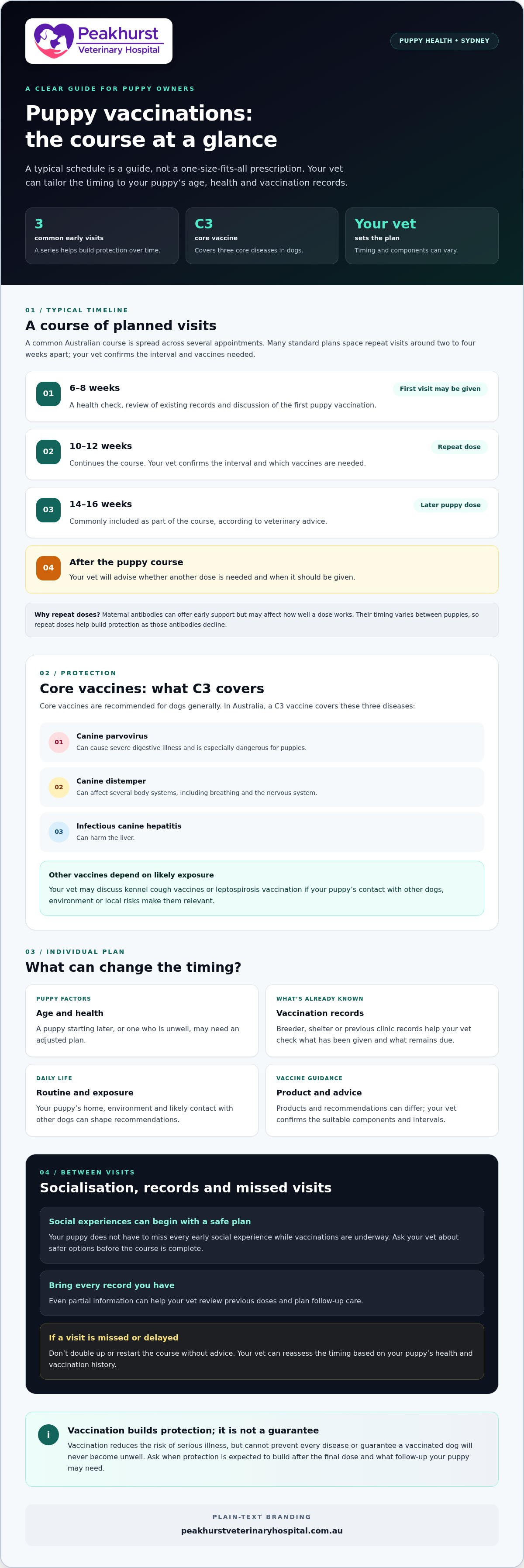
A common Australian puppy vaccination course is planned across several visits rather than completed in one appointment. The ages below are a useful guide, not a prescription. The Australian Veterinary Association guidelines provide professional guidance, while your vet can set dates to suit your puppy’s age, health and vaccination history. Vaccine products and recommendations can differ.
| Puppy’s age | Typical purpose of the visit |
|---|---|
| 6-8 weeks | The first puppy vaccination may be given, alongside a health check and review of existing records. |
| 10-12 weeks | A repeat dose continues the course. Your vet confirms the interval and vaccines needed. |
| 14-16 weeks | A later puppy dose is commonly given as part of the course, according to veterinary advice. |
| After the puppy course | Your vet will advise whether another dose is needed and when it should be given. |
In many standard plans, repeat visits are spaced around two to four weeks apart, with a later puppy dose at 14-16 weeks. The exact interval depends on the vaccine used and your vet’s assessment. Ask when protection is expected to build after the final dose and what follow-up your puppy may need.
The first visit is also an opportunity to check your puppy’s general health and discuss their home, routine and likely contact with other dogs. Your vet will confirm their age, review previous doses and decide whether they’re well enough for vaccination that day. Bring any breeder, rescue or previous clinic records you have. Partial information can still help with planning the next appointment.
A puppy starting at six weeks may have a different appointment plan from one who first sees a vet later. If your puppy is unwell, their records are incomplete or a visit has been delayed, the vet may adjust the timing instead of simply continuing the original dates. Don’t double up or restart the course without advice. If you’re unsure what’s due, Peakhurst Veterinary Clinic and Small Animal Hospital can help you discuss your puppy’s vaccination plan and follow-up visits.
It’s easy to assume every puppy should receive exactly the same vaccines. In practice, core vaccines provide a foundation, while additional protection may be considered based on a puppy’s health and likely exposure. Core vaccines are recommended for dogs generally; risk-based vaccines are considered when an individual dog’s lifestyle or environment makes them relevant. Your vet can explain how this applies to your puppy and confirm which vaccine components are in their plan.
In Australia, core protection commonly covers canine parvovirus, canine distemper and infectious canine hepatitis. A C5 vaccine includes the C3 core components plus protection against two causes associated with kennel cough. Other vaccines, such as leptospirosis, may be discussed if your vet considers your puppy’s likely exposure relevant. For an accessible overview of core and non-core vaccines, the RSPCA explains how these categories differ. Check the final choice with your treating vet.
Kennel cough is a familiar name for a group of contagious respiratory infections, rather than one illness caused by a single germ. A vet may discuss vaccination if your puppy is likely to spend time in close contact with other dogs, such as at boarding, training classes or other group settings. The vaccine can reduce risk, but it can’t guarantee that a dog won’t develop respiratory signs because more than one cause may be involved.
Boarding facilities may have their own vaccination requirements. Check these before booking and share them with your vet so you have time to ask whether an additional vaccine is suitable and when it should be given.
Your puppy’s everyday plans are useful information for your vet. Mention regular contact with dogs and any expected changes to their routine, including:
• daycare, boarding or training classes
• regular visits with dogs from other households
• travel plans or time in settings where dogs gather
• other likely contact with wildlife or environments your vet may ask about.
These details help your vet weigh potential exposure against your puppy’s individual circumstances. A puppy vaccination schedule Sydney owners discuss with their vet should reflect those circumstances, not assumptions based on a suburb alone. If your plans change, mention it at a follow-up visit so recommendations can be reviewed as your puppy’s routine develops.
A few simple habits can help you keep your puppy’s care on track between appointments:
Follow the dates your clinic gives you and contact them if you need to reschedule.
Store the certificate or booklet somewhere easy to find and take it to future vet visits.
If a dose is missed or you’re unsure about an outing, check with your vet rather than guessing.
Vaccination is one part of caring for a growing puppy. Preventive care matters throughout their life, and this annual pet health check guide explains what routine checks can involve.
Some puppies can have positive experiences before their course is complete, but suitable options depend on their health, vaccination history and the setting. Ask your vet about controlled, clean environments, such as a well-managed puppy class, or calm visits with known, healthy, fully vaccinated dogs. These settings can help your puppy meet new people and get used to everyday sights and sounds while limiting contact with unfamiliar dogs.
Until your vet advises otherwise, avoid higher-risk places such as dog parks. As a general guide, wait until one to two weeks after the final puppy vaccination before visiting them. Your vet can weigh socialisation needs against local infection risks, so don’t assume every puppy must stay indoors until a particular age.
If an appointment slips by, don’t panic or double up. Call your clinic with your puppy’s age and any vaccination history you have. The vet can review the dates and decide whether to continue the course, adjust the timing or restart any part. The right next step depends on the vaccine and your puppy’s circumstances.
If you’re unsure how a missed visit affects your puppy vaccination schedule Sydney, contact your veterinary team for an updated plan. Peakhurst Veterinary Clinic provides vaccinations for dogs. Contact the clinic to discuss your puppy’s vaccination follow-up.
The usual puppy course is often planned around visits at 6-8, 10-12 and 14-16 weeks, but these ages are a starting point, not a prescription. Your veterinarian will recommend a plan after reviewing your puppy’s health, age and vaccination history. If records are missing or the course has been delayed, ask the vet to confirm the next steps rather than relying on a general puppy vaccination schedule Sydney guide alone.
Bring any vaccination documents you have, along with adoption, rescue or breeder details that may explain your puppy’s background. It’s also useful to think about their routine and upcoming plans, such as training classes, boarding or regular contact with other dogs. These details help your vet discuss which vaccines may suit your puppy and why.
A few clear questions can help you leave with a better understanding of the plan:
• Which vaccines do you recommend for my puppy, and what does each one help protect against?
• When should we return for the next dose, and what should I do if we need to change that date?
• Are there any precautions you recommend for outings, training classes or boarding while the course is underway?
• What reactions might I notice after vaccination, and when should I contact the clinic for advice?
Your vet can explain what to expect and how to get in touch if you’re concerned. Ask for clarification if anything about the schedule or aftercare isn’t clear.
For puppy owners in Peakhurst and nearby communities, Peakhurst Veterinary Clinic and Small Animal Hospital provides vaccinations and routine veterinary care for dogs. The independently operated practice has served the local area since 1972. A local veterinary team can review the records you bring, discuss your puppy’s routine and help plan follow-up visits based on their needs.
Whether you’re in Peakhurst, Peakhurst Heights, Riverwood, Padstow Heights, Padstow, Mortdale, Lugarno, Narwee, Oatley, Revesby Heights, Penshurst, Beverly Hills, Alfords Point, Connells Point, Bonnet Bay, Oyster Bay, Como, Roselands, Hurstville Grove or Blakehurst, ask a vet if you’re unsure what’s due. Talk with the Peakhurst veterinary team about your puppy.
A puppy’s vaccination course is a series of visits, not a one-size-fits-all checklist. The usual stages can help you understand what may be due, while your vet uses your puppy’s records, health and routine to shape an individual plan. Core vaccines provide a foundation, and additional protection can be discussed according to likely exposure.
Keep vaccination records together, follow the clinic’s recommended dates and ask for advice if an appointment is missed or you’re unsure about outings. These steps can make follow-up care easier to manage.
For owners in Peakhurst and nearby Sydney communities, Peakhurst Veterinary Clinic provides vaccinations and routine veterinary care. The independently operated local practice has been established since 1972, offering a place to discuss your puppy’s needs.
Talk with the Peakhurst veterinary team about your puppy and their vaccination plan. With a clear schedule and support from your vet, you can take the next steps with greater confidence.
This guide is for puppy owners in Peakhurst, Peakhurst Heights, Riverwood, Padstow Heights, Padstow, Mortdale, Lugarno, Narwee, Oatley, Revesby Heights, Penshurst, Beverly Hills, Alfords Point, Connells Point, Bonnet Bay, Oyster Bay, Como, Roselands, Hurstville Grove and Blakehurst.
A puppy commonly has three vaccination visits as part of their initial course, often around 6-8, 10-12 and 14-16 weeks of age. The exact plan depends on the vaccine used, your puppy’s age and any previous doses. Some vaccines are combined in one visit, so the number of injections may differ from the number of appointments. Your vet can confirm what your puppy needs and when.
Puppies commonly receive their first vaccination at around 6-8 weeks of age. If your puppy is older when you bring them home, or you’re unsure whether they’ve already had a dose, don’t assume they need to start from the beginning. Share any available records with your vet, who can recommend the next step. The puppy vaccination schedule Sydney owners follow should be tailored to each puppy’s history and health.
Some outings may be suitable before the course is complete, but the setting matters. Ask your vet about gentle socialisation in controlled, clean places or with known, healthy, fully vaccinated dogs. Avoid higher-risk areas such as dog parks until your vet advises it’s appropriate. As a general guide, wait one to two weeks after the final puppy vaccination before visiting dog parks, and seek advice suited to your puppy and local risks.
Contact your veterinary clinic and provide your puppy’s age, appointment dates and any vaccination records. A missed visit doesn’t automatically mean the course must restart. Your vet will review the vaccine used and timing, then decide whether to continue, adjust or restart part of the plan. Don’t double doses or create a catch-up schedule yourself. If you’re uncertain about the records, bring whatever information you have for the vet to assess.
Routine vaccinations are not generally a blanket legal requirement for every pet dog in NSW, but vets recommend them to help protect against serious infectious diseases. This is separate from NSW requirements for dogs to be microchipped and lifetime registered by 12 weeks of age. Boarding facilities or other settings may also have their own vaccination conditions, so check requirements before making plans and discuss them with your vet.
Some puppies may be quieter than usual or have mild, short-lived effects after vaccination. Ask your vet what reactions to watch for and how long they might last. Contact the clinic for advice if your puppy seems very unwell, their symptoms persist or you’re worried. Seek urgent veterinary attention for signs such as difficulty breathing, facial swelling or collapse. Your vet can advise what to do based on your puppy’s symptoms.
.png)