Could the kindest next step be comfort and guidance, rather than an immediate goodbye? Families searching for pet end of life care Sydney can turn to often share the same worry: is my pet comfortable, and how will I know what they need? These questions can feel heavy, especially when every choice comes from love.
It’s natural to want more time while also wanting to protect your companion from pain. You don’t have to make sense of palliative care, quality of life and euthanasia decisions on your own, or feel pressured towards a particular choice.
This guide explains comfort-focused care, signs that can help you reflect on your pet’s wellbeing, and how to approach the decision about when to say goodbye. Peakhurst Veterinary Clinic and Small Animal Hospital provides compassionate end-of-life care and can coordinate cremation or pet memorial services. The focus is your pet’s comfort, with calm guidance for the people who love them.
• End-of-life care centres on your pet’s comfort, dignity and your family’s informed decisions.
• Notice changes in eating, drinking, movement, rest and enjoyment to build a fuller picture of your pet’s quality of life.
• Understand how comfort-focused care and euthanasia differ, and prepare questions for a calm veterinary discussion.
• Plan a goodbye by considering who you’d like beside you and what support would help your family.
• Pet end of life care Sydney families seek can include compassionate veterinary guidance and support with aftercare arrangements.
Sharing your life with a pet means learning their routines, favourite comforts and little ways of asking for attention. When their needs begin to change, even thinking about the final stage can feel difficult. There’s no single path for every pet or family. End-of-life care supports a pet’s comfort and dignity while helping their family make informed decisions suited to that animal’s needs.
For families looking into pet end of life care Sydney, it helps to know that support can involve more than one appointment or decision. It may include veterinary conversations as needs change, guidance on comfort-focused care, and support in considering whether euthanasia may become the kindest option. These choices have different purposes: ongoing care aims to support comfort, while euthanasia is a decision to end suffering when a pet’s circumstances warrant it.
End-of-life care may include discussing changes in your pet’s health, what comfort means day to day, and how their needs can be supported. A veterinarian can help you talk through options and decide what to observe at home. Euthanasia is one possible part of the conversation, not an automatic next step. Each pet’s situation is individual, and choices may change over time.
It can help to separate the conversation from the decision itself. A consultation gives you space to ask what a diagnosis may mean, discuss what matters most to your pet and family, and understand the options. You don’t need to arrive with a fixed answer. Some families focus on comfort care for a period; others may need to consider euthanasia sooner, depending on the pet’s condition and veterinary assessment. A general overview of animal euthanasia explains the broader topic, while your vet can discuss your pet’s circumstances.
A veterinary discussion connects what you’re noticing at home with your pet’s health and individual needs. You can describe changes, ask what they may mean and talk through care choices without assuming there’s one right answer for every animal. Peakhurst Veterinary Clinic and Small Animal Hospital provides compassionate euthanasia consultations and humane end-of-life care for families in Sydney’s south.
Care depends on the pet, their condition, family circumstances and the veterinarian’s assessment. Comfort needs may not follow a predictable timeline, and what feels manageable for one household may not suit another. Honest conversations help families understand their choices and make thoughtful decisions at their own pace. The aim is to keep the individual animal’s wellbeing at the centre of care, not to follow a prescribed pathway.
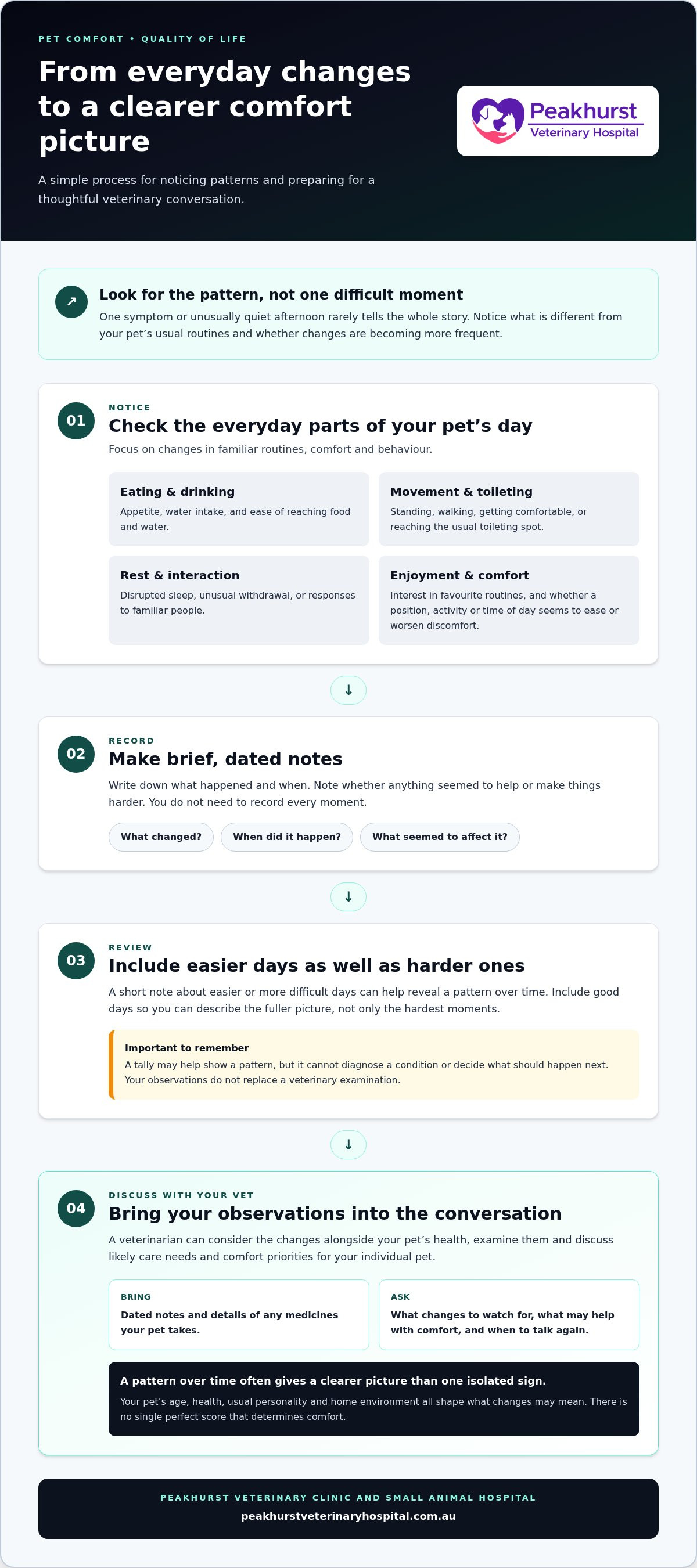
A difficult day can make you worry that your pet’s comfort has changed for good. But one symptom, or one unusually quiet afternoon, rarely tells the whole story. Look at how your pet is managing their usual routines and whether changes are becoming more frequent. This broader view can help you prepare for a veterinary conversation about pet end of life care Sydney without treating a home checklist as a diagnosis.
There isn’t one perfect score that can tell you whether a pet is comfortable. Their age, health, usual personality and home environment all shape what changes may mean. Focus on what’s different for your companion rather than comparing them with another animal.
Make brief, dated notes when you notice a change. You don’t need to record every moment; a few clear observations can help you spot patterns and describe them accurately later. Note what happened, when it happened and whether anything seemed to help or make things harder.
Note changes in appetite, water intake or ease of reaching food and water.
Record difficulty standing, walking, getting comfortable or reaching their usual toileting spot.
Notice disrupted sleep, unusual withdrawal or changes in how your pet responds to familiar people.
Track interest in favourite routines, and whether a position, activity or time of day seems to ease or worsen discomfort.
You can mark days as easier or more difficult, with a short note about why. A tally may show a pattern, but it can’t diagnose a condition or decide what should happen next. The notes are a practical way to make your observations easier to share.
A vet can discuss the changes you’ve seen alongside your pet’s health and examine them to help assess what may be affecting their comfort. They can talk through likely care needs and comfort priorities for your individual pet. A pattern of changes over time often gives a clearer picture than one isolated sign. Your observations are helpful, but they don’t replace an examination.
Before an appointment, bring your dated notes, details of any medicines your pet takes, and the questions you most want answered. Ask what changes to watch for, what could help your pet feel more comfortable, and when to have another discussion. Include good days in your notes too, so you can describe the whole picture, not only the hardest moments. The ASPCA end-of-life pet care resource also offers general guidance on recognising changes and caring for pets nearing the end of life.
Peakhurst Veterinary Clinic’s team can help you discuss your pet’s comfort and care needs. Explore veterinary care in Peakhurst for local support.
It’s common to worry about making a decision too early or waiting until your pet is suffering. That uncertainty doesn’t mean you’re letting them down. The aim is to understand how your pet is feeling now, what support may be appropriate and how their needs could change. There’s no exact timeline or single score that can make this decision for every family.
Comfort-focused care and euthanasia have different purposes. Comfort-focused care aims to support your pet’s wellbeing while they live with a health condition. Euthanasia is a compassionate option to discuss with a veterinarian when a pet’s suffering and comfort cannot be adequately managed. The right pathway depends on your pet’s health, individual circumstances and veterinary assessment.
Families may raise comfort care when changes in health begin to affect everyday wellbeing, such as eating, resting, moving or enjoying familiar routines. The discussion can clarify what matters most for your pet and what care may support their comfort. Needs can change, so review the situation with your vet rather than assuming one conversation settles every question.
Comfort-focused care isn’t a promise that a condition will improve, nor does it mean a family must pursue every possible option. It’s a way to talk through what may be appropriate for this pet, with their health and circumstances in mind. Your veterinarian can explain care considerations and what changes might warrant another review, based on an assessment of your animal.
Euthanasia can be a painful subject to raise, but discussing it doesn’t commit you to a decision. A compassionate veterinary conversation can help you understand your pet’s condition, consider whether suffering can be eased and talk through the choices available. If you’re unsure whether the time has come, say so. Uncertainty is a reason to seek guidance, not a reason to judge yourself.
A vet can help interpret changes in your pet’s quality of life without judging the family who loves them. Bring your observations and ask questions that make the next steps clearer, such as:
• What might be affecting my pet’s comfort at the moment?
• What changes should prompt us to review their care or speak again?
• How will we know if their current support is no longer meeting their needs?
• What should we consider if we’re worried about suffering?
There isn’t a universal answer to these questions. A pattern of changes can guide the discussion, but it doesn’t replace your veterinarian’s assessment or determine the decision on its own. For families considering pet end of life care Sydney, an open conversation centred on the individual pet, their comfort and the family’s concerns is a practical next step. You can take the discussion one question at a time.
Planning can’t take away the sadness of saying goodbye, but it can make practical decisions feel less overwhelming. For families considering pet end of life care Sydney, a few notes and conversations can help everyone feel more prepared, without needing every answer straight away. Take things one step at a time and make choices that feel right for your family and pet.
Before a conversation with your veterinary team, gather details that will help them understand your concerns. It may be useful to write down:
• Recent changes in your pet’s health, comfort or everyday routines.
• The questions you want answered, including what to expect and what choices may be available.
• Any family preferences or practical needs you’d like to discuss.
• Who you’d like beside you, whether to offer support or help remember what’s discussed.
Your notes don’t need to be perfect. A short list can help you stay focused if the conversation feels emotional. Consider what would make the appointment more manageable for you and your household. You may want a trusted person to come along, or prefer a quieter conversation with fewer people present. Both are personal choices.
It can also help to talk with family members beforehand, particularly if they’re involved in your pet’s care. Sharing questions and preferences early can make it easier to understand one another and decide what support you’d like. If family members feel differently, let the veterinary team know so they can help keep the discussion centred on your pet’s needs.
Aftercare is part of planning, too. You may wish to consider what feels meaningful for your family, such as cremation or a pet memorial. There’s no single choice that suits everyone, and you don’t have to settle every detail before starting the conversation. Peakhurst Veterinary Clinic can coordinate cremation or pet memorial services as part of planning a goodbye.
If you’re planning with children or other family members, think about how they’d like to be included and what might help them feel supported. Some may want to share a quiet moment or choose a way to remember their companion; others may need space. Give everyone room to express what they need.
The practical details of euthanasia are a separate part of the conversation. For now, focus on the questions, preferences and support that matter to your family. For compassionate guidance with planning and aftercare, speak with Peakhurst Veterinary Clinic.
Changes in a much-loved pet’s health can leave you with questions that are hard to put into words. At Peakhurst Veterinary Clinic and Small Animal Hospital, families can discuss their pet’s needs with a local veterinary team and learn about compassionate end-of-life care. The independently operated practice has cared for the community since 1972, offering support for families in Peakhurst and surrounding Sydney communities.
Every pet’s situation is different. A conversation can focus on what you’ve noticed, what your pet may need and what options suit their circumstances. The clinic provides humane end-of-life care and compassionate euthanasia consultations, giving families space to raise concerns and understand the choices involved without being pushed towards a particular decision.
You can bring questions about:
• Your pet’s current needs and comfort.
• Whether a euthanasia consultation may help you understand the options.
• What to consider when planning aftercare.
• How cremation or pet memorial services can be coordinated.
It’s okay if you don’t know exactly what to ask at first. Sharing what has changed and what you’re worried about gives the veterinary team a place to begin. They can discuss your pet as an individual and help make the conversation clearer, whether you’re seeking guidance about care or thinking ahead to a goodbye.
Aftercare can be part of that same conversation. The team can coordinate cremation or pet memorial services, helping you consider what feels appropriate for your family. Talk about your preferences and take time to understand the arrangements, rather than feeling you need every detail decided before you speak with the clinic.
Peakhurst Veterinary Clinic is located in Sydney’s south and serves nearby communities, including Riverwood, Mortdale and Padstow. If you’re worried about your pet or want to understand the support available, contact the clinic to discuss your pet’s situation. A conversation can help you share what’s happening and consider a thoughtful next step at your own pace.
Seeking pet end of life care Sydney families can discuss with a local team doesn’t mean you’ve already made a decision. It can simply help you feel better informed and supported as you care for your companion. Talk with our caring veterinary team when you feel ready.
You don’t need every answer before starting a conversation. Share what’s worrying you and what you hope for your pet. A thoughtful discussion can help turn uncertainty into a clearer sense of what to consider next, while leaving space for your feelings and your family’s needs.
Seeking pet end of life care Sydney families can feel supported through is not about being rushed into a decision. It’s about making room for honest questions and keeping your companion’s wellbeing at the heart of each choice. The Peakhurst team can discuss your pet’s situation and the guidance that may help.
Speak with Peakhurst Veterinary Clinic about your pet’s care. You and your companion deserve kindness and understanding, whatever the next step may be.
No. Palliative care describes support focused on comfort while a pet is living with illness or age-related changes. End-of-life care is a broader term for the guidance and decisions that may arise as a pet’s needs change, including planning for a goodbye. If you’re unsure which term applies, ask your vet what the immediate care is intended to achieve and what changes might mean it needs reviewing.
Good days alone can’t tell you whether waiting is right for your pet. Notice what happens between them: for example, whether your dog still wants a short walk or your cat continues to groom and settle comfortably. Share both reassuring and worrying changes with your vet. If you’re concerned, seek guidance rather than relying on a set number of good or difficult days to make the decision.
Use calm, honest words your child can understand, and let them ask questions at their own pace. You might explain that the pet is very unwell and that the family and vet are working out how to care for them. Avoid saying the pet will get better if that isn’t certain. Children can choose how to remember their companion, and families can consider together whether attending an appointment feels right.
They can respond to a changed routine or the absence of an animal they knew, though some show little obvious change. Keep feeding, walks and rest times as familiar as you can, and watch for lasting changes in appetite, sleep or behaviour. Offer gentle company without forcing interaction. If a change persists or you’re worried about your other pet’s health, discuss it with your veterinary team.
If you think your pet has died, contact a veterinary clinic for guidance on what to do next and how to discuss aftercare. If you’re uncertain whether they’ve passed, or they appear distressed, seek urgent veterinary advice. You don’t need to manage the practical questions alone. A veterinary professional can help you understand the next steps and talk through arrangements with care.
Yes. Talking about aftercare beforehand can give you time to consider what feels meaningful, rather than making decisions while distressed. Peakhurst Veterinary Clinic can coordinate cremation or pet memorial services. The practice serves families in Peakhurst and nearby communities, including Peakhurst Heights, Riverwood, Padstow Heights, Padstow, Mortdale, Lugarno, Narwee, Oatley, Revesby Heights, Penshurst, Beverly Hills, Alfords Point, Connells Point, Bonnet Bay, Oyster Bay, Como, Roselands, Hurstville Grove and Blakehurst.
If your pet is severely distressed, struggling to breathe, has collapsed or is worsening quickly, seek urgent veterinary advice rather than waiting for a routine appointment. If the change seems less immediate, make a note of what you’re seeing and contact your regular veterinary team when they’re available. If you can’t judge how serious it is, describe the signs to a veterinary professional and ask for guidance.