The good news is that many cats can be helped quickly once the cause is identified. Knowing the warning signs of FLUTD, especially the signs of a blocked cat, can make a major difference to your cat’s comfort and recovery.
If your cat is straining to urinate, passing little or no urine, or showing signs of pain, contact your veterinarian immediately. The team at Peakhurst Veterinary Hospital can assess your cat and advise on the next steps.
The lower urinary tract of cats is made up of the bladder and the urethra. The bladder stores urine before it is passed out of the body, while the urethra is the tube that carries urine from the bladder to the outside.
When either of these structures becomes inflamed or irritated, the condition is described as feline lower urinary tract disease. FLUTD is a broad term rather than a single diagnosis, so your veterinarian needs to investigate the underlying cause before recommending treatment.
FLUTD can be caused by urinary tract infections, bladder stones, urethral obstruction, feline idiopathic cystitis, urinary tract tumours, anatomical abnormalities, trauma, neurological disease or any other inflammatory trigger within the lower urinary tract.
Cats with FLUTD often show similar clinical signs, regardless of the underlying cause. The most common signs are:
Any cat that is unable to pass urine properly should be treated as an urgent case. Even if the signs seem mild at first, FLUTD can worsen quickly.

A urethral obstruction, often called the blocked cat, happens when stones, crystals, mucus or cellular debris create a plug in the urethra and prevent urine from leaving the bladder. Male cats are affected more commonly than females.
This is a medical emergency and can be fatal. A blocked cat can become very unwell within hours because urine cannot escape, toxins build up and other body systems are affected. Signs may include repeated straining, crying out, collapse, vomiting and a painful, tense abdomen.
If you suspect a blockage, keep your cat calm, do not give human medication, do not force food or water, and seek urgent veterinary care immediately. Urgent treatment usually involves blood tests, a general anaesthetic, intravenous fluids and placement of a urinary catheter to relieve the obstruction and flush the bladder.
Hospitalisation is often required for ongoing monitoring, pain relief and treatment based on laboratory results. Cats that have blocked once are also at risk of recurrence, so post-obstruction care and prevention are especially important.
A veterinary examination is essential because the same signs can occur with several different diseases. Your veterinarian will usually ask about your cat’s diet, behaviour, litter tray habits, environment, recent changes at home and any possible stressors.
A physical examination will include palpating the bladder to assess whether it is enlarged, firm or painful. Urine tests are important because they can reveal information about urine concentration, acidity, blood, white blood cells, crystals, proteins and bacteria.
Depending on the findings, blood tests may also be needed to assess overall health and check for complications. In some cats, imaging such as x-rays or ultrasound is recommended to look for bladder stones, tumours or other structural problems.
A fresh urine sample can help your veterinarian investigate the cause of FLUTD. Collecting one at home can be difficult, but it is sometimes possible with a little preparation.
Options may include isolating your cat in a bathroom or laundry with a non-absorbent litter substitute, collecting urine from a clean floor with a syringe, or arranging sample collection at the clinic. If needed, your veterinarian can collect urine by cystocentesis, bladder expression or by hospitalising your cat.
Treatment depends on the diagnosis, because FLUTD is a syndrome rather than one disease. Some cats may need antibiotics or anti-inflammatory medication, while others may require catheterisation, surgery or long-term environmental management.
If a stone, tumour or other structural problem is identified, treatment may be targeted directly at that cause. In recurrent or severe cases, more intensive treatment and repeat monitoring may be required.
For cats with feline idiopathic cystitis, the focus is often on reducing pain, calming inflammation and lowering stress. This may include pain relief, anti-inflammatory medication, diet changes, pheromone products, anti-anxiety medication and careful environmental adjustment.
Feline idiopathic cystitis is a diagnosis of exclusion, meaning it is diagnosed when the cat has FLUTD signs but no infection, stone, tumour or other obvious cause is found. It is often linked to stress, and many triggers are subtle from a human point of view.
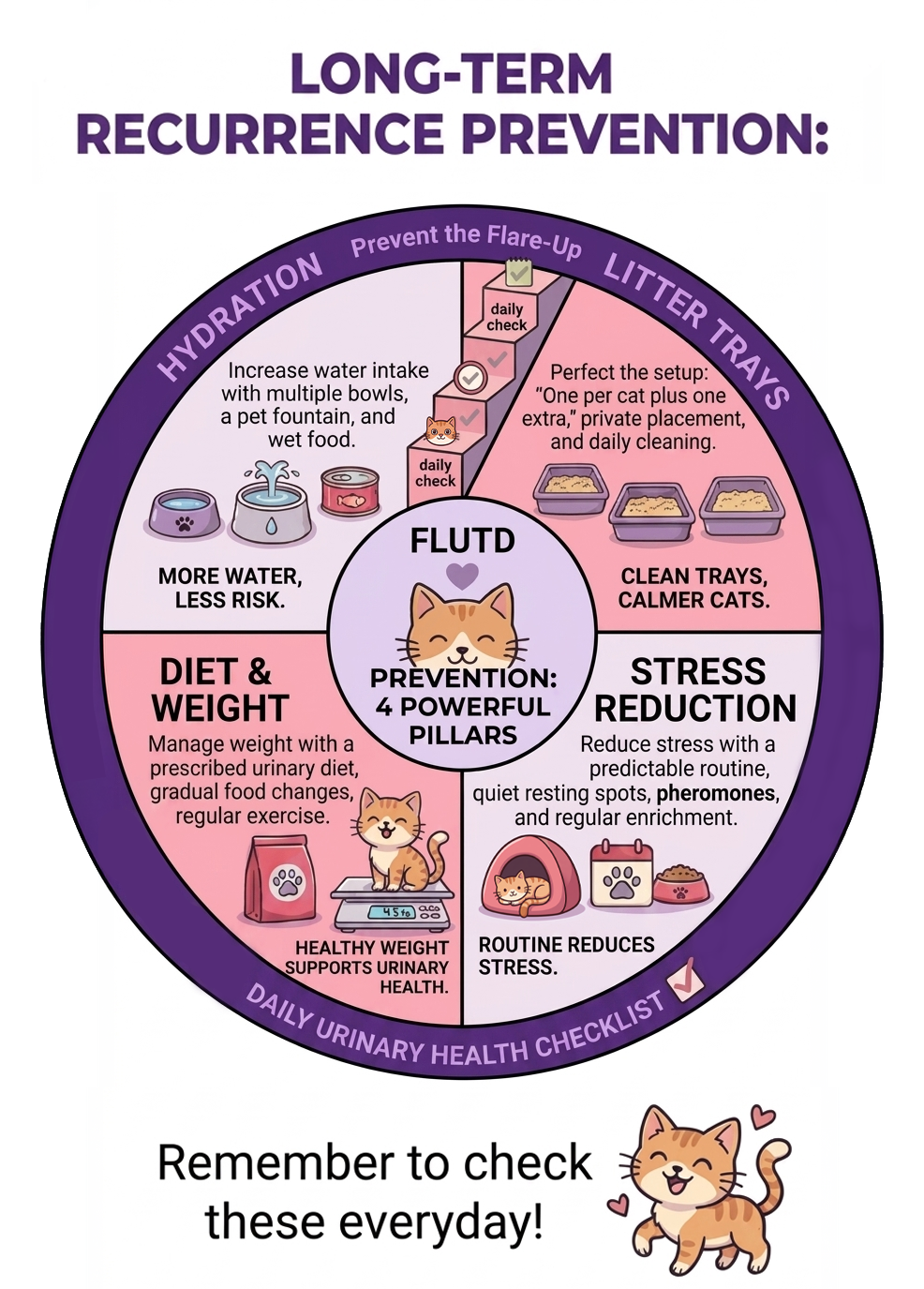
Cats usually do best with predictable routines and an enriched environment. Helpful strategies include one litter tray per cat plus one extra, private litter tray placement, regular cleaning, access to fresh water, puzzle feeders, hiding spots, scratching posts and consistent feeding routines.
If possible, reduce stressors such as dirty litter trays, changes to furniture, new animals, stray cats near windows or doors, and sudden changes in feeding or household routine. A veterinary urinary diet may also support long-term urinary health in some cats.
Recurrence is common, so the goal is not only to treat the current episode but also to reduce the chance of future flare-ups. Cats that have FLUTD often need ongoing support rather than a one-off fix.
The most useful prevention pillars are simple but important:
Small changes can make a big difference. Even reducing one stressor, improving water intake or making litter tray access easier may help lower the risk of another episode.
Some causes of FLUTD can be resolved, but many cats experience recurring episodes over their lifetime. The aim of treatment is often to relieve the current episode, identify the cause and reduce the chance of future flare-ups.
Long-term management is especially important for cats with idiopathic cystitis or a history of urethral obstruction. With the right plan, many cats can live comfortably and have fewer episodes over time.
Not every case of FLUTD can be prevented, but there are several steps that may lower the risk:
A blocked cat often strains repeatedly but passes little or no urine, may seem distressed or painful, and can become dull, unwell or vomit. If you suspect a blockage, treat it as an emergency.
Blood in the urine is a common FLUTD sign, but it can also occur with other urinary problems. A veterinary examination is needed to find the cause.
Yes. Stress is a major factor in feline idiopathic cystitis, which is one of the most common causes of FLUTD.
No. A urinary blockage is a medical emergency and can be fatal. Prompt veterinary attention is essential as cats deteriorate rapidly.
Yes. Recurrence is common, which is why follow-up care, stress reduction, hydration and litter tray management are so important.
When to Call Peakhurst Veterinary Hospital
If your cat is urinating in unusual places, straining to pass urine, passing blood in the urine or not passing urine at all, contact our clinic immediately. Prompt diagnosis and treatment can relieve pain, prevent complications and improve the chances of a good recovery.



.png)