Does your dog need the same vaccinations as every other dog? If you’re researching dog vaccination Peakhurst options, it’s understandable to feel unsure about what’s right for your companion, especially if they’re a puppy, have missed a booster or spend time around other dogs. Vaccination advice can be tailored to your dog’s age, health history and lifestyle, so there’s no need to guess or feel worried about asking questions.
This guide explains how vets consider which vaccines may suit your dog, what to expect at an appointment and how puppy, adult and overdue vaccination timing can differ. You’ll also find out what to bring, including vaccination records and details of past reactions or your dog’s routine. Peakhurst Veterinary Clinic and Small Animal Hospital provides vaccinations and routine health checks for the local community. Talking through your dog’s history with a local veterinary team can make planning preventive care feel more manageable.
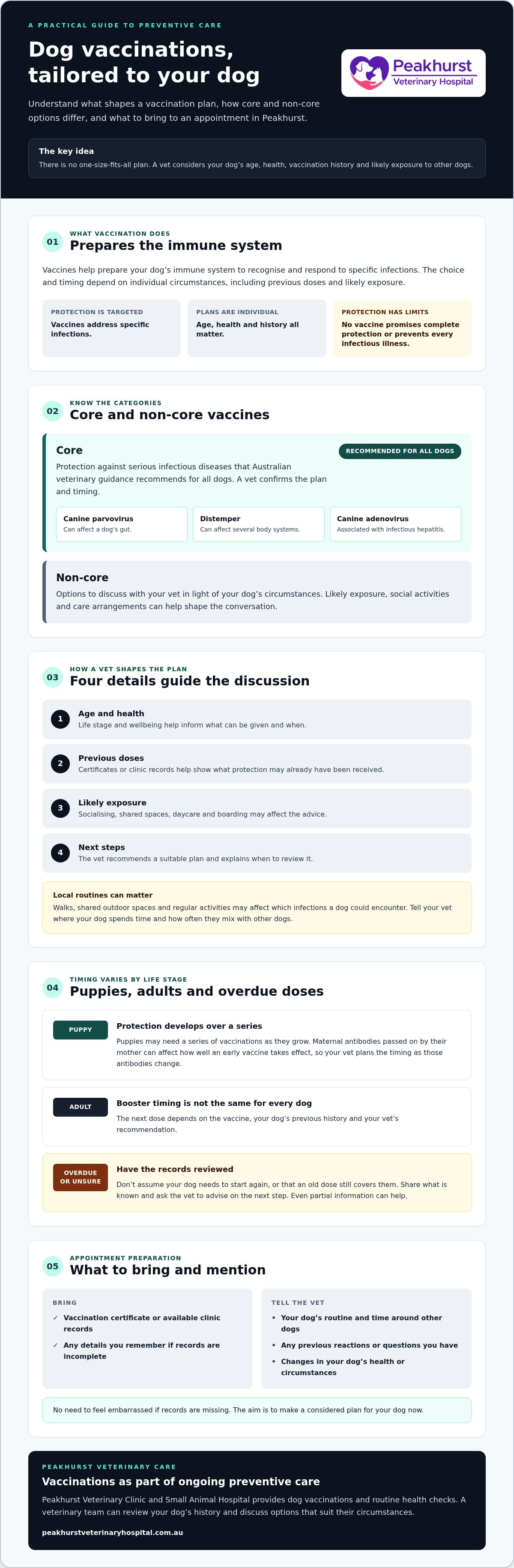
• Vaccines help prepare your dog’s immune system to respond to specific infections. The right choices depend on your dog’s individual circumstances.
• Help your vet shape a suitable plan by sharing your dog’s age, health, vaccination history and likely exposure to other dogs.
• Understand the difference between core and non-core vaccines so you can discuss which options may fit your dog’s needs.
• For dog vaccination Peakhurst appointments, bring any vaccination records and note questions about your dog’s routine or previous reactions.
• Peakhurst Veterinary Clinic and Small Animal Hospital provides dog vaccinations and routine health checks as part of ongoing preventive care.
Vaccine choices can feel confusing, particularly when advice from other owners or online sources doesn’t seem to match. Vaccination helps prepare your dog’s immune system to recognise and respond to specific infections. The vaccines and timing your dog may need depend on factors such as age, health, previous doses and likely exposure. A vet can review these details and explain the options for your dog.
Core vaccination means protection against serious infectious diseases that Australian veterinary guidance recommends for all dogs, with the plan and timing confirmed by a vet. Core vaccines commonly cover canine parvovirus, distemper and adenovirus-related infectious hepatitis. For an introductory overview, read this dog vaccination information, then discuss how it applies to your dog with a veterinary professional.
These infections can cause serious illness. Parvovirus can affect a dog’s gut, distemper can affect several body systems, and canine adenovirus is associated with infectious hepatitis. Core vaccination is intended to reduce the risk of these diseases, but no vaccine can promise complete protection or prevent every infectious illness.
Your vet can check your dog’s records and health before advising on vaccination. This is especially useful if you’re unsure which doses they’ve had or their circumstances have changed since their last visit.
Dogs may encounter one another on walks, in shared outdoor spaces, or through regular activities such as daycare and boarding. These routines can shape which infections your dog could be exposed to. A dog who often mixes with other dogs may have different needs from one whose outings are more limited.
For dog vaccination Peakhurst advice, tell your vet where your dog spends time and how often they socialise. The veterinary team can consider these details alongside your dog’s age, health and vaccination history. This helps keep preventive care relevant without assuming every dog needs the same vaccines.
A suitable vaccination plan starts with your dog, not a standard list of injections. Your vet will consider their age, current health, previous vaccine doses and likely exposure to infectious diseases. These details help explain why recommendations can differ between dogs, even when they live in the same area or have similar routines.
A simple overview of the assessment is:
Your dog’s life stage and wellbeing help inform what can be given and when.
Certificates or clinic records help the vet understand what protection your dog may already have received.
Socialising with other dogs, shared spaces and care arrangements may affect the advice.
The vet recommends an appropriate plan and explains when to review it.
For further background, the American Veterinary Medical Association’s veterinary vaccination guidelines explain why vaccine schedules are individualised. Your Australian vet can advise how that general information applies to your dog.
Puppies may need a series of vaccinations as they grow, rather than a single visit. Maternal antibodies passed on by their mother can affect how well an early vaccine takes effect, so timing is planned to support protection as those antibodies change. Your vet can advise on a schedule for your puppy. Ask them to explain each step if you’re unsure.
Adult dogs don’t all need the same booster at the same interval. The next dose depends on the vaccine, your dog’s previous history and your vet’s recommendation. If a vaccination is overdue, or you don’t know what your dog has received, don’t assume they need to start again or that an old dose still covers them. Ask the vet to review what’s known and advise on the next step.
Bring your dog’s vaccination certificate or ask their previous clinic to share the records. Even partial information can help. If records aren’t available, tell the vet what you remember and when the last visit may have been. There’s no need to feel embarrassed; the aim is to make a considered plan for your dog now.
If you’re arranging dog vaccination Peakhurst care, you can discuss your dog’s age, health and history with Peakhurst Veterinary Clinic and Small Animal Hospital, which provides dog vaccinations and routine health checks.
Vaccine labels are useful shorthand, but they don’t tell the whole story. In Australian veterinary practice, vaccines are commonly described as core, recommended broadly for dogs, or non-core, considered according to a dog’s individual risk of exposure. This distinction can guide a conversation, but it doesn’t replace one. Your vet can consider your dog’s health and routine before recommending a plan.
Core vaccination protects against serious diseases that are considered a concern for all dogs. In Australia, C3 is a familiar term for a combination vaccine covering canine parvovirus, distemper and adenovirus-related infectious hepatitis. The RSPCA vaccination recommendations offer further background on Australian vaccine categories. Your vet can confirm the vaccine components and timing relevant to your dog.
| Category | What it means | What to discuss |
|---|---|---|
| Core | Broadly recommended protection against serious diseases, commonly associated with C3. | Your dog’s previous doses, health and the timing of any next dose. |
| Non-core | Additional vaccination considered when a dog’s circumstances may increase exposure. | Social contact, group care, boarding, travel and any relevant health factors. |
A C3 label doesn’t settle every question about your dog’s care. The vet still needs to consider their history and decide whether any additional protection is appropriate.
Frequent contact with other dogs, group care or boarding may prompt a discussion about kennel cough vaccination. The level of exposure and your dog’s health help shape that conversation. This is not a blanket recommendation: your vet can explain what a vaccine covers and what it doesn’t, including that kennel cough vaccination may not prevent every cause of coughing illness.
Boarding facilities may set their own vaccination and proof-of-record requirements. Check directly with the place your dog will stay and share those details with your vet. A facility’s requirements are separate from a vet’s clinical recommendation.
For dog vaccination Peakhurst advice, ask your veterinary team why a vaccine is suggested for your dog rather than choosing a package based on its label alone. This lets the plan reflect your dog’s routine and health needs.
A little preparation can make the visit more straightforward, especially if your dog’s records are incomplete or a dose may be overdue. The vet will usually review your dog’s vaccination history and may check their general health before discussing what, if anything, is due. If you can’t find the records, tell the clinic what you know rather than trying to guess. The vet can advise on the next step.
Before arranging dog vaccination Peakhurst care, ask the clinic how to book and confirm its current appointment options. Let the team know if your dog is currently unwell, pregnant or has another health concern so they can advise you before the visit. Mention any past reaction to a vaccine, even if you’re unsure whether it was related.
Bring and ask:
• Vaccination certificates or records from a previous clinic. If you don’t have them, mention this when arranging the visit.
• Details of your dog’s medicines, current health concerns and any previous reactions you remember.
• Questions about which vaccines are being considered, why they may suit your dog and when to review the plan.
• Information about your dog’s routine, including regular contact with other dogs or plans for boarding.
These details give the vet a clearer picture of your dog’s history and a practical starting point for the discussion, rather than relying on assumptions about what they’ve already received.
Some dogs may be quieter than usual or have tenderness where the vaccine was given for a short time. Ask the vet what reactions may be expected for the vaccine your dog receives and how long to monitor them. Advice can vary, so follow the guidance given at your appointment.
Contact a veterinarian if your dog has severe, unusual or worsening signs, or if you’re worried about how they’re feeling. Don’t try to diagnose the cause or give medication without veterinary advice. If you’re unsure, it’s reasonable to ask for guidance.
For help planning a vaccination visit, ask Peakhurst Veterinary Clinic and Small Animal Hospital about arranging an appointment. Sharing your dog’s records and health details gives the veterinary team a useful starting point.
A useful vaccination discussion takes your dog’s whole picture into account: age, health, previous doses and everyday activities. Bring any records you have and mention changes such as starting group care or planning to board. If records are missing, say so. Your vet can review the information available and explain the options without relying on guesswork.
It’s reasonable to ask your veterinary team to explain their recommendation. Consider asking:
• Which vaccines may suit my dog’s age, health and vaccination history?
• Do my dog’s usual activities or contact with other dogs affect the advice?
• When should we review the plan, and how can I keep the records up to date?
• Could a previous reaction or health concern affect the next step?
Share any concerns openly, even if they seem small. Clear answers can help you understand the plan and what to expect next.
For dog vaccination Peakhurst care, Peakhurst Veterinary Clinic and Small Animal Hospital provides dog vaccinations and routine health checks. The independently operated clinic is located in Peakhurst, Sydney, and serves the local community and nearby southern Sydney suburbs.
Vaccination can be discussed as part of your dog’s ongoing preventive care. To learn how a routine health check fits into that picture, explore the clinic’s annual pet health checks guide.
If you’re ready to talk through your dog’s vaccine history, lifestyle or next steps, contact the clinic to ask about dog vaccinations or routine health checks. The veterinary team can help you consider care that suits your companion.
Your dog’s vaccination plan should reflect their age, health, previous doses and everyday routine. Core and additional vaccines serve different purposes, so a conversation with your vet can help clarify which options may suit your companion. Bring any vaccination records and share your concerns to give the team a useful starting point, even if some history is missing.
If you’re looking for dog vaccination Peakhurst care, Peakhurst Veterinary Clinic and Small Animal Hospital provides dog vaccinations and routine health checks. The independently operated practice serves Peakhurst and surrounding southern Sydney communities. Your local veterinary team can help review your dog’s history and discuss vaccination as part of their ongoing preventive care.
Contact the Peakhurst veterinary team to discuss your dog’s vaccinations. Asking questions is a thoughtful way to care for your dog, and you don’t need to have every answer before starting the conversation.
Most dogs are advised to receive core vaccination against canine parvovirus, distemper and adenovirus-related infectious hepatitis. Other vaccines, such as kennel cough vaccination, may be discussed according to your dog’s health and exposure to other dogs. The best plan depends on their age, records and routine, so ask your vet why each vaccine is being recommended. For dog vaccination Peakhurst advice, share your dog’s usual activities with the veterinary team.
There isn’t one interval that suits every vaccine and dog. Puppies usually need a series of vaccinations as they grow, while adult doses depend on the vaccine, previous history and veterinary advice. In Australia, core C3 boosters for adult dogs are often given every three years, while kennel cough vaccination may need annual renewal. Your vet can check your dog’s records and confirm the timing that applies to them.
Tell the clinic if your dog is unwell before their vaccination visit. The vet may recommend assessing their health and deciding whether to proceed or wait. Mention what you’ve noticed, when it began and any medicines your dog is taking. Don’t make the decision based on a general schedule alone. The veterinary team can consider your dog’s condition and advise on a suitable next step.
If doses are overdue or you can’t find your dog’s records, arrange a veterinary review rather than guessing which vaccines they need. Bring any certificates you have, or ask the previous clinic to share the history. The vet can use the available information to recommend a plan. Peakhurst Veterinary Clinic and Small Animal Hospital serves Peakhurst and nearby communities, including Peakhurst Heights, Riverwood, Padstow Heights, Padstow, Mortdale, Lugarno, Narwee, Oatley, Revesby Heights, Penshurst, Beverly Hills, Alfords Point, Connells Point, Bonnet Bay, Oyster Bay, Como, Roselands, Hurstville Grove and Blakehurst.
Yes. In NSW, dogs need vaccination against common diseases, including kennel cough, before they can be accepted into a boarding kennel, and proof of vaccination is required. Check with the boarding facility about which vaccines it expects and what documentation to provide. Share those details with your vet, who can review your dog’s history and advise on timing. Check the requirements before arranging your dog’s stay.
Some dogs may be quieter than usual or have tenderness where the vaccine was given for a short time. Ask your vet what to watch for after your dog’s particular vaccination and how long any expected effects may last. Contact a veterinarian if signs are severe, unusual or worsening, or if you’re concerned. Don’t try to diagnose the cause or give your dog medication without veterinary advice.
Sometimes, but the vet should decide based on your dog’s health, vaccination history and the vaccines being considered. Ask what each vaccine covers and whether giving them together or at separate visits is suitable for your dog. Peakhurst Veterinary Clinic and Small Animal Hospital provides vaccinations for local owners in Peakhurst, Peakhurst Heights, Riverwood, Padstow Heights, Padstow, Mortdale, Lugarno, Narwee, Oatley, Revesby Heights, Penshurst, Beverly Hills, Alfords Point, Connells Point, Bonnet Bay, Oyster Bay, Como, Roselands, Hurstville Grove and Blakehurst.
.png)