Many pet owners believe that arthritic pain and loss of mobility are inevitable parts of ageing for their pet. Whilst degeneration will occur with age, there are numerous strategies and treatments available that will minimise the pain and mobility restrictions brought on by arthritis.
Arthritis is an inflammatory condition affecting joints. It is degenerative and progressive in nature and there is currently no cure.
Although there are several types of arthritis, the focus here is on the most common type affecting ageing pets, degenerative joint disease (osteoarthritis).
Joints are the area in bodies where bones meet and “bending” occurs. Examples include the shoulder, elbow, hips and knee (stifle). There are many joints in a dog and cat body, and any can be affected by arthritis.
Symptoms of arthritis develop when the cartilage covering the bones in a joint suffer wear-and-tear or injury. This results in inflammation, pain and development of bony processes within the joint. Often referred to as “bone-on-bone” rubbing, the cushioning within the joint is reduced and a cycle of further deterioration is created.
There are multiple factors that can influence the development and rate of progression of arthritis in dogs and cats.
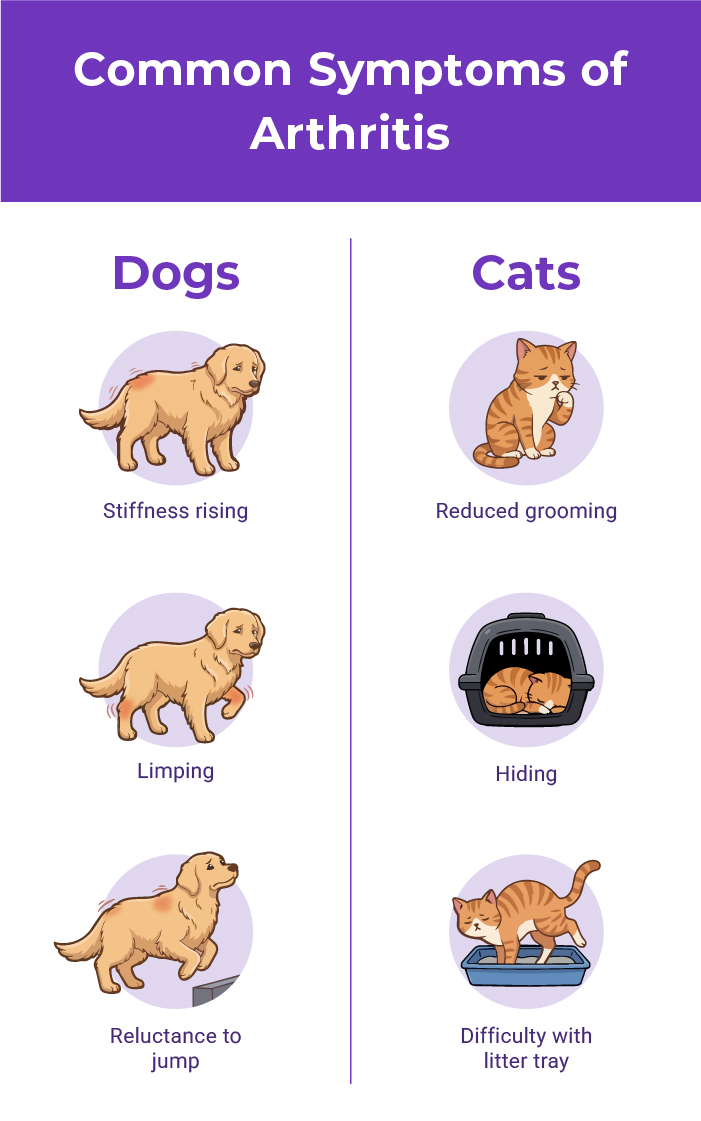
Dogs and cats may display the following symptoms:
Cats often mask pain so often display more subtle signs of arthritis, and they are often missed by owners. Examples include:
A veterinary examination will reveal pain, stiffness, limited range of motion and possibly crepitus (crunching sound) in your pet’s joints. Combined with the history or clinical symptoms you discuss with your vet, a preliminary diagnosis of arthritis can be made.
Imaging such as x-rays may be recommended, as well as blood tests to ensure adequate liver and kidney function and general health before starting any medications. If indicated, advanced imaging options may be recommended such as CT scans in some cases.
Managing dog and cat arthritis involves the implementation of multiple strategies at the same time. The aims are to reduce pain, slow degeneration of the joints, improve mobility and improve your pet’s quality of life.
Whilst arthritis cannot be cured, a good quality of life can be provided if several strategies are utilised. Please organise a veterinary examination for your pet to receive individualised advice on managing your pet’s clinical symptoms.
Joint supplements and nutraceuticals – These are products added to your pet’s diet or given as a tablet which do not contain medication, but rather provide supplements directed at reducing inflammation and/or improving joint health. Commonly used products contain omega-3 fatty acids, chondroitin, glucosamine and green-lipped mussel products.
Veterinary prescription diets are available which contain supportive ingredients for joint health. Please contact our clinic to discuss with our staff.
Never give any supplement, herb or holistic treatment to your pet without first seeking veterinary advice.
Anti-inflammatory medications and pain relief – These are veterinary prescribed medications which will assist in reducing inflammation and pain, allowing increased mobility and enjoyment of daily life. They must be given strictly according to veterinary instruction and will require ongoing regular veterinary checkups. Your vet will discuss the best options for your pet based on its individual symptoms, medical history and needs.
Never dose your dog or cat with human medications or medications prescribed for other animals without seeking veterinary advice.
Weight management – Maintaining an optimal weight for your pet is an essential component of managing arthritis. The staff at Peakhurst can assist you in determining your pet’s ideal weight and give advice on how to achieve consistent and long-term weight loss. Less stress on joints means less pain and deterioration!
We can help tailor a diet specifically for your pet and discuss the use of high-quality foods with reduced calories, low calorie treats and carefully measured portion sizes.
Although it often seems to owners like an insurmountable task to achieve weight loss goals for their pets, slow consistent reductions are the aim. With multiple people in a household providing food and treats, a combined effort by all household members is essential for success.
It is crucial that cats only undergo weight loss under veterinary supervision. Rapid or extensive weight loss can cause severe liver issues in cats.
Exercise and physical therapy – Moderate low impact exercise is strongly recommended for arthritic pets.
For dogs, gentle lead walks on even surfaces using a harness, swimming and hydrotherapy and canine physiotherapy are all appropriate physical exercises to consider.
Cats can benefit from interactive moveable toys which move along flat surfaces as well as physiotherapy if they will tolerate it.
Animal physiotherapy professionals may also have access to laser therapy and other alternate options.
Environmental modifications – Providing ramps, low stairs and alternate access points for affected animals will assist greatly in providing ongoing mobility for arthritic pets. Providing non-slip mats can reduce slip injuries and allow greater grip and control on polished surfaces. Providing thick comfortable bedding is also strongly recommended. An often-overlooked modification is the provision of raised food and water bowls. Reducing the need to bend can relieve pressure on the neck and spine and greatly improve comfort for your pet.

Miscellaneous support techniques – Any intervention which reduces strain on affected joints and increases activity and quality of life for your affected pet can be discussed with your veterinarian to ensure it will safely provide the support needed.
It is essential to implement additional grooming for cats who are unable to adequately groom due to arthritis to avoid the development of matts and skin conditions.
Ongoing veterinary support – The best outcomes for arthritic pets occur when there is ongoing interaction between the owners and veterinary staff to ensure alterations can be made to management plans whenever needed. As your pet’s arthritis inevitably deteriorates, quality of life can be greatly improved by moving to more targeted therapies and interventions appropriate to your pet’s level of need.
Our staff at Peakhurst Veterinary Hospital look forward to assisting you and your pet on their journey towards a fulfilling and enjoyable life despite any arthritic changes in their joints. Being pro-active, committed and well educated on pet arthritis is the best starting point to providing your pet with comfortable and active senior years.

Arthritis often involves multiple joints and there is no surgical cure. Targeted surgery may be offered for specific joint conditions such as an anterior cruciate rupture or hip dysplasia, but arthritis will still develop over time.
No. Never use supplements, nutraceuticals, holistic treatments or medications used in humans without discussing first with your veterinarian. Many products used in humans are toxic to cats and dogs.
There is no proven way to prevent an animal from getting arthritis. However, implementing strategies when your pet is young such as weight management, moderate exercise, use of joint supplements and regular veterinary checkups especially after injury can assist in delaying the onset and rate of deterioration of arthritis, especially if you own a high-risk breed.
This is a common misconception amongst pet owners. Cats will hide discomfort and pain and both dogs and cats will “push through” some levels of pain for a greater reward such as a game or walk with their owner. Regular veterinary check ups can assist in identifying changes early so those games and walks are not painful for your beloved pet.
Your pet’s joint health impacts their overall wellbeing
Whether your pet is showing early signs of stiffness or has been managing arthritis for some time, the team at Peakhurst is here to help. We’ll assess your pet’s mobility, explain what we find, and guide you through the most appropriate treatment options.
Book an appointment online or call us on (02) 9153 7614 to organise a health check for your pet.


.png)