The lowest fee isn’t always the most affordable choice. For an affordable vet in Peakhurst, compare what an exam includes and how clearly possible costs are explained, as well as the amount itself. Peakhurst vet reviews average 4.4 out of 5 on Trustindex, with 77% of reviewers giving five stars across 156 reviews.
It’s understandable to want a clear idea of costs before deciding on your pet’s care. A health check can assess their general wellbeing, while any follow-up depends on the vet’s findings and your pet’s needs.
This guide explains how to read local reviews, what to expect from a health assessment, and which details can affect fees. You’ll also find practical guidance on seeking an upfront explanation of costs and understanding which nearby suburbs the clinic serves, so you can make a considered choice for your companion.
• Look beyond star ratings by reading what pet owners say about communication, care and follow-up.
• Prepare a few notes about your pet’s health and behaviour to make a wellness exam more useful.
• Understand which details can affect veterinary fees and what to clarify when discussing costs upfront.
• Use the nearby-suburb information to judge whether the clinic is a practical fit for your household.
• Learn what to consider when discussing desexing, including your pet’s needs and recovery care.
Trustindex shows an average rating of 4.4 out of 5 across 156 reviews collected from Google and Trustindex. Seventy-seven per cent of reviewers gave five stars. Together, these figures offer a useful first impression, but they don’t explain every family’s experience. Read several comments alongside the rating to understand what mattered during different visits.
Look for details that match your priorities. A review might describe how staff explained an assessment, helped a nervous pet or discussed follow-up care. These specifics offer more context than a star score alone. Patterns across several accounts can help you decide whether the approach sounds right for your companion.
Some reviewers describe long-standing relationships with the clinic. One reviewer said their pets had received care there over 25 years, while another said their dog Duke had been a patient for 11 years. These are individual accounts, not a guarantee of the same experience for every pet. They can, however, show how some households describe continuity of care.
Other reviews focus on particular episodes. One reviewer said their cat had been unwell for four days before Dr Jan assessed and treated it. The reviewer also reported that the cat returned to normal within 24 hours of treatment. Another described their dog’s eye-operation result as perfect seven days after surgery. These comments reflect personal experiences, rather than expected outcomes for other patients.
Use reviews as one part of your decision. Check each comment’s date and context, then note whether it covers something that matters to you. A review about communication may show how clearly care was explained; an account of surgery reflects that reviewer’s experience of a procedure. Focus on relevant details rather than dramatic wording.
Opening hours are another practical factor, especially when fitting a routine appointment around work, school or travel. Before planning a visit, check the clinic’s published opening hours and note which times suit your household. Then consider the journey from home and how you’ll transport your pet. For example, a cat carrier or an anxious dog may need a calmer travel plan.
For a balanced view, compare the overall Trustindex rating with the experiences described in individual reviews. The 4.4-out-of-5 average and 77 per cent five-star share provide a snapshot; the 156 written reviews add personal context. Use both, along with opening hours and your own priorities, to decide what information will help you feel prepared for a first appointment.
One reviewer said they continued travelling to Peakhurst Veterinary Clinic and Small Animal Hospital after moving 50min away, describing a commitment that may inform how readers weigh individual accounts while looking for affordable vet Peakhurst services.
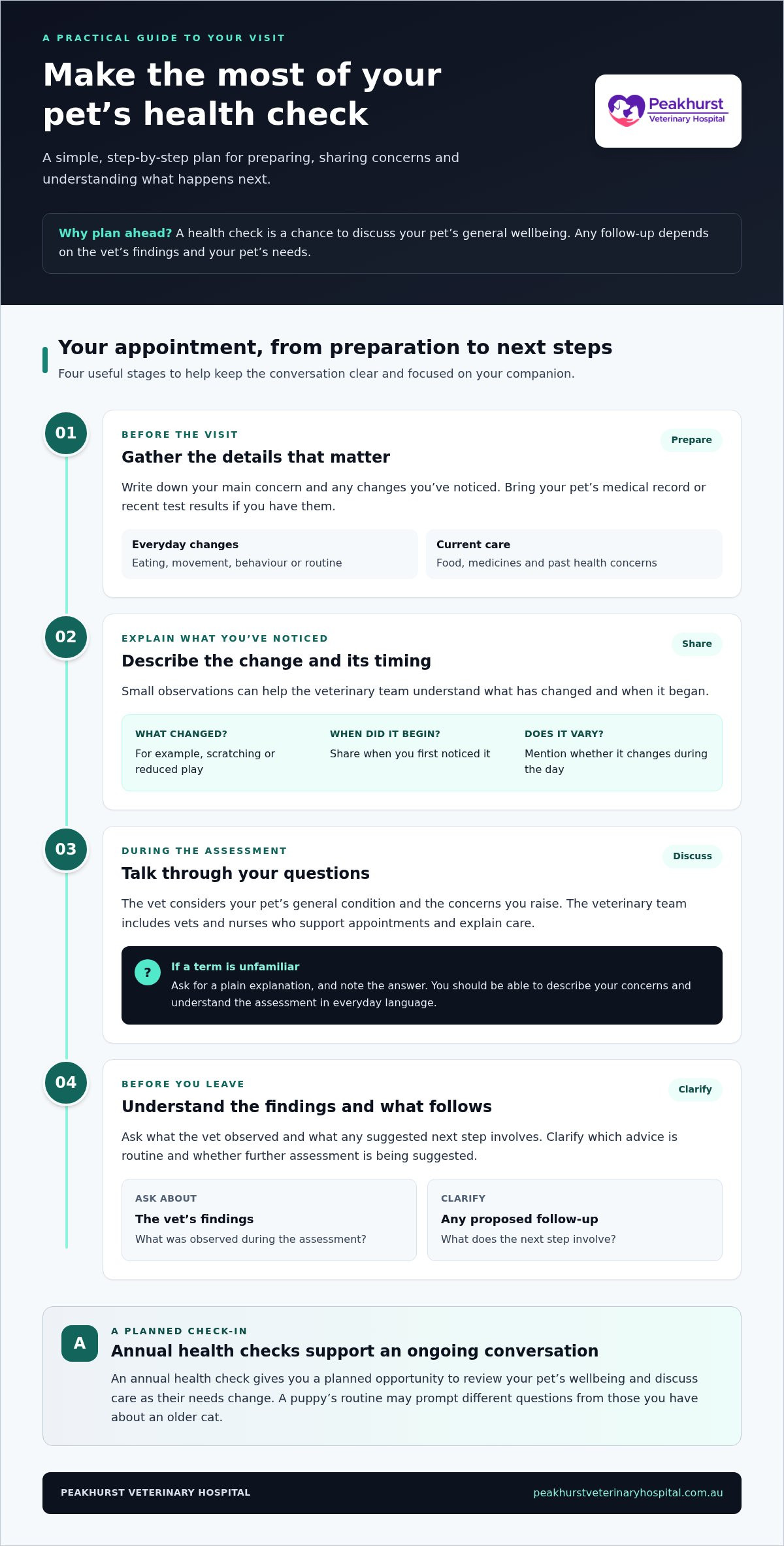
A health check gives you time to discuss how your pet is eating, moving and behaving. Mention changes such as increased thirst, a different appetite or reluctance to climb stairs. These everyday observations help the veterinary team understand what has changed and when you first noticed it.
During an assessment, the vet considers your pet’s general condition and the concerns you raise. Prepare a short list to make the appointment more useful. Include changes in routine, current food, medicines, and questions about comfort or behaviour. Bring your pet’s medical record or recent test results if you have them.
• Describe the change you’ve noticed, such as scratching or reduced play.
• Explain when it began and whether it varies during the day.
• Share relevant details about food, medicines and past health concerns.
• Ask what the vet observed and what the suggested next step involves.
An annual health check gives you a planned opportunity to review your pet’s wellbeing, rather than waiting for a concern to disrupt daily life. It also gives you time to discuss care as your animal’s needs change. A puppy’s routine, for example, may prompt different questions from those you have about an older cat.
The veterinary team includes vets and nurses, who support appointments and explain care. Clear communication matters: you should be able to describe your concerns, hear the assessment in everyday language and understand any proposed follow-up. If a term is unfamiliar, ask for a plain explanation and note the answer.
Reviews offer individual perspectives on veterinary care, though experiences can differ. One reviewer described Dr Jan assessing and treating their cat after it had been unwell for four days. This account highlights the value of explaining symptoms and when they began; it cannot predict another pet’s assessment or outcome.
Before an appointment, write down your main concern and questions. During the visit, ask the vet to explain the findings and distinguish routine advice from suggested further assessment. These steps can help you leave with a clearer understanding of your pet’s health and the next actions discussed.
If a planned check would help you keep track of your companion’s wellbeing, explore the clinic’s annual health checks as a starting point for that conversation.
Peakhurst Vet Clinic said it had experienced intermittent phone issues over the past week as of 2026.04.09. If you are arranging a wellness exam, keep your main questions and relevant health notes ready so you can make the most of the conversation when you reach the team. If a call does not connect, try again later and make sure you have the details you want to discuss close at hand. This can help you stay focused on your pet’s needs while arranging the visit.
Affordable care means understanding what a proposed visit covers, not just comparing the first amount quoted. A consultation, diagnostic test and procedure involve different kinds of care. Ask what work is planned, what it addresses and which costs could arise if the findings call for another step.
The total depends on the care your pet needs. Factors may include the reason for the visit, examination, tests, medicines and follow-up care. A skin concern, for example, may involve an examination and discussion of possible tests, while an injury could call for a different assessment. The vet’s findings guide what is relevant.
The price depends on the case and is given after a quote request; factors include the examination, tests, medicines, treatment and follow-up involved. An estimate is easier to understand when it separates the recommended care from possible additional steps. Ask what each part is for, which items are essential now and what might change the total.
Before agreeing to a plan, use a short sequence to clarify the expected costs:
• Describe your pet’s concern and share any relevant history.
• Ask what the proposed assessment or treatment includes.
• Request an explanation of possible additional tests or follow-up.
• Make sure you understand the estimate before deciding how to proceed.
This conversation can help prevent surprises and make choices feel more manageable. If the vet recommends a test, for instance, ask how its result could affect the next care decision. Understanding that connection helps you weigh the purpose of each step rather than viewing the estimate as an unexplained total.
Keep your pet’s needs at the centre of the discussion. A lower initial amount may not represent the full care plan if further assessment is needed. A longer list of proposed items may include different options or stages. Ask why each item is recommended and which decisions need to be made during the current visit.
When comparing an affordable vet in Peakhurst, compare like with like: the same type of appointment, included assessment and proposed follow-up. A clear explanation lets you consider both the cost and the care involved. Bring your questions in writing, especially if your pet has an ongoing concern or needs several stages of treatment. You can then review the plan at home and discuss it with your household before making a decision.
Peakhurst is the location to consider when deciding whether a local veterinary visit suits your household. For residents of nearby suburbs, think about how easily you can travel there with your pet. A familiar route, manageable appointment time and suitable transport can matter as much as the suburb name.
Start with your home address and map the journey to Peakhurst at the time you expect to travel. A route that feels straightforward on a quiet day may take more planning during busy periods. Consider where you’ll park, how you’ll carry your cat and whether your dog is comfortable travelling in the car.
Nearby suburb boundaries don’t always reflect how convenient a trip feels. A household close to Peakhurst may face a difficult journey with a nervous pet, while another home farther away may have a familiar, direct route. Consider your actual starting point and the needs of the animal travelling with you.
Before arranging a routine visit, use these steps to assess the journey:
• Enter your home suburb and Peakhurst as the destination.
• Consider the likely travel conditions at your appointment time.
• Plan how your pet will travel, including a secure carrier or restraint.
• Allow time for settling your pet before the appointment begins.
For a cat, secure the carrier in the vehicle and keep the route calm. If your dog becomes unsettled, bring familiar items that help them feel secure. These preparations can make travel from a nearby suburb more comfortable and help you arrive ready to discuss your pet’s needs.
If you’re travelling from outside Peakhurst, consider whether repeat visits would be manageable. If your pet needs follow-up care, think about making the journey more than once. A longer trip may be easier to organise at a quieter time or with another household member along.
Make your travel plan specific to your suburb and pet. Save the Peakhurst destination in your maps, check the route before leaving and have your pet’s lead or carrier ready. If you’re travelling with more than one animal, plan how each will stay secure and comfortable.
Nearby suburbs can involve different routes and travel demands, so choose based on the journey your household can manage. Planning the trip from your street to Peakhurst helps you decide whether an appointment is practical for your pet, both for a first visit and any return.
Spaying and neutering are forms of desexing for pets, usually referring to surgery for female and male animals, respectively. If you’re considering the procedure for your dog or cat, discuss your pet’s age, health and circumstances with a vet. These details help shape a conversation about whether desexing is appropriate and how to plan.
There isn’t one ideal time that suits every pet. Species, development, health history and daily environment all matter. Questions about a growing puppy, for example, may differ from those about an adult cat. Share previous medical concerns and explain why you’re considering desexing. This gives the vet useful context for discussing timing and care.
Before deciding, prepare questions about the procedure and what happens around it. Ask what assessment is needed beforehand, what the surgery involves and what care your pet will need afterwards. Mention early if your pet takes medication or has had a previous operation. A clear discussion helps you understand the plan and organise your household around your companion’s needs.
Planning includes practical details as well as veterinary care. Think about who will transport your pet, where they’ll settle at home and how you’ll follow the care instructions. For example, arrange a quiet resting space away from energetic children or other animals. Keep the vet’s instructions accessible, and contact the clinic if you’re unsure how to follow them.
Costs relate to the individual procedure and the care involved. The price depends on the case and is given after a quote request; factors include your pet’s needs, the procedure and any recommended assessment or follow-up. Ask for an explanation of the proposed plan so you can understand what each part covers. An itemised discussion can help you distinguish the planned procedure from other recommended care.
Use these steps to prepare for a desexing discussion:
• Write down your pet’s age, relevant health history and current medicines.
• Note your questions about timing, the procedure and home care.
• Discuss the plan and costs before making a decision.
• Organise transport and a calm resting area for your pet.
Desexing is a significant decision for a household, so give yourself time to understand the options and instructions. If you’re considering desexing your pet, discuss desexing care with the veterinary team and bring your questions to the conversation.
Peakhurst Veterinary Clinic and Small Animal Hospital offers annual health checks to help you keep track of your pet’s wellbeing. A check gives you time to discuss changes in appetite, movement or behaviour and ask about everyday care. The clinic also provides vaccinations, microchipping and desexing. Microchipping must be followed by registration with your local council, as required by law.
Consider an annual health check to review your companion’s general health or discuss a concern you’ve noticed. Bringing notes about changes, medicines and past health issues can make the conversation more useful. You can also ask about vaccinations, microchipping or desexing as part of your pet’s care plan. Microchipping must be followed by registration with your local council, as required by law.
For a conversation about your pet’s care, contact Peakhurst Veterinary Clinic and Small Animal Hospital.
Choosing an affordable vet in Peakhurst also means finding a clear way to move forward with your pet’s care. Note what you’d like to discuss, whether it’s a new concern, routine prevention or your pet’s changing needs. Taking your questions to an appointment can help you feel prepared and keep the conversation focused.
Peakhurst Veterinary Clinic and Small Animal Hospital offers annual health checks, vaccinations and microchipping. These services can support ongoing care at different stages of your companion’s life. You can bring your questions and talk through which care is relevant to your pet.
To discuss your pet’s care, contact Peakhurst Veterinary Clinic and Small Animal Hospital. A thoughtful conversation is a positive place to begin, and you can take the next step at a pace that feels right for your household.
Affordability depends on the care included, so compare the same type of appointment and treatment. Peakhurst Veterinary Clinic and Small Animal Hospital describes its pricing as affordable and transparent. It serves Peakhurst and nearby suburbs, including Peakhurst Heights, Riverwood, Padstow Heights, Padstow, Mortdale, Lugarno, Narwee, Oatley, Revesby Heights, Penshurst, Beverly Hills, Alfords Point, Connells Point, Bonnet Bay, Oyster Bay, Como, Roselands, Hurstville Grove and Blakehurst.
Consultation fees depend on the reason for the visit and the care involved. The total may reflect the examination, diagnostic tests, treatment or a specialised consultation. For a useful estimate, describe your pet’s concern and relevant history, then request a quote for the proposed care. This helps distinguish the consultation from any additional services in the plan.
Costs vary with the service and your pet’s needs, so no single figure applies to every visit. Ask for a quote for the vaccination, desexing procedure or microchipping appointment you’re considering. Microchipping must be followed by registration with your local council, as required by law. Mention your pet’s age and relevant health history when discussing the estimate.
Peakhurst Veterinary Clinic and Small Animal Hospital describes its pricing as affordable and transparent. Standard clinic fees and subsidised animal-welfare services are different kinds of support, so don’t assume one includes the other. If cost is your main concern, write down the care your pet needs and ask for an estimate that separates recommended treatment from additional steps.
Ask what the estimate covers, which tests or treatments are proposed and what could change the total if new findings arise. Clarify whether follow-up care or medicines are included, and which decisions are needed during the visit. If you have more than one pet, request a separate breakdown for each animal to understand their individual care plans.